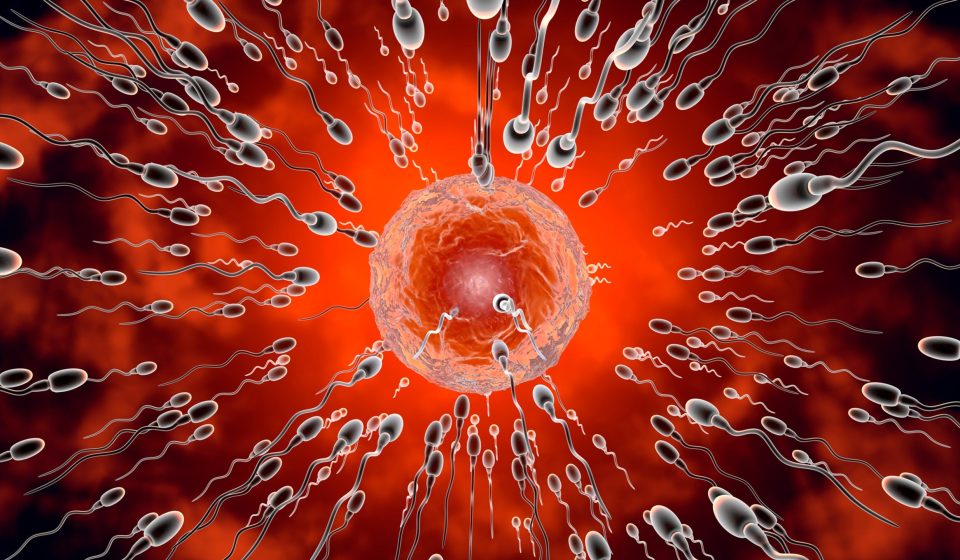
After all, human sperm counts may not be in precipitous global decline.
A new study by one of the same scientists who helped document a global decline in 2022 now offers a more nuanced and hopeful perspective.
In Denmark at least, data suggests that sperm counts are no longer falling in young men.
In fact, from 1996 to 2022, sperm counts in this country have remained relatively stable.
Among a sample of 8,320 men evaluated for military service over the past 26 years, there were even signs of modest improvement.
The results, published in Andrologysuggest that there may be geographic differences in modern sperm count trends.
“The most recent data presented here allow for some optimism, as all sperm parameters show higher levels than those observed at the start of the study period more than 20 years ago,” the research team concludes.
That said, a large proportion of men had impaired sperm quality. In total, more than a third had at least one sperm quality measure below the threshold associated with increased risk of infertility.
“Regardless of the modest increase in sperm quality in recent years, the current level remains a cause for concern,” the researchers add.
“First, because of the high number of men with poor sperm quality. Second, because the current level is much lower than 50 to 80 years ago.”
But not all scientists are convinced of this long-term trend.
Concern about global sperm counts began in 1992, when a landmark study was published in the British Medical Journal which reported a 42 percent decline in sperm concentrations in men since 1940.
The findings were based on data from 61 studies conducted around the world and sparked global concern over a hidden fertility crisis.
Have male sperm counts dropped worldwide without us realizing it?
For decades, scientists have studied and debated this controversial issue.
Some studies have only found this trend in Western countries, and skeptics have argued that the way we measure sperm is too inconsistent to draw definitive conclusions over decades.
However, in 2022, international researchers conducted the largest meta-analysis of its kind.
In pooled global data, they found that between 1973 and 2018, sperm concentrations declined by more than 50 percent and total sperm counts declined by more than 60 percent.
Even broken down by geographic region, the decline in sperm counts was apparent in North America, Europe, Australia, South America, Central America, Asia and Africa – albeit in different proportions.
The recent Danish study adds another difficulty, although it does not necessarily contradict these previous results.
A global decline in sperm counts could still occur, the authors note, but the results suggest that in some regions sperm counts may be stabilizing.
Reproductive scientist Michael Carroll, who was not involved in the recent study, wrote an article for The conversation on recent discoveries.
“These studies suggest that trends in sperm quality can vary significantly across populations and regions,” Carroll explained.
“And that means the question of whether sperm counts are declining globally is far from settled.”
Carroll is not the only skeptic.
In 2022, andrologist Allan Pacey, of the University of Sheffield, argued in an independent commentary to the Science Media Center that “whether or not human sperm counts have declined is a really important question that we haven’t addressed seriously in my view.” »
Although Pacey thought the authors of the 2022 study “conducted a very elegant meta-analysis,” he said he remained concerned about the quality of the data in the papers published decades ago.
“Counting sperm, even with the gold standard technique of hemocytometry, is really difficult,” Pacey argued in 2022.
“I believe over time we’ve just gotten better through the development of training and quality control programs around the world. I still think that’s a lot of what we see in the data.
Michael Dahan, a doctor and fertility specialist at McGill University in Canada, tends to agree with Pacey.
Earlier this year, he wrote a scientific perspective for Reproductive biomedicine online which argued that the evidence for global sperm decline was “considerably weaker than their importance in the literature suggests.”
“The central thesis of this argument is simple,” Dahan argued, “if the instruments and methods used to measure sperm parameters have changed significantly over the study period, and they have, then longitudinal comparisons of the resulting data will confound technical evolution with biological change.”
In other words, can we trust sperm measurements from 50 to 80 years ago? And can these results really be compared to modern techniques?
Although there is concern that male fertility may suffer, it should also be noted that changes to sperm may not have clinical significance.
Sperm shape, number, and movement can all help indicate their health and functionality, but even an imperfect germ cell can eventually fertilize an egg.
“The evidence does not support the idea that humanity is on the verge of extinction because we are running out of sperm,” Carroll wrote for The Conversation.
“The dramatic headlines may have overstated the science. What they have succeeded, however, is in shining a much-needed spotlight on male fertility, and it’s a conversation worth having.”
The research was published in Andrology.
This article was fact-checked by Fiona MacDonald and edited by Fiona MacDonald. Although we are proud of our process, we are only human. If you spot an error, please let us know.
Gn Health