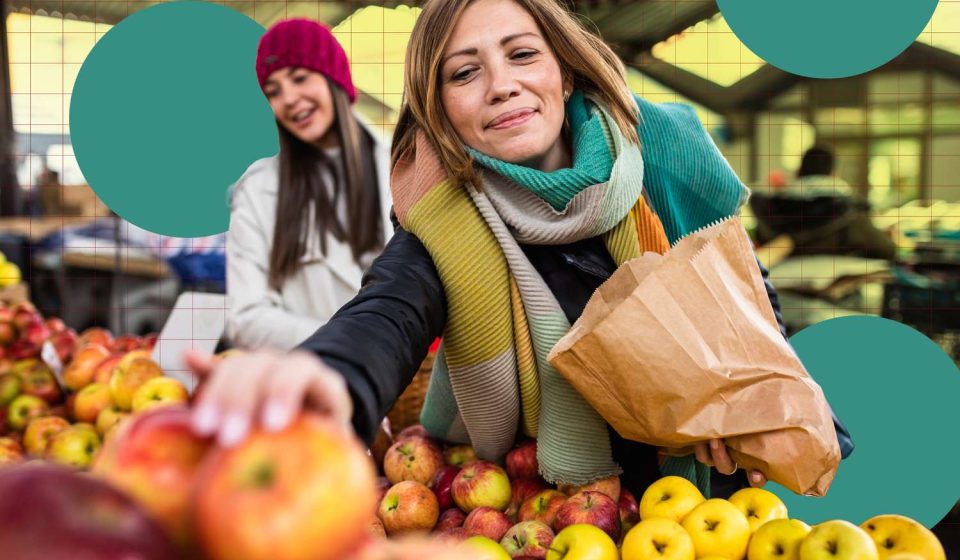

- Apples, pears, persimmons, pomegranates and pumpkin are fiber-rich fall choices.
- Keeping the skin on apples and pears adds even more fiber and plant compounds.
- Add fall produce to snacks, salads, yogurt, smoothies and savory dishes for extra fiber.
It’s fall, y’all! And that means a whole new range of seasonal produce to enjoy. Embracing seasonal produce allows you to score the best deals, get the freshest foods, and mix up your produce rotation to keep things exciting. When it comes to fiber-rich fall fruits, a few stand out to dietitians. These five fall fruits are recommended by dietitians for their high fiber and other health-promoting nutrients.
1. Apples
Sweater weather means apple picking season for those of us who live in the northern United States, so it’s no surprise that apples made the cut. Dietitians agree that consuming this seasonal fruit is an effective way to increase your fiber intake.
“Apples are a good source of pectin, a type of soluble fiber that may help lower cholesterol, improve blood sugar, and support the gut microbiome,” says Avery Zenker, RD, MAN. Their skin also provides insoluble fiber, which helps keep you regular. In total, a medium apple contains about 4 grams of fiber, or 14% of the daily value.
They say an apple a day keeps the doctor away, and studies show there may be some truth to that old adage. “Apples contain a variety of polyphenols in the skin and flesh, which have antioxidant and anti-inflammatory properties,” says Zenker. A 2022 study found that, thanks to their strong nutritional profile, apples may help prevent chronic diseases like diabetes, cancer, and cardiovascular disease.
“There are so many varieties that it’s easy to find one you like,” says Amanda Crowe, MS, RD, INHC. “Some are sweet, some are tangy, and different varieties work well for snacking, baking, or savory dishes.” Whether you’re making a snack plate, a dessert pie, or a cozy dinner, apples deserve a place on your plate.
2. Pears
“Pears are one of my favorite fall fruits for boosting fiber,” says Crowe. A medium pear contains about 5.5 grams of fiber, or 20% of the DV.
“Pears offer a blend of soluble fiber, including pectin and insoluble fiber, so they support both digestive regularity and healthy cholesterol levels,” says Payton Brewer, MS, RDN, LD, CPT. Soluble fiber is mainly found in the flesh of the fruit, while insoluble fiber is found in the skin. For both apples and pears, eating the skin helps you take advantage of all the fiber the fruit has to offer. “Keeping the skin is also beneficial because of its rich content of flavonoids (an antioxidant plant compound),” says Brewer.
Enjoy the pears alone, garnished with a salad, as a dessert or roasted with Brie.
3. Khaki
“Persimmon is the unsung hero of fall fruits,” says Kinga Portik-Gumbs, RDN. She highly recommends trying this fruit to get out of your comfort zone and increase your fiber intake. A persimmon contains about 6 grams of fiber, or about 21% of the DV.
“Their beautiful orange color comes from carotenoids, including beta-carotene, which the body converts into vitamin A,” explains Portik-Gumbs. “Persimmons are also rich in vitamin C and other antioxidants, providing anti-inflammatory benefits.” In turn, some evidence suggests they may help improve glucose regulation and reduce inflammation, but more research in humans is needed.
Persimmons are quite versatile and pair well with yogurt, cheese and pork. They are also excellent in salads, in dressings or on their own.
4. Pomegranate
Pomegranate arils contain 7 grams of fiber per cup, or 25% of the DV, making them a high-fiber favorite from Samina Qureshi, RDN, LD, CSDH.
“Not only does pomegranate give you an easy way to add fiber to your diet, it’s also packed with antioxidants like quercetin and anthocyanins and is a great source of vitamin C, zinc, magnesium, and potassium,” says Qureshi.
Pomegranates are also rich in compounds, including ellagitannins, that may support cardiovascular health. These compounds have antioxidant and anti-inflammatory properties that can help relax blood vessels, promote healthier blood flow, and lower blood pressure. Studies also suggest that pomegranates may also help support healthy blood sugar and cholesterol.
“Top a salad with pomegranate arils or add some to your yogurt parfait; Either way, pomegranate is a great way to meet your fiber needs,” says Qureshi.
5. Pumpkin
Last but not least, the shining star of fall: the pumpkin! You probably think of it as an iconic fall flavor, but did you know it’s also a solid source of fiber? Each cup of pumpkin puree contains 6 grams of fiber, or 21% of the DV.
Brewer recommends stocking up on canned pumpkin for maximum convenience. “Because it’s shelf-stable, there’s no preparation, no waiting for it to ripen, and no worries about spoiling it before you get there,” she says. His advice? “Be sure to look for 100% pure pumpkin rather than pumpkin pie filling, which contains added sugar.”
In addition to being rich in fiber, pumpkin is also rich in antioxidants and vitamins. “Just one cup of canned pumpkin provides more than double the daily value of vitamin A, which supports healthy vision, immune function and skin health,” says Brewer. “Pumpkin also contains lutein and zeaxanthin, two antioxidants linked to eye health, as well as vitamin K, vitamin E, iron and potassium, which help maintain healthy blood pressure,” she adds.
Mix pumpkin puree with yogurt, smoothies, overnight oatmeal, and baked goods for a boost of fiber and flavor this fall.
Our expert opinion
Berry season is behind us, but fall brings a whole new selection of fiber-rich fruits. Dietitians’ five favorite fall fruits are apples, pears, persimmon, pomegranate and pumpkin. Each provides at least 4 grams of fiber per serving, as well as antioxidants, vitamins and minerals excellent for various aspects of health.
If you want to increase your fiber intake, just adding these few fruits could make a big difference. “You don’t necessarily need to overhaul your diet to eat more fiber. Adding a pear as a snack, cutting an apple into your oatmeal, or incorporating fruit into a tasty dinner can all help increase your intake,” says Crowe.
Gn Health