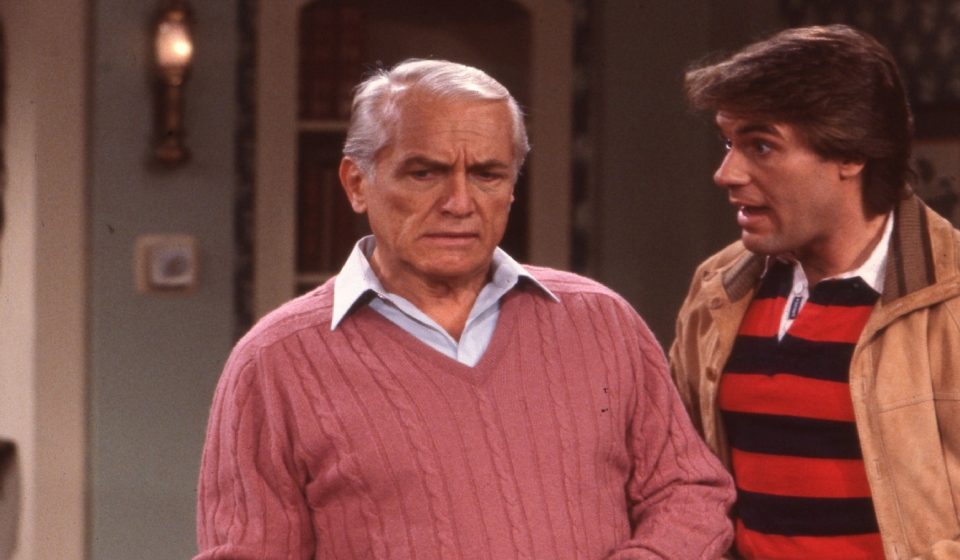
Just because networks axed these sitcoms due to low ratings, production costs, or any other reason doesn’t mean there wasn’t an audience that would enjoy them. Essentially, first-run syndication is a distribution model in which a show is sold directly to individual local stations, who program the show independently and in different time slots. This contrasts with network television, where major networks such as CBS, ABC, or NBC broadcast one show on all of their stations at specific time slots.
There are several reasons why a show may be more successful in its first run. On the one hand, competition in the network television field is tough and it is very common for a show to be canceled if it does not produce the expected results quickly. Additionally, while a network may only air an episode once a week, a local station may air the show over multiple days. This repeated viewing can help foster a connection with viewers and even make the show a comfort watch. First-run syndication is an interesting and viable alternative that has proven to be an excellent model for shows that have not survived the constraints of network television, including “It’s a Living,” “Charles in Charge” and “Too Close for Comfort.”
It’s A Living pumped up in syndication
The workplace comedy takes place at the Above the Top restaurant at the Bonaventure Hotel. “It’s a Living” follows a group of waitresses as they navigate their demanding jobs and personal lives, alongside supervisor Nancy Beebe (Marian Mercer) and pianist Sonny Mann (Paul Kreppel). The ABC series aired for 27 episodes over 2 seasons, from October 30, 1980 to June 11, 1982. Slot changes, the renaming of the second season to “Making a Living”, and the replacement of two of the original waitresses (Susan Sullivan as Lois Adams and Wendy Schaal as Vicki Allen) with Louise Lasser’s Maggie McBurney did not save the series from its eventual cancellation.
It performed much better in syndication. After reruns of 22 episodes did well, original producer Witt/Thomas Productions created new episodes of the series and the series was rebooted. Returning in 1985 under the original title, the series “It’s a Living” ran for an additional 93 episodes, more than three times the ABC version, bringing the total to 120 episodes. The late Barrie Youngfellow, Gail Edwards, Marian Mercer and Paul Kreppel were retained, with Crystal Bernard and Richard Stahl joining the revival.
Webster was a success before syndication
“Webster” is an interesting case when talking about syndicated shows, as the ABC version was a real success, peaking at #23 in the Nielsen ratings during the 1984-1985 season. However, it lost steam and fell to No. 50 in the 1986-87 season, and ABC canceled it. Airing for four seasons and producing 100 episodes, “Webster” follows orphan Webster Long (Emmanuel Lewis), who is adopted by retired football player George Papadopolis (Alex Karras) and his socialite wife, Katherine Calder-Young Papadopolis (Susan Clark).
Even before the show’s cancellation, Paramount had a syndication plan for “Webster.” After ABC dropped it, Paramount produced the show in syndication for two seasons and 50 more episodes, bringing the total number of episodes to 150. Emmanuel Lewis, Alex Karras and Susan Clark reprized their roles, and Nicky Papadopolis (George’s nephew), played by Corin Nemec, was introduced and served as Webster’s peer. Unlike other shows that were canceled due to low ratings and found new life through syndication, “Webster” had an established success record, and its revival simply continued what had been started. The Paramount syndication aired from September 21, 1987 to March 10, 1989.
Charles in Charge featured a major overhaul
Unlike “Webster” and “It’s a Living,” which retained their main characters, “Charles in Charge” restructured its main cast. It did, however, retain its titular protagonist, Charles (Scott Baio), and his best friend, Buddy Lembeck (Willie Aames). The show follows college student Charles, who works as a caretaker and babysitter for the Pembroke family’s children in exchange for room and board.
The CBS series premiered on October 3, 1984, but after one season of 22 episodes, it was canceled. It earned a Nielsen rating of 13.1 and was the 55th show of the season. A few years later, on January 3, 1987, the series “Charles in Charge” premiered and ran for four seasons and 104 more episodes. Talk about a major blowout.
The familiar face of Charles was still there, but the Pembrokes had moved to Seattle and the Powells had taken their place. Fortunately for Charles, the Powells kept the previous arrangement where he could live with them as their caretaker. In February 1989, KTLA’s “Charles in Charge” earned a Nielsen rating of 9.2 in Los Angeles, evidence of its popularity in a competitive local market.
Too Close for Comfort was completely different in the end
Based on the British comedy series “Keep it in the Family,” “Too Close for Comfort” follows conservative cartoonist Henry Rush (Ted Knight) as he lives his life with his adult daughters, Jackie (Deborah Van Valkenburgh) and Sara (Lydia Cornell). The ABC show aired from November 11, 1980 to May 5, 1983, for three seasons and 63 episodes.
Although it achieved a Nielsen rating of 22.6 and was ranked No. 7 nationally during the 1981-82 season, it fell to No. 38 after it was moved to Thursday nights and was canceled. The Metromedia television network picked it up for syndication, and from April 7, 1984 to February 7, 1987, the show aired for three seasons and 66 additional episodes. The main cast, including Ted Knight, Lydia Cornell and Deborah Van Valkenburgh, returned for syndication.
The syndicated version has an interesting story regarding its final season. The sixth season was renamed “The Ted Knight Show” and Henry Rush, with his wife Muriel Rush (Nancy Dussault), moved to Mill Valley. Sadly, Ted Knight succumbed to colon cancer on August 26, 1986, and by that time, 12 of 22 episodes had already aired. Production, of course, could not continue, but the rest of the season aired and the series ended.
Mama’s family shined after her resurrection
Born from “The Family” sketches on “The Carol Burnett Show,” “Mama’s Family” revolves around the Harper family and aired from January 22, 1983 to April 7, 1984. The sassy Thelma “Mama” Harper (Vicki Lawrence) runs the household. Her daily squabbles and interactions with her family members, particularly Vinton Harper (Ken Berry), Fran Crowley (Rue McClanahan), and Ellen Harper (Betty White), are the heart of the series.
Its first season earned an 18.6 rating, but the second season proved less successful and NBC canceled it. Produced by Lorimar Productions, the series featured a recasting of the main family. Eunice Higgins (Carol Burnett) and Ed Higgins (Harvey Korman) were not in the revival; Fran was eliminated and Betty had less frequent appearances. Allan Kayser as Bubba Higgins, Mom’s grandson, and Beverly Archer as neighbor Iola Boylen entered the series.
The syndicated show enjoyed great success, as it became one of the leading sitcoms in first-run syndication, with a 6.6 Nielsen rating and 10th nationally in February 1989. The syndicated revival continued for an additional 95 episodes over four seasons. Although the show lost one of its biggest stars in Burnett, whose feud with Vicki Lawrence lasted for years, “Mama’s Family” soared even higher and is one of the biggest success stories in the world of first-run syndication.
Gn entert