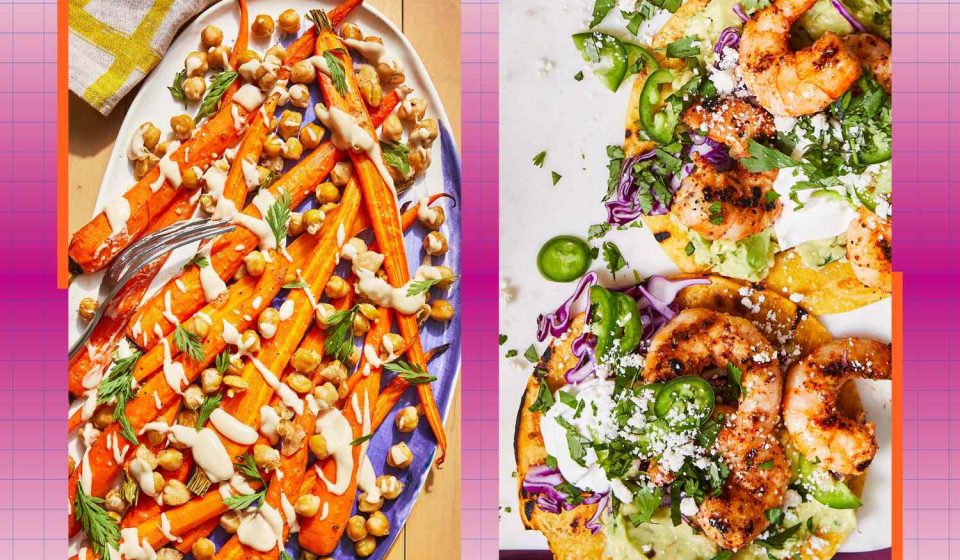

| Meal plan at a glance | ||
|---|---|---|
| BREAKFAST / MORNING SNACK | LUNCH / SNACK IN PM | DINNER |
| Muffin omelettes, blackberries & kefir/pear | Bean and vegetable salad/Apple | Salmon power bowl |
| Yogurt, granola & fruit/ Edamame | Zoodles, peppers & hummus/Pistachios | Pork, spinach and white beans |
| Yogurt, granola & fruit/ Pear | Zoodles, peppers & hummus/Pistachios & blackberries | Sesame Chicken Salad |
| Muffin omelettes, blackberries & kefir/ Apple & nut butter | Zoodles, peppers & hummus/Pistachios | Shrimp Tostadas and Shrimp Salad |
| Yogurt, granola & fruit/ Pear | Zoodles, peppers and hummus/ Apple and nut butter | Chicken Chili |
| Yogurt, granola and fruit/blackberries | Chicken chili/pear & hard-boiled egg | Chickpea, carrot and kale salad on a sheet pan |
| Muffin omelettes, blackberries & kefir/apple | Chicken Chili/Pear and Yogurt | Flank salad |
Crystal Hughes
Day 1
Breakfast (338 calories)
Morning snack (131 calories)
Lunch (360 calories)
Afternoon snack (95 calories)
Dinner (572 calories)
Daily totals: 1,497 calories, 65 g fat, 76 g protein, 166 g carbohydrates, 38 g fiber, 1,259 mg sodium
To make 2,000 calories: Add ¼ cup unsalted dry roasted almonds to morning snack, add ½ cup low-fat plain yogurt (such as Greek) at lunch, and add 2 tbsp. almond butter as an evening snack.
Day 2
Breakfast (345 calories)
- 1 cup plain low-fat yogurt, such as Greek
- 1 serving of maple granola
- ½ cup raspberries (or fruit of your choice)
Morning snack (150 calories)
Lunch (357 calories)
Afternoon snack (175 calories)
- ¼ cup dry-roasted, unsalted shelled pistachios
Dinner (499 calories)
Daily totals: 1,525 calories, 65 g fat, 116 g protein, 132 g carbohydrates, 35 g fiber, 1,806 mg sodium
To make 2,000 calories: Increase to 1 cup edamame, in scoops, as a morning snack, add 1 clementine to an evening snack, add 1 serving of massaged kale salad to dinner, and add 1 serving of apple with cinnamon almond butter as an evening snack.
Charlotte and Johnny Autry
Day 3
Breakfast (345 calories)
- 1 cup plain low-fat yogurt, such as Greek
- 1 serving of maple granola
- ½ cup raspberries (or fruit of your choice)
Morning snack (131 calories)
Lunch (357 calories)
Afternoon snack (238 calories)
- ¼ cup dry-roasted, unsalted shelled pistachios
- 1 cup blackberries
Dinner (432 calories)
Daily totals: 1,503 calories, 66 g fat, 99 g protein, 145 g carbohydrates, 37 g fiber, 1,674 mg sodium
To make 2,000 calories: Add 1 serving of Sprouted Grain Toast with Peanut Butter and Banana to breakfast and add ¼ cup unsalted dry roasted almonds to morning snack.
Jason Donnelly
Day 4
Breakfast (338 calories)
Morning snack (193 calories)
- 1 medium apple
- 1 tbsp. almond butter
Lunch (357 calories)
Afternoon snack (176 calories)
- ¼ cup dry-roasted, unsalted shelled pistachios
Dinner (448 calories)
Daily totals: 1,512 calories, 74 g fat, 89 g protein, 141 g carbohydrates, 35 g fiber, 2,263 mg sodium
To make 2,000 calories: Increase to 2 tablespoons. almond butter to morning snack, add 1 large pear to evening snack and add 1 oz. dark chocolate with 10 unsalted dry roasted almonds as an evening snack.
Day 5
Breakfast (345 calories)
- 1 cup plain low-fat yogurt, such as Greek
- 1 serving of maple granola
- ½ cup raspberries (or fruit of your choice)
Morning snack (131 calories)
Lunch (357 calories)
Afternoon snack (242 calories)
- 1 medium apple
- 1½ tbsp. almond butter
Dinner (404 calories)
Meal preparation tip: Reserve 2 servings of Chili Verde Chicken for lunch on days 6 and 7.
Daily totals: 1,479 calories, 57 g fat, 88 g protein, 172 g carbohydrates, 35 g fiber, 1,549 mg sodium
To make 2,000 calories: Increase to 2 tablespoons. almond butter at evening snack, add 1 serving of chopped salad to guacamole at dinner and add 1 oz. dark chocolate with 10 unsalted dry roasted almonds as an evening snack.
Jason Donnelly
Day 6
Breakfast (345 calories)
- 1 cup plain low-fat yogurt, such as Greek
- 1 serving of maple granola
- ½ cup raspberries (or fruit of your choice)
Morning snack (62 calories)
Lunch (408 calories)
Afternoon snack (209 calories)
- 1 large pear
- 1 large hard-boiled egg
Dinner (499 calories)
Daily totals: 1,523 calories, 67 g fat, 78 g protein, 161 g carbohydrates, 38 g fiber, 1,346 mg sodium
To make 2,000 calories: Add 1 serving of Sprouted Grain Toast with Peanut Butter and Banana to breakfast and ¼ cup unsalted shelled dry roasted pistachios to morning snack.
Day 7
Breakfast (338 calories)
Morning snack (95 calories)
Lunch (404 calories)
Afternoon snack (214 calories)
- 1 large pear
- ½ cup low-fat plain yogurt, such as Greek
Dinner (467 calories)
Daily totals: 1,518 calories, 51 g fat, 104 g protein, 172 g carbohydrates, 35 g fiber, 1,616 mg sodium
To make 2,000 calories: Add 2 tbsp. almond butter to morning snack and add 1 oz. dark chocolate with 14 unsalted dry roasted almonds as an evening snack.
Frequently Asked Questions
Yes! This meal plan is intended to serve as inspiration. You don’t have to follow it exactly to reap the benefits. When choosing recipes, we made sure to check calories, fiber, protein, and sodium to match the parameters of this plan and stay within our sodium limits. If you’re doing a recipe swap, it can help to choose a recipe with similar levels of calories, fiber, protein and sodium. For more inspiration, check out these delicious fiber-rich dinner recipes.
Definitely, it’s good to eat the same breakfast or lunch every day. Breakfasts range from 338 to 345 calories while lunches range from 357 to 408 calories. These ranges are pretty close, but if you’re closely monitoring your calories or other nutrients, like protein, you may want to adjust a snack or two.
We no longer offer modifications for 1,200 calorie days in our meal plans. The 2020-2025 Dietary Guidelines for Americans suggest that limiting calories to 1,200 per day is too low for most people to meet their nutritional needs, and that it is not sustainable for long-term health and well-being.
Yes! The Mediterranean diet is an eating plan that includes a large number of fiber-rich foods such as fruits, vegetables, whole grains, nuts, seeds and beans. It’s also rich in lean proteins, like fish and lean poultry, which are ideal for blood sugar management.
Health Benefits of Fiber for Insulin Resistance
So how can we promote healthy blood sugar levels and reduce the risk of developing insulin resistance? Eating more fiber can help. Fiber is the unassuming workhorse of the nutrition world. Its health benefits are numerous: fiber is linked to better heart health, better digestion, and, of course, healthier blood sugar levels and a reduced risk of developing type 2 diabetes. Plus, eating more fiber can help promote weight loss, even in the absence of other diet changes. Since fiber can independently improve insulin resistance and promote weight loss, which may also help improve insulin resistance, it’s a useful nutrient to focus on if you’re trying to improve your blood sugar levels.
Although both soluble and insoluble fiber have their benefits and should be included in a healthy diet, insoluble fiber appears to be particularly beneficial for supporting healthy blood sugar levels. In fact, research has concluded that a diet rich in dietary fiber can reduce complications of type 2 diabetes. Sources of insoluble fiber include bran, whole wheat, barley, oats, nuts, and the skins of many fruits and vegetables.
How We Create Meal Plans
Registered dietitians carefully create EatingWell’s meal plans so they’re easy to follow and delicious. Each meal plan meets specific parameters based on the health condition and/or lifestyle goal it targets and is analyzed for accuracy using the ESHA Food Processor Nutrition Database. As nutritional needs differ from person to person, we encourage you to take inspiration from these plans and adjust them as you see fit.
Gn Health