When it comes to nutrition and bone health, many people think of calcium. This makes sense, since calcium is necessary for building (and maintaining) strong bones. But what about protein? Often associated with muscle mass and satiety, protein also affects bone strength. This is especially important as you age because bone mass naturally decreases. This is yet another reason to prioritize protein-rich foods on your plate.
However, some options contain additional bone-strengthening nutrients, making them particularly beneficial. We asked dietitians to name these foods and what makes them so helpful; here’s what they had to say.
- Lauri WrightPhD, RDN, LD/N, FADA, Registered Dietitian Nutritionist, Associate Professor and Director of Nutrition Programs at the University of South Florida
- Beth Goodridge, RD, Dietitian at Kaiser Permanente in Northern California
- Connie Elick, RD, dietitian and health-focused culinary arts chef-instructor at the Institute of Culinary Education
Protein and strong bones
Protein makes up about half of bone volume and provides the structure that calcium and other minerals strengthen, says Lauri Wright, PhD, RDN, LD/N, FADA, registered dietitian nutritionist, associate professor and director of nutrition programs at the University of South Florida. It also supports processes that strengthen bones. For example, proteins provide amino acids, which are used by the body to make collagen. Collagen gives bones strength and flexibility, which helps absorb impacts, says Beth Goodridge, a registered dietitian at Kaiser Permanente in Northern California. Amino acids are also used to create osteoblasts (i.e. cells that help build new tissue), keeping bones strong, notes Goodridge. Additionally, protein helps maintain lean or muscle body mass. This is important because muscles pull on tendons (which attach to bones) during resistance exercises, says Goodridge. “The traction of the tendon on the bone sends a signal to the body to produce more osteoblasts, which makes the bones stronger,” says Goodridge.
But as we age, we naturally lose bone and muscle mass, which increases the risk of falls and fractures, Wright says. “Adequate protein intake helps preserve muscle, promote bone remodeling, and improve calcium absorption,” she says.
It’s worth noting that the key to having stronger bones isn’t simply getting more calcium or protein, says Wright. It’s about consistently getting the right combination of nutrients. “A diet containing enough protein, calcium, and vitamin D, combined with regular strength training and weight-bearing exercises, can help you stay strong and independent as you age,” says Wright.
The Best Protein-Rich Foods for Strong Bones
Dietitians share the best protein-rich foods that can keep your bones strong.
Lean meats
Lean meats are not only low in saturated fat, but also high in protein. For example, one cup of skinless ground chicken breast contains 43 grams of protein. Plus, “lean meat contains magnesium and zinc, which promote density,” says Goodridge. “Magnesium helps vitamin D convert to its active form, which allows the body to absorb calcium from the foods we eat,” says Goodridge. Meanwhile, zinc helps build the collagen matrix, keeping bones strong, she notes.
How to eat
Cottage cheese
Marcus Nilsson
Cottage cheese is considered a high-protein food, according to Connie Elick, RD, registered dietitian and chef-instructor of health-centered culinary arts at the Institute of Culinary Education. It offers 24.2 grams of protein per cup. This popular food also provides calcium and phosphorus, another component that bone matrix is built with, says Elick. Additionally, some brands of cottage cheese are fortified with vitamin D, a nutrient necessary for optimal calcium absorption.
How to eat
Oily fish
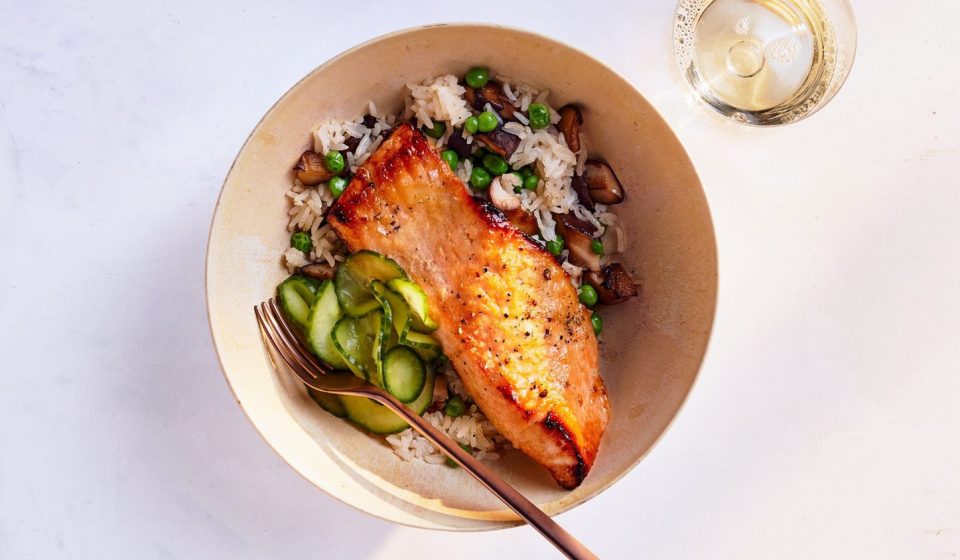
When it comes to the best protein-rich foods for strong bones, oily fish like salmon and sardines are worth considering. For example, a 3-ounce serving of cooked salmon provides about 20 to 22 grams of high-quality protein, helping to maintain muscle mass that protects against falls and fractures, Wright says. “Canned sardines and salmon with edible bones are particularly beneficial, as these bones provide a substantial amount of calcium,” she adds. Additionally, fatty fish are one of the few dietary sources of vitamin D, which plays a key role in helping the body absorb (and use) calcium, says Elick. And then there are omega-3 fatty acids, notably EPA and DHA, which are found in fatty fish. These “good” fats help slow age-related bone mineral loss and reduce inflammation, which can damage bones, says Elick.
How to eat
Legumes
According to Goodridge, protein in legumes (think beans, peas, and lentils) can help support bone density. Protein content depends on the type; for example, a cup of canned white beans contains 19 grams, while a cup of boiled lentils contains 17.9 grams. “Just like animal-based proteins, plant-based proteins are also made up of amino acids used to create collagen and osteoblasts,” she explains. Beans also contain calcium and phosphorus, which help support bone structure and strength, she says.
How to eat
Greek yogurt
“Greek yogurt is a great choice for a protein-rich food that supports bone density,” says Goodridge. It contains 21.5 grams per one-cup serving, considerably more than traditional yogurt varieties. As a dairy product, Greek yogurt also provides calcium and phosphorus. Some types are also fortified with vitamin D, according to Wright.
How to eat
- Add protein to smoothies by incorporating Greek yogurt.
- “Enjoy it with berries and nuts for breakfast,” suggests Wright.
- Use Greek yogurt in place of sour cream on baked potatoes, tacos, or chili.
Soy
Stephen Johnson
“Soy is an excellent source of plant-based protein for bone health. Unlike many plant-based proteins, soy provides all nine essential amino acids, making it a complete protein,” says Wright. The exact protein content depends on the type of soy product, but for context, half a cup of tofu offers 10 grams of protein. Meanwhile, a cup of soy milk contains 3.9 grams. Beyond protein, soy contains isoflavones, which can help slow bone loss, says Elick. Some soy products are also particularly rich in bone-maintaining nutrients. For example, natto (fermented soybeans) contains vitamin K, which helps calcium bind to the bone matrix, strengthening it, says Elick. Calcium-containing tofu can be particularly high in calcium, Wright says.
How to eat
Milk
Sidney Bensimon
“Milk is a convenient source of several nutrients that work together to support bone health. One cup of cow’s milk provides about eight grams of high-quality protein, containing all nine essential amino acids needed to maintain and repair tissues, including bones,” says Wright. Milk also provides about 300 milligrams of calcium, as well as vitamin D, which is added via fortification. As mentioned, vitamin D is essential for calcium absorption.
How to eat
- Prepare oatmeal with milk instead of water.
- Add milk to bowls of coffee, tea, cereal or granola.
- Mix milk into smoothies.
Gn Health