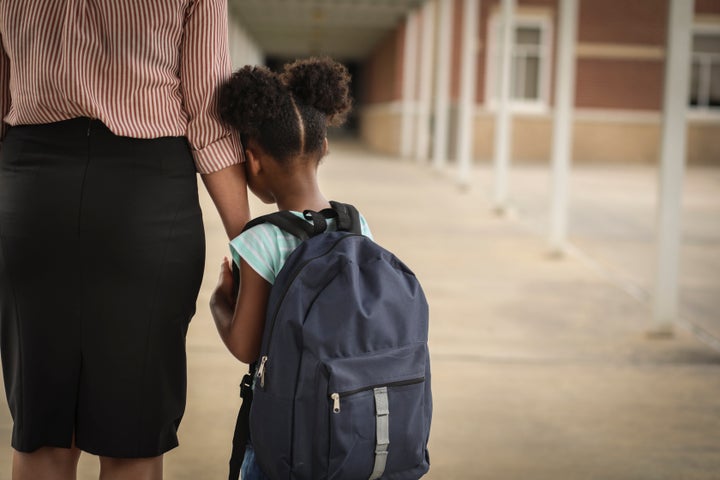
Anxiety isn’t just an adult problem. Clinical research indicates that millions of children suffer from anxiety symptoms, with a recent analysis putting the figure at 20.5% of young people worldwide.
“Sometimes anxiety can be difficult to identify because children can show their anxiety in different ways,” said Dr. Khadijah Booth Watkins, associate director of the Clay Center for Young Healthy Minds at Massachusetts General Hospital. “This can be due to many factors such as the type of anxiety they are experiencing, their age or their language skills.”
While some children exhibit physical symptoms such as an upset stomach, racing heartbeat, and headaches, others exhibit emotional reactions such as increased tantrums or feelings of attachment. Yet others withdraw and stop participating in activities or engaging with their peers.
Even if you don’t intend to create anxiety, some common parent behaviors and comments can make children anxious. Below, experts detail some parenting approaches that promote anxiety.
Encourage avoidance
“Because of the uncomfortable feeling that anxiety produces in the body, a child suffering from anxiety will most often develop avoidant behaviors,” said parent educator Laura Linn Knight. “The child will avoid what makes them uncomfortable, which may start as a small avoidance but escalate over time.”
For example, if your child is afraid of leaving you to go to school, this feeling may manifest as a fear of taking the bus.
“The child thinks that if mom or dad drives him to school, he will feel less anxious about leaving, but quickly discovers that even though he was driven to school, the anxiety remains,” she explained. “The child can then ask mom or dad to walk them to their classroom door, in the hope that this will make them less anxious.”
This avoidance creates more anxiety and can harm a child’s self-confidence.
“Parents unwittingly perpetuate the cycle of anxiety by helping their child avoid the things they are afraid of,” Knight said. “Most parents don’t do this intentionally, but because anxiety often demands to be heard and a child becomes very loud or shuts down verbally and physically with the feeling of anxiety, a parent wants to avoid difficult behaviors and thus helps avoid triggers.”
Instead, parents should work to cultivate resilience and allow their children to face their fears knowing they have a support system behind them.
“Changing behavior to actively participate in avoiding or reducing our children’s anxiety prevents them from developing the healthy coping skills needed,” Booth Watkins said. “In this way, we engage in over-accommodation, thereby fueling anxiety. The goal is not to eliminate all discomfort and distress, but to balance empathy, validation, and support with a little nudge and lots of encouragement.”

fstop123 via Getty Images
Refusing to face your own anxiety
“We have to remember that our children are very sensitive to what is happening with us as caregivers,” Booth Watkins said. “They both listen to our words and pay close attention to our body language. If we suffer from anxiety ourselves, we need to deliberately manage our stress and distress, and model healthy coping skills and strategies that will be essential in helping your child manage their anxiety.”
Just as you must put on your own oxygen mask before helping others, you must address your own anxiety issues to support your children in theirs.
“When our anxiety is not managed well and our children are overly exposed to it, we may unintentionally teach them to be afraid or communicate to them that situations or scenarios should be feared because we fear them,” Booth Watkins said.
Of course, perfection is not the goal and parents should not try to suppress any anxious feelings or emotions. Instead, use these moments as opportunities to share what you’re experiencing in an age-appropriate way.
“There’s nothing wrong with talking to your kids about your anxiety, and if your child is struggling with anxiety, it can be helpful for them to know they’re not alone and that you understand what they’re going through,” Booth Watkins said. “Most importantly, it lets them know that they don’t have to suffer in silence and that you are there to help.” »
When an anxiety-provoking situation arises in your family, try to practice self-regulation. For example, explain to your children that you are breathing deeply or doing a certain activity to manage and overcome your anxiety.
“Anxiety is a normal part of life,” said Keneisha Sinclair-McBride, a clinical psychologist at Boston Children’s Hospital in Massachusetts. “Everyone needs coping strategies. One of the most important things you can do as a parent is help your child learn the unique toolbox of skills that help them manage anxiety.”
Turning away from conversations about feelings
Talking about your feelings can be uncomfortable, especially when difficult emotions arise, but it is crucial for parents to encourage these conversations.
“Give space for your child to feel worried, anxious, or nervous,” recommends pediatric psychologist and parenting coach Ann-Louise Lockhart. “Since they may not be fully aware of what they’re feeling or what it means, name this feeling based on what you observe: “It looks like you’re feeling really uncomfortable about going into the water” or “You’re pacing back and forth because you’re afraid to go into the classroom” or “You’re feeling nervous about going to the party without me.” »
The next step is to validate these emotions by saying something like, “I understand. This makes sense to me. Some people feel this way and need time, and others just jump in and do it out of fear.” Then try to think of a solution together. Make it clear that you are there to support and encourage your child without simply solving the problem for them.
Alvin Thomas, assistant professor of human development and family studies at the University of Wisconsin-Madison, also stressed the importance of talking about your emotions as a parent. This approach prevents your children from inventing anxiety-provoking stories to explain why the adults around them behave differently.
“For example, you can tell your child that Dad is feeling a little sad or a little frustrated,” he explains. “It expands the child’s emotional vocabulary, teaches them to speak through their emotions and shows them how to do it. You can then provide age-appropriate reasoning. Dad feels frustrated because he was really hoping for something, but it didn’t happen.”
As a parent, you can then share some coping mechanisms you plan to use to manage your difficult emotions, whether that’s meditation and deep breathing or planning a fun activity to take your mind off things for a bit.

Catherine Costa via Getty Images
Being too careful
“Often we trigger anxiety in children when we are overly cautious,” said clinical psychologist and author Jenny Yip. “If we constantly tell them to be careful, we are constantly warning them of danger.”
Saying things like “be careful, you’re going to fall” creates hesitation in children, which can be helpful in small doses depending on the child, but it doesn’t need to be said all the time. Instead, be careful how often you warn your children and try to help them understand why something is dangerous.
“Like, don’t jump off the table because, first of all, tables are not meant for jumping, and it’s not a playground,” Yip explained. “No. 2, the ground is really hard. So if you hurt yourself on the ground, we’ll have difficulty here, and we may have to go to the emergency room.”
These moments of explanation can encourage open dialogue and make it clear that they can also share their concerns with you.
“Refrain from fear messages such as: ‘Smoking will give you cancer, disfigure your face and kill you!’ » or ‘If you start smoking, I will punish you for life!’ said Kristene Geering, Director of Education at Parent Lab. “Try educational, reasoned messages: “Smoking has been linked to many health problems. Your grandmother died of smoking-related cancer. I love you and want you to be healthy – please don’t start smoking. I’ll be happy to talk with you further if you have any questions.”
Explaining your reasoning to your children allows them to understand different issues and develop the confidence to make their own intelligent judgments. Giving them the tools to find solutions and face challenges on their own is more valuable than inundating them with a list of all the dangers in the world.
Praising results rather than efforts
“Many of my patients are afraid of disappointing their parents if they aren’t the best at just about everything,” Sinclair-McBride said. “I think we should absolutely praise our children and give them affirmation in the areas in which they shine, but I also think it’s important to praise efforts and remind your child that they are good and loved and important to you no matter what.”
Examine the expectations you place on your children and whether or not they are realistic. Adjusting your perspective may require some personal introspection.
“Both the first place team and the last place team have incredible, wonderful, sweet kids,” Sinclair-McBride said. “The high school student who is excluded from his best school still has much to be proud of and can still…
Gn Health