A new trial compared muscle gains in vegetarians and meat eaters. One difference stood out. : Science Alert

Plant-based diets are associated with many long-term health benefits, but for older adults, they may have potential disadvantages.
A strictly vegetarian diet can make it more difficult to protect muscle mass as we age.
Protein is a key component in building, maintaining and strengthening muscle, and in old age, you may need more of it than current guidelines suggest.
Vegetarians tend to consume less dietary protein than meat eaters, and recent research suggests that underweight vegetarians are less likely to live to be 100.
Now, a new clinical trial adds a positive twist.
Among adults aged 55 and older, vegetarians and meat eaters gained muscle and showed similar improvements in strength and exercise performance after 12 weeks of resistance training.
The results are published in the American Journal of Clinical Nutrition.
“Importantly, our results also show that a predominantly plant-based diet can still promote significant improvements in muscle mass, strength and physical function when protein intake is sufficiently high and combined with resistance training,” write researchers from the Amsterdam University of Applied Sciences in the Netherlands.
In the randomized trial, 108 adults followed a vegetarian or omnivorous diet for three months.
During the trial, they also participated in resistance training three times per week, with exercises including leg presses, squats, chest presses, lat pull-downs, arm pull-ups and abdominal exercises.
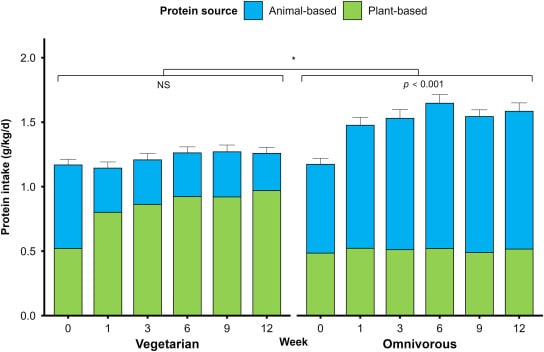
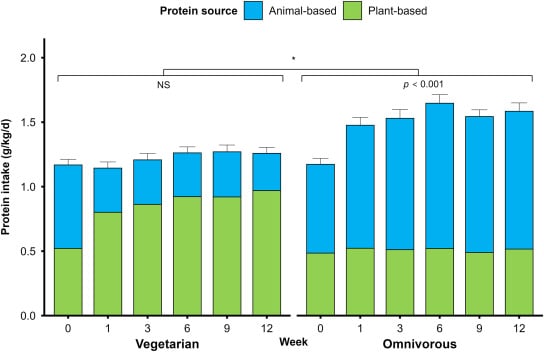
Each participant received advice on healthy diets and how to consume at least 1.2 grams of protein per kilogram of body weight each day.
On average, both groups managed to meet their daily protein goals – even vegetarians, who could eat no meat or fish, but only dairy, eggs or plant-based proteins.
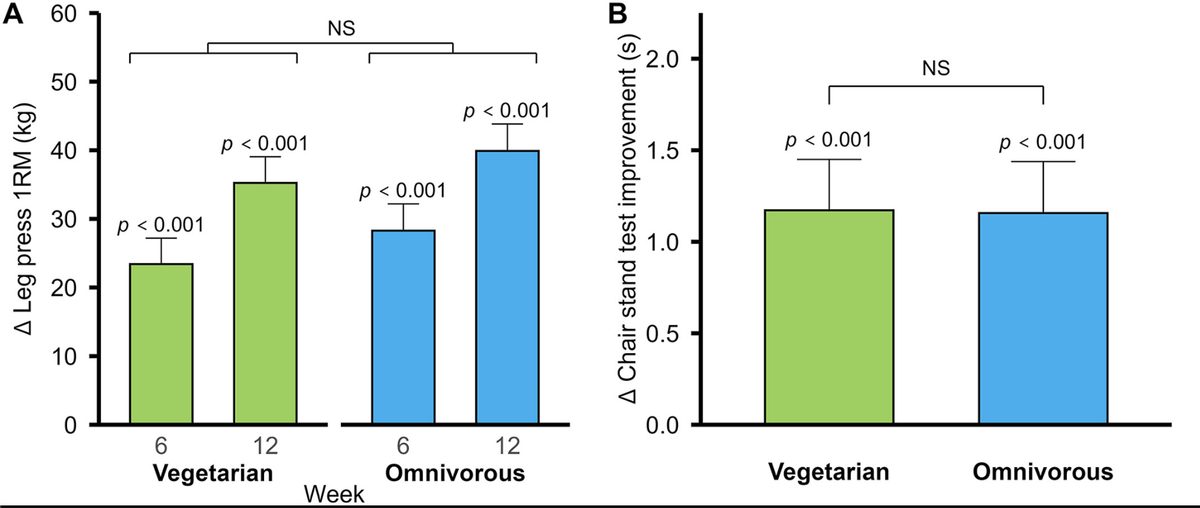
At the end of the trial, muscle strength and physical performance improved in both groups, with no significant difference between vegetarians and meat eaters.
On leg presses, participants could lift more weight, and on chair stands, they stood up faster than at the start of the trial.
But there was a key difference between the groups.
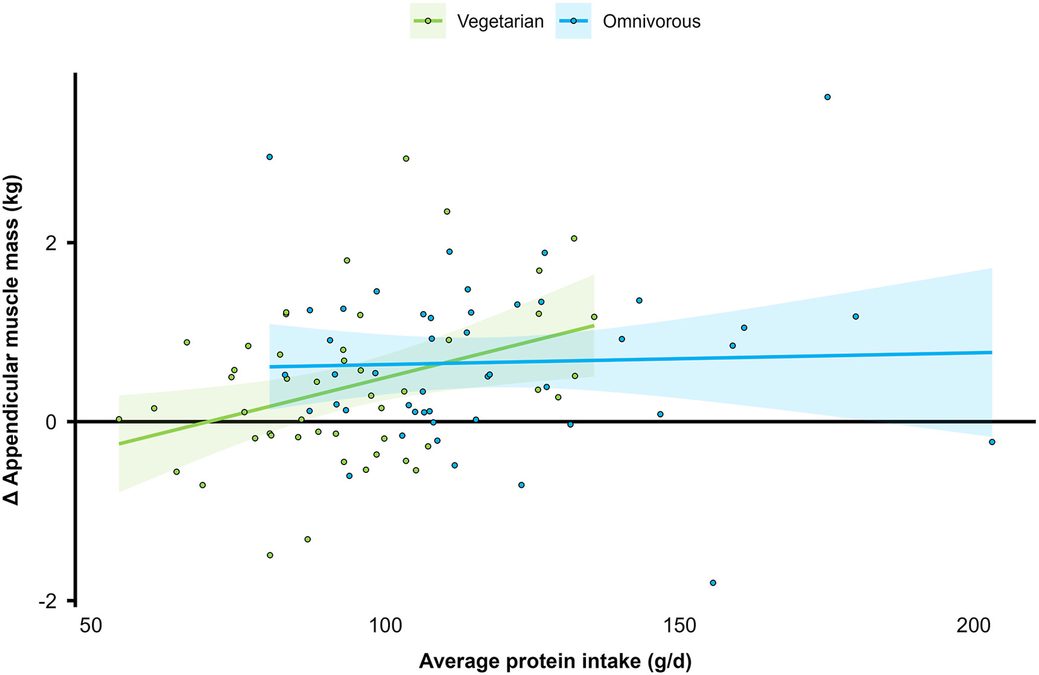
Leg and arm muscle mass increased in vegetarians and omnivores during the trial, but omnivores showed about 70% more gains (+0.66 kg, compared to +0.38 kg for vegetarians).
It is unclear whether this is due to lower protein intake among vegetarians or to the quality of dietary protein provided by meat and other animal foods.
Interestingly, the study found that vegetarians who ate more protein tended to gain more muscle, unlike meat eaters who ate more protein.
“The omnivore group likely reached a saturating protein threshold where additional intake provided no additional anabolic benefit,” the authors hypothesize.
Nutrition is a highly complex area of research subject to lifestyle, behavioral, genetic, social, and environmental factors too numerous to count.
This particular cohort of older adults was predominantly white, healthy, and highly educated. It is unclear whether these results are relevant to others.
Yet the findings dovetail with other recent studies suggesting that vegetarian diets, as long as they provide enough calories and essential nutrients, may be associated with lives as long and healthy as those of meat eaters.
Research like this reminds us that it’s important to eat enough protein in old age, especially for vegetarians.
“The suitability of a more plant-based diet may depend on individual context,” the authors of the new study conclude.
“For people with low appetite or low energy intake, there is likely a need to focus more on meeting protein goals and protein quality to maintain muscle mass, which is especially important for older adults.”
The research was published in the American Journal of Clinical Nutrition.
This article was fact-checked by Rebecca Dyer and edited by Rebecca Dyer. Although we are proud of our process, we are only human. If you spot an error, please let us know.
Gn Health