A phenomenon: initial applications for unemployment benefits (4-week average) fall to lowest level since 1969

Despite sluggish growth in private sector payrolls and significant staff reductions in federal and state governments, a declining workforce due to crackdowns on illegal immigration.
By Wolf Richter for WOLF STREET.
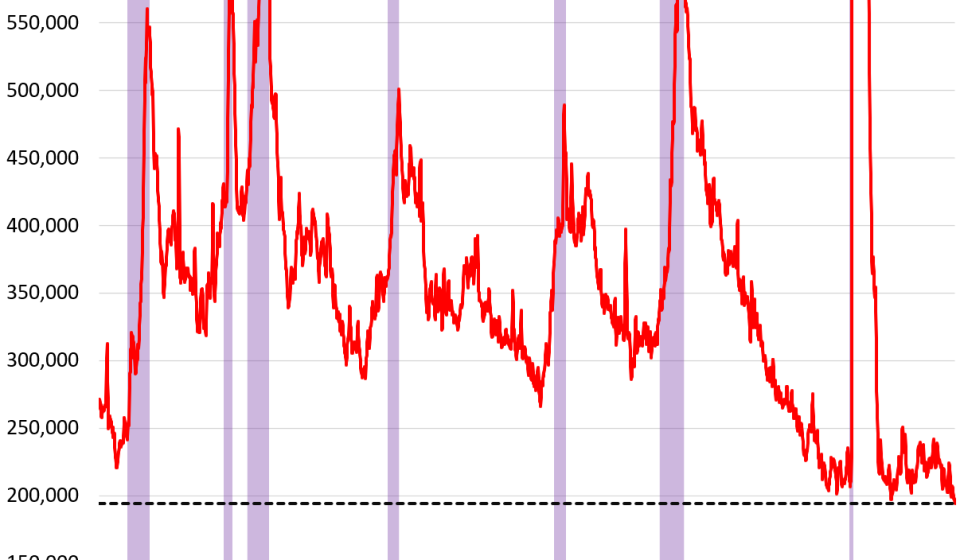
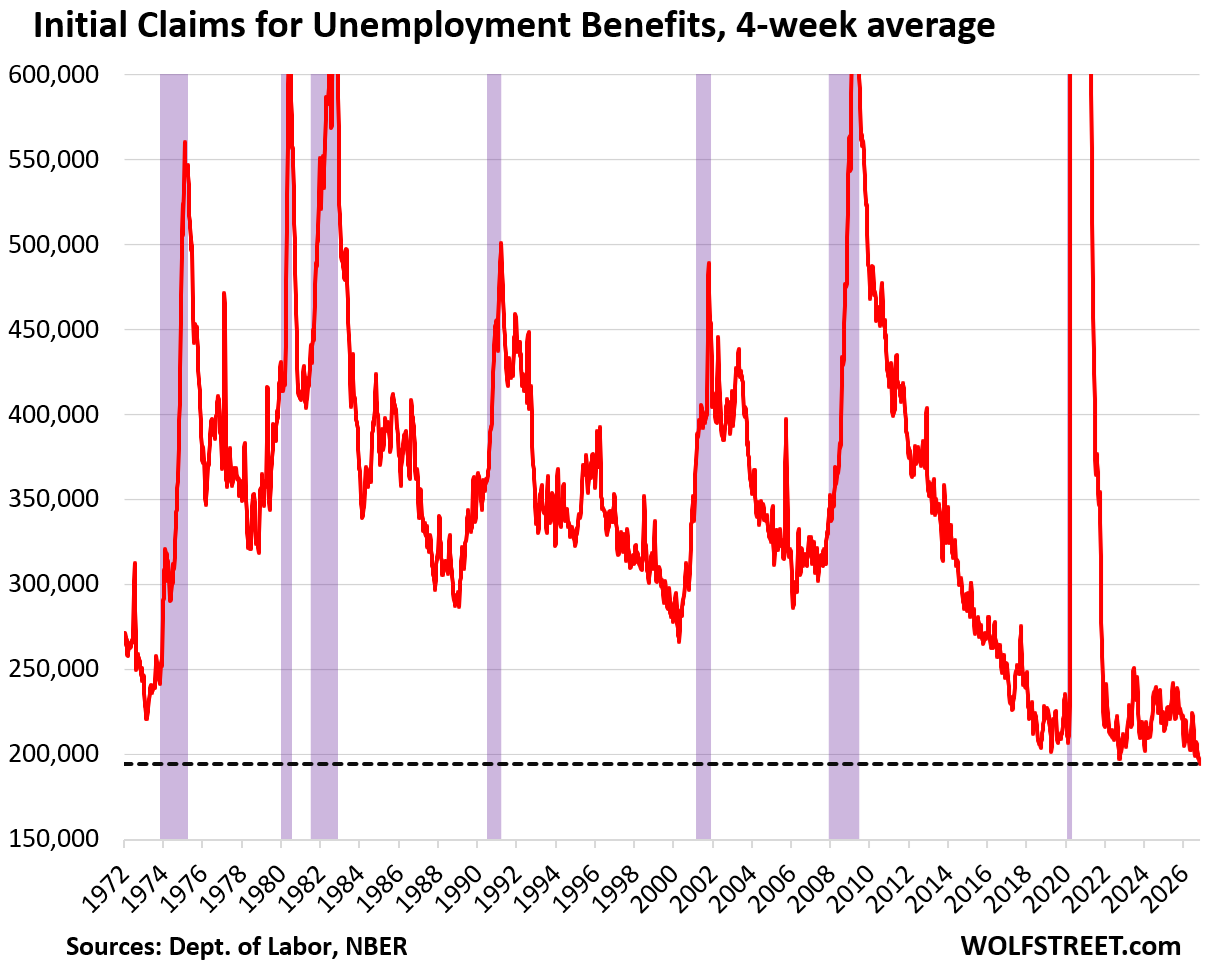
The four-week average of initial claims for unemployment insurance benefits fell to 194,700, the lowest since 1969, the Labor Department said today. For the week through Saturday alone, initial claims for unemployment benefits fell to 189,000, the same as in mid-July, and both cases were the lowest since 1969.
But the population, labor force and employment are much greater today than in the 1960s. So these early demands, historically low in absolute terms, are surprisingly low in relative terms.
The four-week average smooths out the weekly volatility caused by some states missing the reporting deadline, with those weekly claims then falling into the following week. The purple columns show recessions and what happens to initial claims for unemployment benefits before and during recessions.
There were waves of layoffs in some companies through the left door, while they were hiring through the right door – big tech has been doing this since 2022. Overall, private sector companies have been growing their workforces at a sluggish pace, with some sectors experiencing labor shortages and hiring booms, and other sectors (like mortgage lending in 2022 and 2023 and some tech sectors) seeing pay cuts substantial. Where are the jobs? Winners and losers by industry.
Additionally, the federal government has laid off 328,000 workers since January 2025, and state governments (primarily higher education) have laid off 53,000 workers since January 2025.
Terminated employees who receive severance benefits, such as having their salary continued for x number of months, cannot apply for unemployment benefits since they are still being paid by their former employer. Many of them find a new job during the period of layoff, receive severance pay as well as the salary from the new job, and are therefore not eligible for unemployment benefits and are not on the unemployment lists.
But people who were unable to find a new job during the severance period can apply for unemployment benefits when the severance expires. Their initial claims for unemployment benefits appear here in the data.
Dismissed H-1B visa holders are generally not eligible to apply for unemployment insurance benefits and do not appear in the data here.
What we see here is that the crackdown on illegal immigration and abuse of legal immigration rules has changed the labor market by reducing labor supply over the past 18 months, and confirms what the separate monthly jobs report data also showed from a different perspective.
This decline in the labor force has kept the labor market relatively tight.
NormallyThis combination of significant federal and state job losses and sluggish private sector payroll increases, amid a normally growing workforce, would have led to increased unemployment insurance claims and, by extension, higher unemployment rates (data in the jobs report, next tomorrow).
The fact that this did not happen shows the impact of the crackdown on illegal immigration, which has led to a decline in the labor force this year.

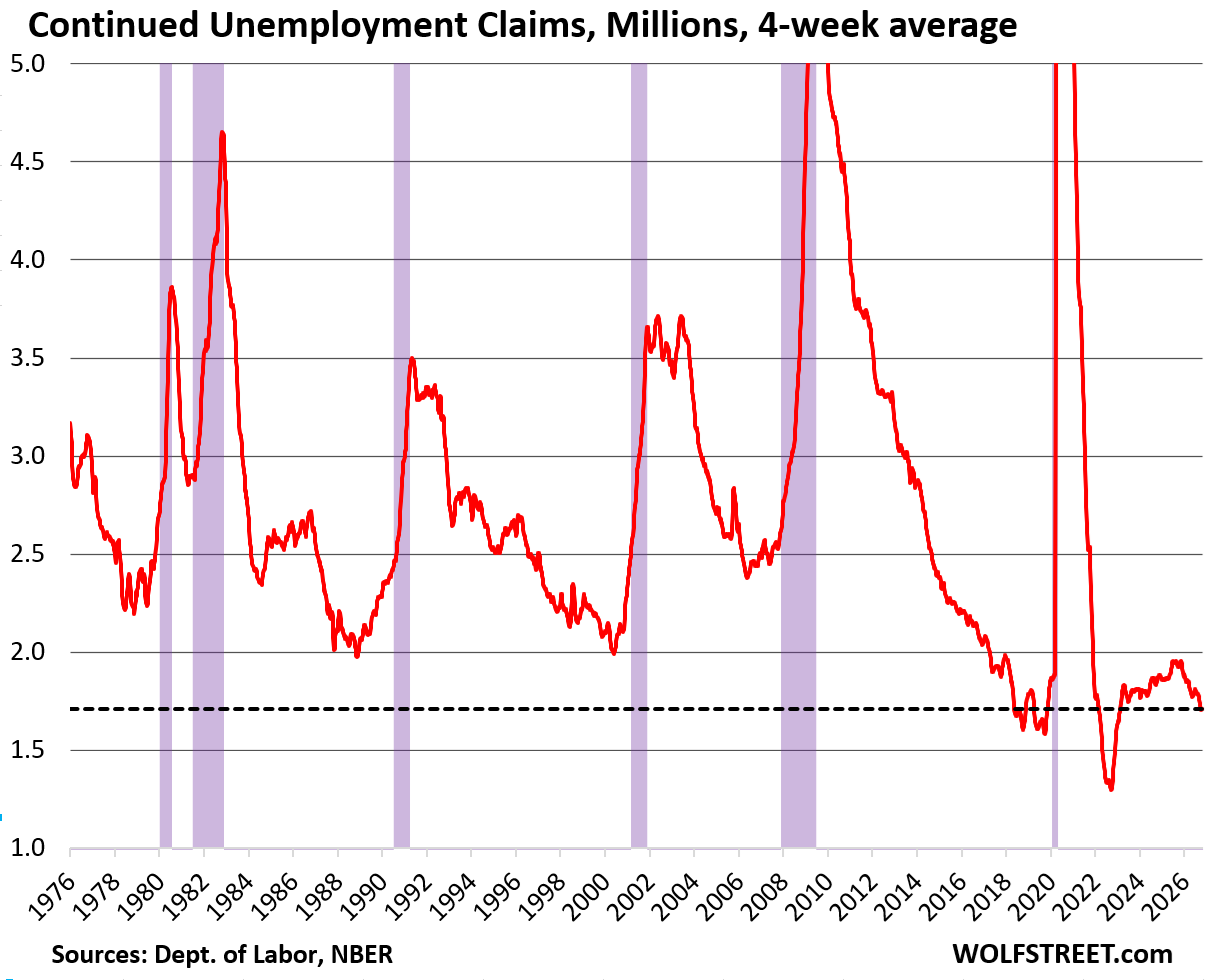
Continuing weekly complaints for unemployment insurance benefits reflect the total number of people who had initially applied for unemployment insurance at least a week earlier and who still have not found a job and are still claiming unemployment benefits.
Continuing claims totaled 1.72 million in the most recent reporting week, with a four-week average at 1.71 million. The only periods since the 1960s when continuing demands were lower were a few weeks in 2018-19 and during post-Covid labor shortages.
With initial claims being very low – that is to say the influx into continuing complaints is very low – increasing or decreasing continuing complaints suggest the overall time it takes for laid-off people to find a new job after applying for unemployment insurance.
When it takes them longer overall to find a new job and they spend more time paying into unemployment insurance, these continuing claims increase, and they have done so because of labor shortages – but have remained historically low.
Over the past 12 months, the trend has reversed, with people spending less time unemployed before finding new work, and the number of continuing claims has fallen since the end of 2025.
The purple columns indicate recessions and what happens before and during them:
Do you like reading WOLF STREET and want to support it? You can make a donation. I appreciate it immensely. Click on the mug to find out how:


Gn bussni