People with prediabetes have higher than normal blood sugar levels, but a simple change in diet could help.
In a recent clinical trial, when refined white bread was replaced with a whole wheat option, researchers noticed a significant change among participants.
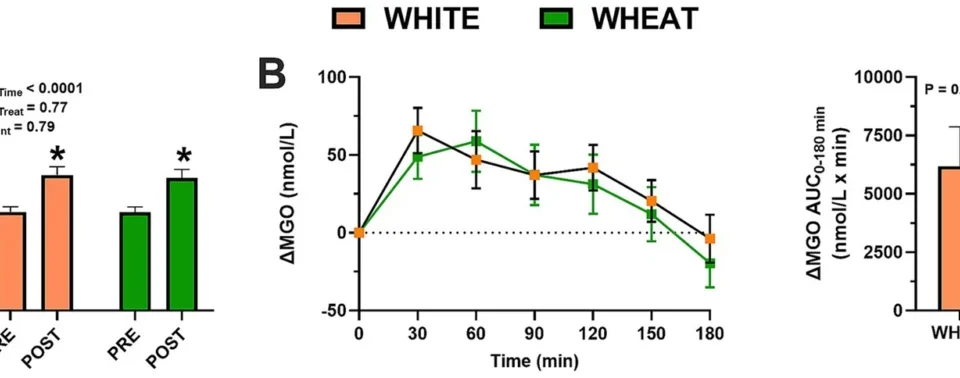
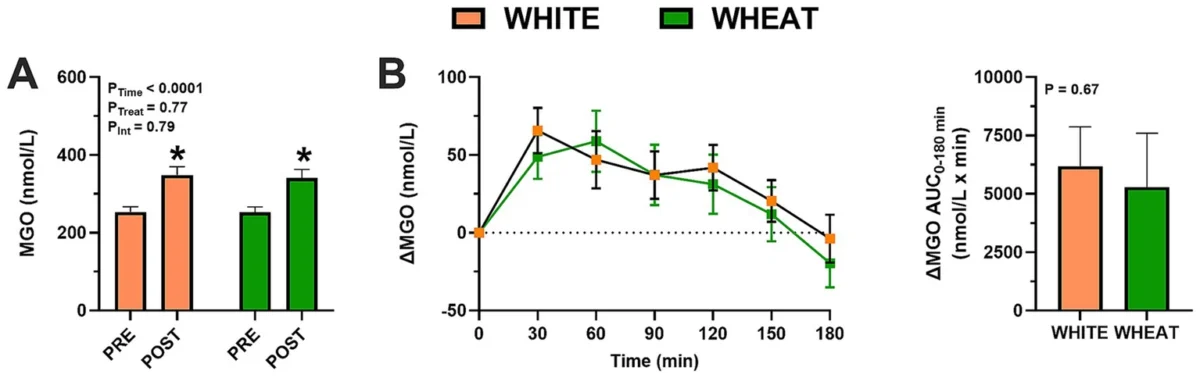
On average, blood sugar peaks were 27% lower.
Some participants included in the trial saw big improvements from this diet change alone, while others saw only slight improvements.
But the overall effect remained significant even when researchers took into account differences in body weight, inflammation, insulin concentration, cellular stress, or the presence of short-chain fatty acids in the gut.
The results, published in Nutrition Frontierssupport the idea that prediabetes can be treated with healthy dietary changes.
“Food is really medicine in many ways,” says co-senior author Jiangjiang (Chris) Zhu, professor of human nutrition at Ohio State University.
He and his colleagues are interested in how certain diets affect the gut microbiome and whether this impacts blood sugar control.
“We still need to get as much information as possible to generate more powerful and accurate predictive machines that can really tell you what to eat, what not to eat, which food is good for you, which is not,” says Zhu.
Based on their exploratory results, he and his colleagues at Ohio State suspect that some people are “super-responders” to whole-wheat bread.
“And we think part of this difference is the unique signatures of microbes in the gut and the distinct metabolites they generate,” says co-senior author and nutritionist Richard Bruno.
In the randomized, controlled crossover trial, 39 adults with prediabetes followed a fully controlled diet that differed in only one aspect.
For two weeks, participants ate whole wheat bread or refined white bread. Then, after a two-week break, they ate the other type of bread for another two weeks.
Fasting blood and stool samples were collected before and after the interventions, and participants also underwent glucose tolerance tests after each phase of the trial.
Whole wheat consumption did not significantly alter the overall diversity of the gut microbiome; however, certain types of gut microbes capable of breaking down complex carbohydrates were enriched.
These coordinated changes suggest that the gut is responding to the fiber in whole wheat bread.
Although these results are preliminary, these trends may go some way to explaining which individuals are “super-responders” to whole wheat.
“Collectively,” the authors conclude, “these results demonstrate that whole wheat improves postprandial glucose tolerance while exhibiting microbiome-associated variation in response, which is consistent with the role of gut microbial traits in precision nutrition.” »
“Precision nutrition” is an emerging field that aims to optimize dietary advice by taking into account the individual’s health, demographic, nutritional and psychosocial factors.
But nutrition research is notoriously difficult.
Foods contain thousands of compounds and are rarely eaten in isolation. Instead, they are mixed, cooked, processed, dried and prepared in endless ways.
Then you have to consider the person. Each of us has a unique gut microbiome, which can change over time and, as a result, we all respond differently to foods at different times in our lives.
Clinical trials that attempt to rigorously test the health benefits of foods often struggle to blind participants to what they’re eating, because flavor and appearance can be unhelpful tell-alls.
Additionally, it is difficult to take into account all the lifestyle factors that can influence health outcomes and confound results.
The recent trial at Ohio State was also not blinded, but the focus on the gut microbiome could help explain why previous studies of whole wheat substitutes have had mixed results when it comes to glucose tolerance.
Perhaps some people are more sensitive to whole wheat than others.
The glycemic improvements observed in the Ohio State clinical trial were not related to metabolic changes or inflammatory changes. Researchers therefore suspect that intestinal microbes play a role.
Participants with greater abundance of Lachnoclostridium At the start of the trial, the microbes were more likely to suffer from lower glucose tolerance when eating white bread, but they showed improved responses when eating whole wheat bread.
“Lachnoclostridium is frequently associated with a more pro-inflammatory state, such as that due to a less healthy diet,” explains first author Jillian Pierson, a graduate fellow in Bruno’s lab.
“And there are other studies showing that it is sensitive to diet, so improving certain parameters of the diet has helped decrease this bug.”
This is an exciting finding that could lead to more personalized dietary recommendations for people with prediabetes, but because these results are only exploratory, they will need to be confirmed in larger, longer trials.
For now, we have general recommendations.
“These results support whole wheat as an effective dietary strategy for improving postprandial glycemic control in individuals at high risk of type 2 diabetes,” the study authors conclude.
The research was published in Nutrition Frontiers.
This article was fact-checked by Peter Dockrill and edited by Peter Dockrill. Although we are proud of our process, we are only human. If you spot an error, please let us know.
Gn Health