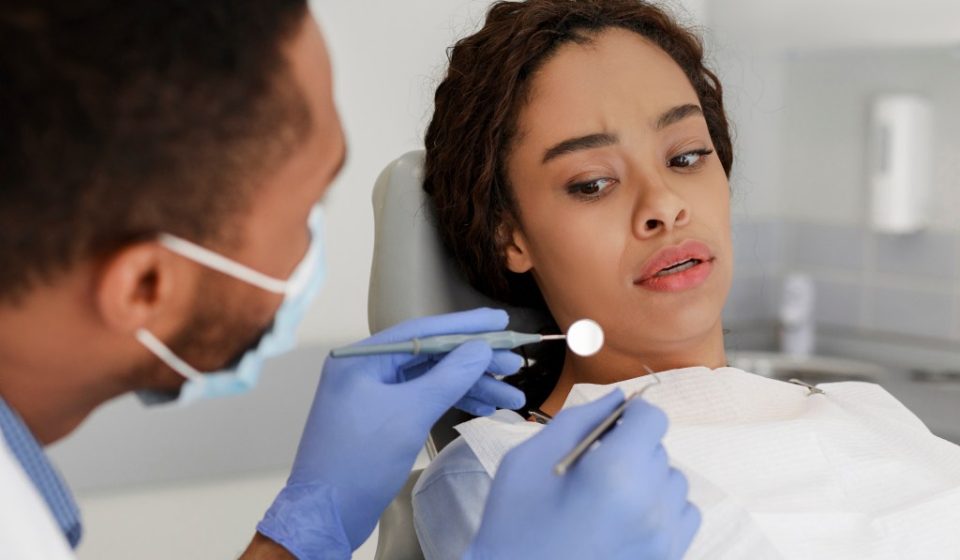

A perfect plaque solution for those who fear the dentist?
Cavities are a nightmare for patients and dentists, with 1 in 5 adults and 1 in 10 children suffering from untreated tooth decay.
The good news is that an innovative treatment could not only replace the dental drill, but also save those who brush their teeth from scheduling their next checkup.

Silver diamine fluoride has been widely used in Japan, China, Australia and other countries to treat cavities without drilling, injection or anesthesia.
This simple, inexpensive liquid treatment was not approved by the FDA for cavities in the United States because there was not enough large-scale clinical evidence demonstrating that it is safe and effective – until now.
In a new trial, researchers at the University of Michigan applied a 38% SDF solution to the teeth of more than 800 children younger than 6 years old.
The application, which took just seconds per tooth, stopped decay in more than half of the children’s baby teeth when done every six months.
Although SDF does not replace any tooth structure that may have been lost to decay, it is designed to prevent existing decay from getting worse.
The combination of silver and fluoride works to fight bacteria that causes tooth decay and strengthen the existing mineral structure to resist future damage.
There could be a major cosmetic drawback, however, because the liquid leaves a permanent stain on the decayed part of the tooth.

This matters less in children, whose affected baby teeth will fall out.
Adults, on the other hand, could use SDF to manage decay for a longer period of time or as a temporary solution before a filling.
SDF can also help people with disabilities, patients with severe dental anxiety, and others who cannot tolerate or access conventional dental treatment.
“If we want more children and families to benefit from this treatment, we need rigorous evidence showing both that it works and that it is safe,” Margherita Fontana, the study’s principal investigator and professor of dentistry at the University of Michigan School of Dentistry, said in a press release.
SDF was approved in the United States in 2014 for tooth sensitivity, with dentists using it off-label as a treatment for cavities.
The results of the Michigan clinical study provide evidence that could pave the way for FDA approval for use in cavities, an important regulatory change, according to researchers.
“Removing SDF from off-label status would be an important innovation that could lead to increased use by providers, improved payments by insurers, and more consistent product quality,” said co-principal investigator Dr. Amr Moursi.
The new treatment may not work for all cavities and will not prevent all future dental work.
However, the procedure which takes only seconds can provide immediate relief compared to surgery or prolonged discomfort and pain.
Gn Health