
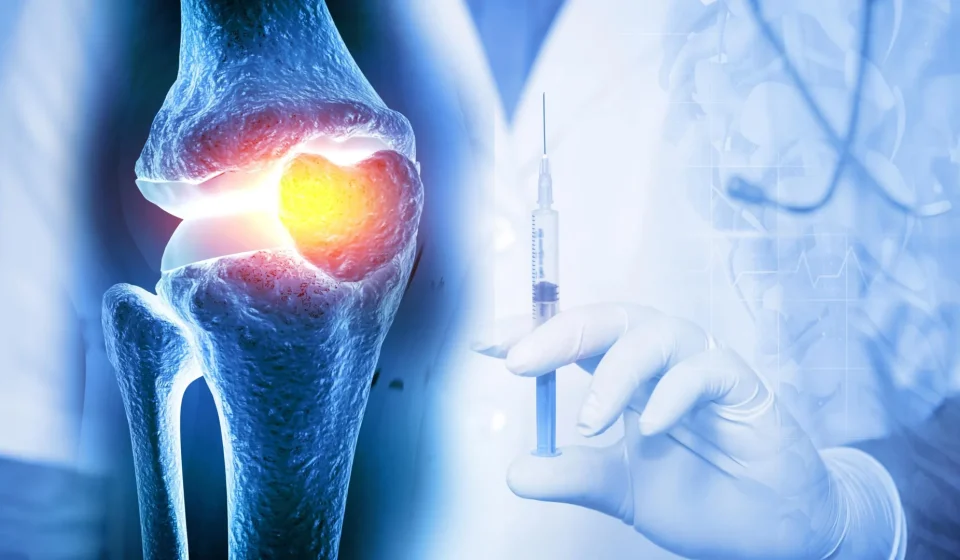
Researchers at the University at Buffalo have developed an injectable gel that could keep osteoarthritis medications inside damaged joints for weeks after a single injection. The technology offers two potential benefits: restoring joint lubrication and delivering medications designed to target the biological processes causing disease.
Osteoarthritis (OA) is a leading cause of chronic pain and disability worldwide. This disease involves the progressive deterioration of cartilage and other joint tissues, often leading to pain, stiffness and reduced mobility. Although existing treatments can help manage these symptoms, they usually do little to slow the progression of the disease.
Current treatments delivered directly into the joints include painkillers, corticosteroids, and viscosupplements, which are substances designed to improve joint lubrication. However, their benefits are usually temporary.
One of the main obstacles to developing more effective treatments is that many drugs are quickly eliminated from synovial fluid, the natural lubricating fluid found inside joints. Other potentially useful drugs dissolve poorly in water, making it difficult to achieve therapeutic concentrations in the joint while limiting exposure elsewhere in the body.
An injectable gel that delivers medication for weeks
University at Buffalo technology aims to overcome these challenges by using a hydrogel, a network of polymers capable of retaining large amounts of water.
Initially, the formulation is a liquid that can be administered through a single, minimally invasive injection. Once exposed to body temperature, it quickly transforms into a slippery semi-solid gel that acts as a drug reservoir inside the joint.
The biocompatible gel contains tiny drug carriers called nanocarriers, designed to hold significant quantities of drugs that would otherwise be difficult to dissolve in water. The platform incorporates materials with a history of regulatory acceptance, which could help facilitate its eventual development for clinical use.
Rather than releasing its entire drug supply at once, the gel gradually delivers therapeutic compounds over several weeks. Drugs move through the polymer network by diffusion and are also released as the internal structure of the gel gradually relaxes. Together, these mechanisms allow controlled and prolonged drug exposure within the joint.
Keeping medications inside the joint for longer periods could reduce the need for repeated injections while minimizing the risk of side effects caused by medications circulating throughout the body.
Targeting osteoarthritis beyond pain relief
One of the most promising features of this technology is its ability to treat osteoarthritis through two complementary mechanisms.
In addition to serving as a drug delivery system, the gel acts as a viscosupplement, potentially improving lubrication of damaged joints. At the same time, it may provide compounds to target some of the biological processes that cause osteoarthritis, including chronic inflammation and cellular senescence.
Cellular senescence occurs when cells stop dividing but remain alive and metabolically active. These cells can accumulate in tissues with age and release inflammatory substances that contribute to tissue deterioration and disease.
The researchers validated the drug delivery platform using a compound that activates SIRT6, a protein involved in the regulation of inflammation, cellular aging, DNA repair and metabolism.
However, the technology is not limited to a single drug. Its ability to carry relatively large quantities of poorly soluble drugs in a water-based formulation makes it adaptable to other compounds intended to slow or modify the progression of osteoarthritis.
Potential applications beyond knee osteoarthritis
Knee osteoarthritis is the main anticipated application of this technology, representing a significant potential market. However, the platform could also be adapted to treat other conditions involving joint and tissue degeneration.
These include osteoarthritis that develops following an injury, degeneration of the cushioning discs between the spinal vertebrae, and deterioration of the rotator cuff, a group of muscles and tendons that help stabilize and move the shoulder.
The gel could also serve more broadly as a localized delivery system for experimental drugs that don’t dissolve easily in water.
The technology is currently at Technology Readiness Level 3 to 4, indicating that it is still in the early stages of development, involving experimental proof of concept and laboratory validation. Further research will be needed to establish its safety and effectiveness in patients, including whether it can slow the progression of the disease or provide lasting relief of symptoms.
The technology is patent pending and is available for licensing and collaborative development.
Gn Health