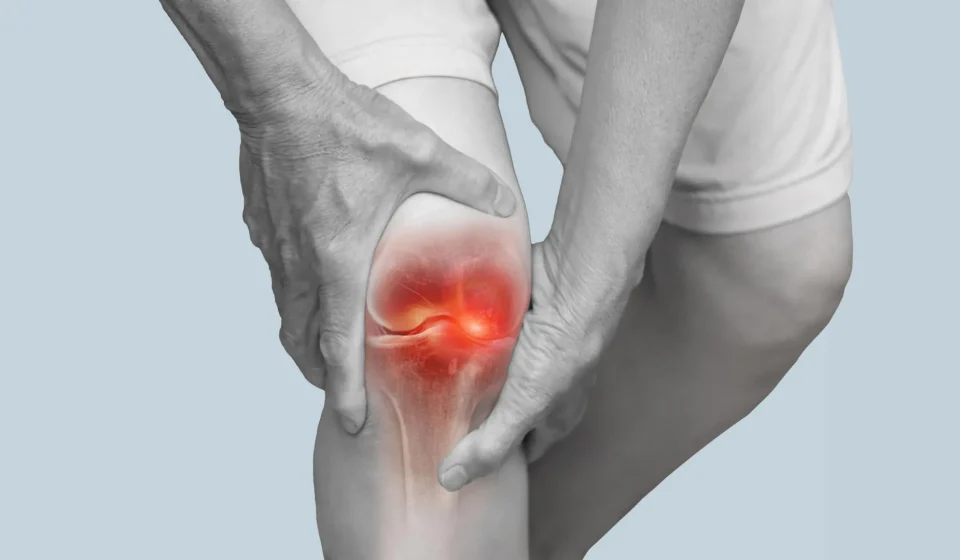

What if relieving arthritic knee pain didn’t require another pill, injection, or surgery, but simply a change in the way you walk?
A clinical trial published in The Lancet Rheumatology suggests that a small, carefully chosen adjustment to the angle of your feet could make a significant difference. After one year, participants who learned to walk with a personalized foot position reported significantly less knee pain than those receiving a placebo treatment. They also showed encouraging signs of slower deterioration of their knee cartilage.
The pain relief was comparable in magnitude to the benefits reported for some commonly used medications. More importantly, this approach could help address a problem that painkillers can’t: excessive pressure on knee joints that contributes to the progression of osteoarthritis.
A Simple Change of Gait Could Help Fight Knee Arthritis
Osteoarthritis affects approximately 22% of adults over the age of 40 and is a leading cause of disability. The disease gradually damages cartilage, the smooth, protective tissue that cushions the ends of bones and allows joints to move with minimal friction.
As cartilage deteriorates, daily activities such as walking, climbing stairs, and getting up from a chair can become increasingly painful. Although exercise, physical therapy, weight management, and medications can help manage symptoms, there are currently no established treatments that can reliably restore cartilage lost to osteoarthritis. People with advanced disease may eventually need joint replacement.
Researchers from the University of Utah, New York University and Stanford University studied a different strategy called gait retraining. Rather than focusing solely on pain relief, this approach modifies the mechanics of walking to reduce pressure on vulnerable parts of the knee.
The results, published in August 2025, come from the first randomized, placebo-controlled clinical trial aimed at demonstrating the effectiveness of personalized gait rehabilitation for knee osteoarthritis over a full year.
The research was co-led by Scott Uhlrich, assistant professor of mechanical engineering at the University of Utah’s John and Marcia Price College of Engineering, with collaborators from Stanford and New York University. The work received support from federal research agencies, with the U.S. Department of Veterans Affairs serving as the funder of the trial.
“We know that in people with osteoarthritis, higher loads on the knee accelerate progression and that changing the angle of the foot can reduce the load on the knee,” said Uhlrich, assistant professor of mechanical engineering. “The idea of a biomechanical intervention is therefore not new, but no randomized placebo-controlled study has shown its effectiveness.”
Why the angle of your feet matters
The secret lies in how the weight of the body shifts onto the knee with each step.
The knee has an inner section, called the medial compartment, and an outer section, called the lateral compartment. During normal walking, the inner section generally carries more of the load. This helps explain why osteoarthritis affecting the inside of the knee is particularly common.
For people with this type of arthritis, repeatedly putting excessive pressure on the already damaged area can accelerate deterioration.
Changing the direction your toes point while walking can redistribute some of this pressure. Turning the toes slightly in or out changes the forces acting on the knee, potentially reducing stress on the affected cartilage.
There is, however, one important problem: the same adjustment doesn’t work for everyone.
Some people benefit from turning their toes inward, while others respond better when their toes point more outward. Improper adjustment might not help or even increase pressure on the damaged seal.
“Previous trials prescribed the same intervention to all individuals, resulting in some individuals not reducing or even increasing joint loading,” Uhlrich said. “We used a personalized approach to select each individual’s new walking pattern, which improved the individuals’ ability to unload their knee and likely contributed to the positive effect we saw on pain and cartilage.”
How scientists found the right walking pattern
The researchers focused on people with mild to moderate osteoarthritis affecting the inner part of the knee.
During their first two lab visits, participants underwent MRI scans and walked on a specialized treadmill equipped with sensors measuring the forces generated with each step. Motion capture cameras recorded their movements in detail, allowing researchers to analyze the impact of different walking styles on the knee.
Participants tested small changes in their foot position, turning their toes in or out 5° or 10°.
The scientists then identified which adjustment most effectively reduced pressure on the affected knee for each person.
Not everyone is qualified. Some potential participants were excluded because none of the adjustments tested were successful in reducing the load on their knees. The inclusion of these individuals in previous studies may help explain why previous attempts at gait rehabilitation have produced inconsistent results.
After initial assessments, 68 participants were randomly divided into two groups of 34.
One group received personalized instructions designed to minimize stress on the inside of the knee. The other received sham treatment, meaning he went through the same training process but was asked to maintain the natural angle of his foot.
This comparison allowed researchers to separate the benefits of a change in walking mechanics from improvements caused by expectations, researcher attention, or participation in a structured walking program.
Just six weeks of training changed the way they walk
Both groups completed six weekly training sessions.
During these visits, participants walked on a treadmill while wearing a small device on their shin. The device provided biofeedback, delivering gentle vibrations every time their foot moved out of the prescribed angle.
Biofeedback is a technique that uses immediate cues to help people gradually recognize and control movements they normally make without thinking.
Over time, participants learned to maintain their assigned foot position without needing constant reminders.
After completing the six weeks of supervised training, they were encouraged to practice their walking technique for at least 20 minutes each day until it became a natural habit.
Follow-up assessments indicated that participants were remarkably consistent. On average, they maintained their prescribed foot angle to within about one degree.
This consistency is important because the potential benefits depend on continuing the modified gait pattern during ordinary daily activities, not just during laboratory sessions.
Arthritic pain improved and cartilage showed less damage
A year after starting the program, participants returned for another MRI and reported the intensity of their knee pain.
Results showed a significant benefit for those who received personalized gait rehabilitation.
On a pain scale of zero to 10, participants in the intervention group reported an average improvement of 2.5 points, compared to 1.3 points in the sham group.
In an exploratory analysis, approximately 91% of participants receiving personalized rehabilitation experienced a clinically meaningful reduction in pain, compared to 66% in the comparison group.
The researchers also found that the intervention reduced a mechanical measure associated with pressure on the inside of the knee, confirming that the modified walking pattern had effects beyond participants’ perception of pain.
“The reported decrease in pain compared to the placebo group was somewhere between what is expected from an over-the-counter medication, like ibuprofen, and a narcotic, like OxyContin,” Uhlrich said. “With the MRIs, we also saw slower degradation of a marker of cartilage health in the intervention group, which was very exciting.”
MRI findings can be particularly important.
The researchers used advanced imaging techniques that can detect subtle changes in cartilage composition before major structural damage becomes visible on conventional scanners.
One measurement, known as T1rho, suggested that the cartilage on the inside of the knee deteriorated more slowly in participants who changed their walking pace. A second MRI measurement showed no significant difference between the groups.
These results do not establish that damaged cartilage has been reconstructed or that the progression of arthritis can be permanently stopped. However, they raise the possibility that reducing mechanical stress may help preserve cartilage health over time.
The treatment also appears to be generally well tolerated. No serious adverse events were reported, although two participants in the intervention group and one in the sham group withdrew due to increased knee pain.
More recent research adds to the evidence
Research published since the 2025 trial has provided insight into how gait modifications could help people with knee osteoarthritis.
In a separate randomized trial published in Clinical biomechanics In April 2026, researchers from the University of Bath studied different types of biofeedback training in 50 people with knee osteoarthritis.
Participants completed a six-week program using different feedback strategies intended to improve gait mechanics.
All three groups, including the control group, saw improvements in activity-related knee pain and physical function. However, only the group receiving feedback on their walking pace achieved a lasting reduction in a key measure of knee loading.
This group’s knee load measurement fell by 7.6%, with improvement maintained at a follow-up assessment one month later.
Interestingly, investigators detected no significant change in foot angle in any of the…
Gn Health