Skip to content
-
Subscribe to our newsletter & never miss our best posts. Subscribe Now!
Today's News. Tomorrow's Perspective. Today's News. Tomorrow's Perspective.

Deliver fast, factual, and easy-to-understand news covering global events, technology, business, science, AI, health, entertainment, and lifestyle.

Today's News. Tomorrow's Perspective. Today's News. Tomorrow's Perspective.

Deliver fast, factual, and easy-to-understand news covering global events, technology, business, science, AI, health, entertainment, and lifestyle.

  • Home
  • Breaking News
  • Business
  • Sports
  • Health
  • Politics
  • Technology & AI
  • World
  • Home
  • Breaking News
  • Business
  • Sports
  • Health
  • Politics
  • Technology & AI
  • World
Close

Search

  • https://www.facebook.com/
  • https://twitter.com/
  • https://t.me/
  • https://www.instagram.com/
  • https://youtube.com/
Subscribe
AI bubble risks worst S&P 500 crash since 2008, strategist says
Business

AI bubble risks worst S&P 500 crash since 2008, strategist says

By adminvoxa
October 8, 2026 3 Min Read
Comments Off on AI bubble risks worst S&P 500 crash since 2008, strategist says

(Bloomberg) — The head of market strategy at a London investment bank is issuing a stark warning to investors that the artificial intelligence business may soon be over, potentially triggering the most serious stock market crash since the global financial crisis.

Most read on Bloomberg

Stocks have hit record highs around the world this year, fueled in part by optimism over rising spending on AI infrastructure. But Panmure Liberum’s Joachim Klement said his base case scenario is that this trade disintegrates as early as 2027, which would lead to a sharp decline in stocks.

“My fundamental belief is that the AI ​​bubble is going to burst either in 2027 or 2028, so in the next two years,” Klement said in an interview. Hyperscalers’ free cash flow is largely depleted, while the cost of debt is rapidly increasing and becoming prohibitive for these companies, he said.

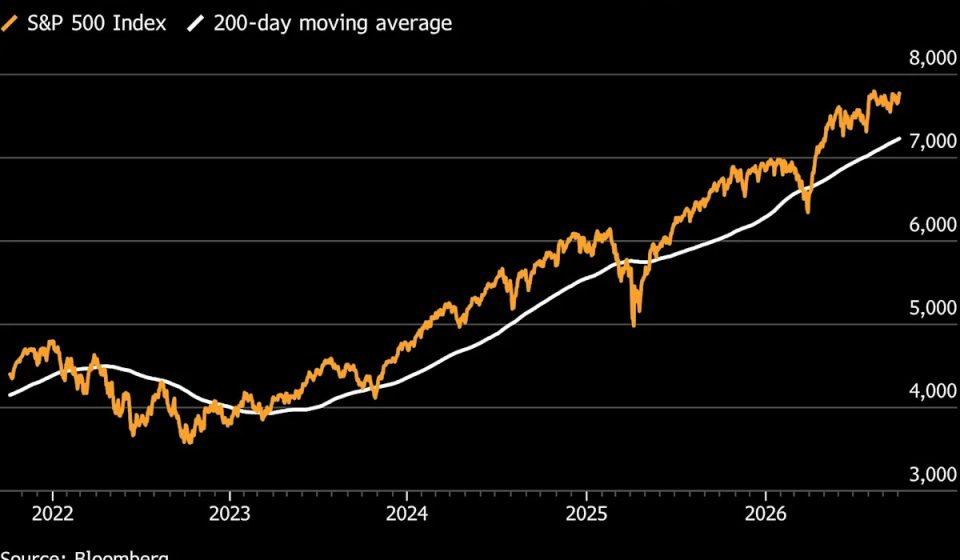
Klement’s 2027 year-end target of 5,000 points for the S&P 500 implies a 36% decline from current levels. He’s by far the most pessimistic of the seven other strategists tracked by Bloomberg, who on average are looking for 14% upside potential. Klement predicts that the European Stoxx 600 will fall to 430 points, more than 30% below current levels.

The strategist, who began his career at UBS Group SA more than twenty years ago, is one of the first to put an end to the current upward trend in the stock market. As recently as mid-September, his primary assumption was that the S&P 500 would hit 8,300 by the end of next year.

His change of heart reflects fears that stubborn inflation and an associated rise in the cost of borrowing needed to finance investments could derail the AI ​​infrastructure bonanza.

This echoes the warning issued this week by Rohit Sipahimalani, chief investment officer of Temasek International, that a reversal in the AI ​​business is a major risk facing global markets.

Hyperscalers’ capital spending in data centers could more than double from last year’s level in 2026 to $713 billion, according to Bloomberg Intelligence estimates. This figure is expected to rise further next year, albeit at a slower pace, and has underpinned many projections regarding the projected profits of US technology companies.

“It’s a situation where people are focused on one thing and one thing only, and that is profits, and particularly technological profits,” Klement said. “And they excuse every macro, credit or other headwind you can invent with this story.”

Citigroup Inc. strategists said this week that strong 2027 earnings could support further gains for global stocks, despite rising interest rates and geopolitical risk.

Klement acknowledges his bearish call may be premature and he remains the most bullish among the strategists tracked by Bloomberg for the Stoxx 600 through the end of 2026, forecasting gains of around 10% for the regional benchmark.

“I’m starting to worry people today about something that I think could happen in six to nine months,” he said.

Rather than advising clients to sell now, the strategist advises them to develop contingency plans and timing tools that would help identify the onset of a crash.

His number one recommendation is to “go completely defensive” once the S&P 500 falls below the benchmark’s 200-day moving average, a technical indicator that averages the index’s closing price to help identify long-term market trends. In such a case, he advocates ultra-defensive sectors, notably food, tobacco and pharmaceutical stocks.

“What I tell people is it’s time to prepare,” Klement said. “Now is the time to make contingency plans in case you enter a bear market.”

Most read from Bloomberg Businessweek

©2026 Bloomberg LP

Gn bussni

Post Views: 4
Author

adminvoxa

Follow Me
Other Articles
What happened to Dilan Ashar? UMD student found “disoriented” after 6 days in the woods
Previous

What happened to Dilan Ashar? UMD student found “disoriented” after 6 days in the woods

Witcher 3 Remastered patch rolling out to PC and console, with separate Switch 2 patch aimed at fixing blurry visuals
Next

Witcher 3 Remastered patch rolling out to PC and console, with separate Switch 2 patch aimed at fixing blurry visuals

Deliver fast, factual, and easy-to-understand news covering global events, technology, business, science, AI, health, entertainment, and lifestyle.
  • About Us
  • Accessibility Statement
  • Advertise With Us
  • AI Usage & Transparency Policy
  • Contact us
  • Cookie Policy
  • Corrections Policy
  • Meet Our Team
  • Privacy Policy
    • Disclaimer
    • DMCA & Copyright Policy
    • Editorial Policy
    • Ethics Policy
    • Fact-Checking Policy
  • Terms and Conditions
Copyright 2026 — Today's News. Tomorrow's Perspective.. All rights reserved.