

Engineers typically design wireless chips using familiar designs and models, refining them through careful simulations and testing. But a series of studies propose a different approach: a design process based on deep learning to create circuits and components.
Using artificial intelligence (AI), researchers from Princeton University and IIT Madras have demonstrated a method of “inverse design,” where you start with the desired properties and then carry out the design based on that.
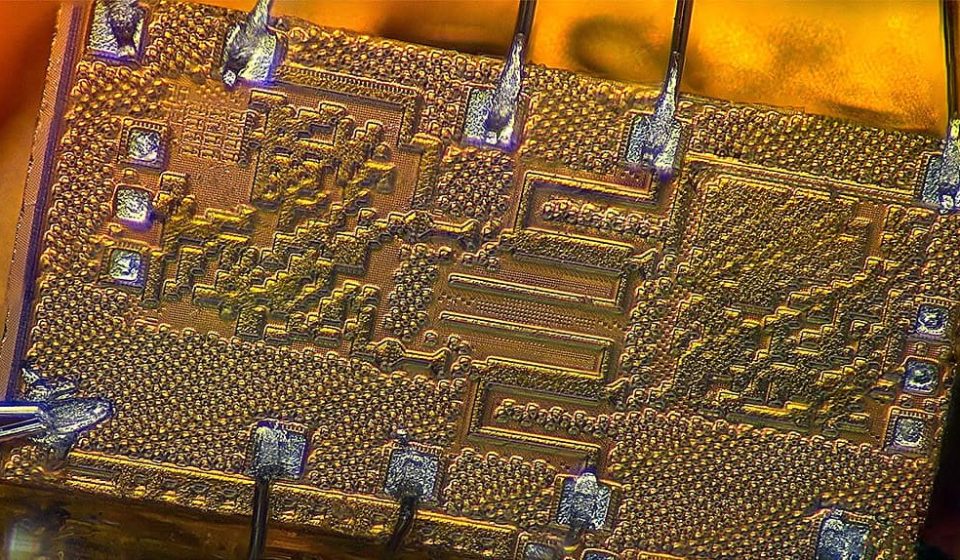
The algorithm created some strange chips that seem to work very well. But there’s a catch: no one really knows why they work so well.
“Humans can’t understand them, but they can work better,” said Kaushik Sengupta, lead researcher and professor of electrical and computer engineering at Princeton.
AI in charge
The AI-based method focused on the design of wireless chips, a type of computer chips used for high-frequency applications such as 5G networks, radar systems and advanced sensing technologies. These circuits power innovations in everything from radar systems to autonomous vehicles, but their development is notoriously slow. Engineers would start with predefined models and manually optimize or improve designs through simulations and iterative testing.
This method is time consuming and difficult. It also requires a high degree of expertise, which limits how much (and how quickly) you can improve. That’s where the new study comes in.
While the previous method was bottom-up, the new approach is top-down. It’s more efficient because you’re creating a system that does exactly what you want; but it’s much more difficult to make it work.
Researchers trained convolutional neural networks (CNNs) – a type of AI model – to understand the complex relationship between a circuit’s geometry and its electromagnetic behavior. These models can predict the performance of a proposed design, often operating on a completely different type of design than we are used to.
Neural networks worked alongside optimization algorithms that searched for configurations that met the engineers’ specifications. Researchers didn’t just accept what AI was producing. They verified the designs with conventional electromagnetic simulations, fabricated physical components, and measured their performance.
The study presented a range of use cases, from simple single-port antennas to complex multi-port RF (radio frequency) structures such as filters or power dividers. Compact AI-designed antennas that operate on two separate frequencies, improving the performance of multi-band devices. In minutes, he synthesized filters with precise bandpass characteristics, a task that would have taken days or weeks previously.
The ability to quickly design high-performance circuits could accelerate progress in telecommunications, autonomous systems and beyond. This approach allows engineers to focus on innovation rather than routine optimization. But perhaps the most exciting part is the new types of designs on offer.
Completely new concepts
“We create complex, randomly shaped structures, and when connected to circuits, they create previously unachievable performances,” says Sengupta. The designs were not intuitive and very different from those created by the human mind. Yet they often offered significant improvements.
“Classical designs carefully assemble these circuits and electromagnetic elements, piece by piece, so that the signal flows as we want within the chip. By modifying these structures, we incorporate new properties,” Sengupta said. “Before, we had a limited way of doing it, but now the options are much broader.”
In August 2025, the Princeton group published another approach called Dall-EM. This time, the researchers used diffusion models (the same broad family of AI techniques associated with image generators) to create electromagnetic structures meeting specified performance goals.
Instead of repeatedly testing and modifying candidate designs through evolutionary search, the generative system could produce suitable structures much more quickly. The researchers reported that this reduced design time by at least a factor of ten compared to their previous predictive AI approach, with some designs converging in seconds.
Then came another breakthrough. At the February 2026 IEEE International Solid-State Circuits Conference, the team presented a design framework that brings together circuit architecture, component selection, electromagnetic design, and physical layout.
Another study from June 2026 addressed a different practical challenge: producing components that must fit within a prescribed physical area. AI-generated shapes may look impressive on a computer screen, but real chips have strict spatial constraints.
These studies mark a pivotal moment in engineering, where AI not only accelerates innovation, but also pushes the boundaries of what is possible. However, researchers don’t yet see AI taking over chip engineering on its own.
“There are pitfalls that still need to be addressed by human designers,” Sengupta said. “The goal is not to replace human designers with tools. The goal is to improve productivity with new tools. The human mind is better used to create or invent new things, and the most mundane and utilitarian work can be entrusted to these tools.”
A promising program faces a classic obstacle
The growing ambitions for chips designed for AI have also run into a more conventional problem: financing.
In May 2025, the National Semiconductor Technology Center announced a nearly $10 million award for a Princeton-led effort to develop AI-based design tools for wireless chips. The program brought together researchers and industry partners, with Sengupta leading the research.
But a few months later, the project received a stop work order.
In August 2025, the U.S. Department of Commerce withdrew its support for Natcast, the organization that oversees the program, following a dispute over how the organization was created. This was part of a broader set of decisions made by the Trump administrations against programs launched under the Biden administration.
Sengupta’s team tried to find alternative financing, but encountered difficulties.
An August 2026 government audit confirmed that Natcast ceased operations in September 2025 and that the federal semiconductor research program suffered significant cancellations. It is unclear what the status of the original award given to Princeton is.
This failure did not stop the scientific work, as the group’s subsequent publications demonstrate. But it illustrates how difficult it can be to turn an experimental breakthrough into a widely usable technology, even when the underlying results are promising.
Then, of course, there is the general question.
The black box
How comfortable are we with these conceptions that we do not fully understand? What happens if something goes wrong with this design?
There’s no doubt that AI will play an increasingly important role in how we design things, and chips are no exception. Yet, for the most part, we still have no transparency about how AI arrives at its designs. This makes it difficult for engineers to fully understand or predict the behavior of these circuits under all conditions. This “black box” nature could lead to unanticipated outages or vulnerabilities, particularly in critical applications such as medical devices, autonomous vehicles or communications systems.
AI-generated designs are not necessarily inexplicable. Their behavior always follows the laws of electromagnetism and engineers can test their performance. But it can be very difficult to understand why a particular arrangement of metal traces produces a particular result.
Engineers must determine how devices respond to manufacturing variations, temperature changes, and operating conditions beyond those used in their initial testing. Original research has demonstrated measured performance in manufactured prototypes, but this does not establish long-term reliability of commercial products.
As Sengupta mentions, the best path forward is likely a partnership between humans and AI.
AI can explore circuit layouts that human designers could never consider, while engineers remain responsible for deciding which designs are worth building, testing, and trusting.
But there is a danger in becoming too dependent on systems whose decisions we do not fully understand. A design that works wonderfully in the lab may behave differently under conditions no one anticipated. And if engineers lose the expertise to question, troubleshoot, or improve what AI produces, even small faults could become difficult to diagnose.
AI can be a powerful tool for innovation, but its success should never become an excuse to forgo human understanding and oversight.
Journal reference: Emir Ali Karahan et al, Deep learning enabled widespread inverse design of multi-port radio frequency and subterahertz passive and integrated circuits, Natural communications (2024). DOI: 10.1038/s41467-024-54178-1
Note on transparency: This article was originally published in January 2025 and has been updated to include new research developments, additional context, and more detailed discussion of the risks and limitations of AI-designed chips. This update is part of our ongoing efforts to review and improve previously published articles, ensuring our coverage remains accurate, relevant and informed by the latest scientific evidence.


Gn tech