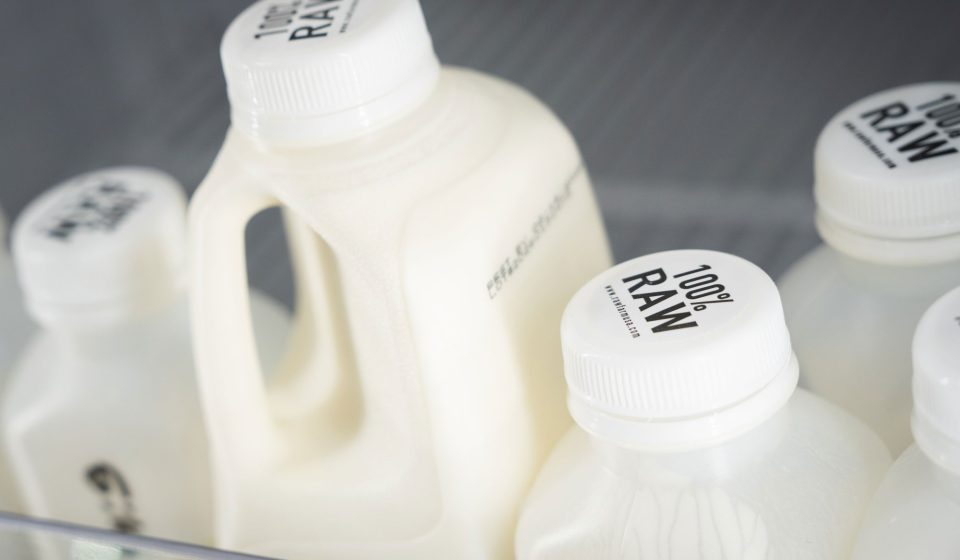

The nation’s largest pediatric professional group has renewed its call for a nationwide ban on the sale and distribution of unpasteurized milk and other raw dairy products, according to a policy statement released earlier this week.
Revised guidelines from the American Academy of Pediatrics warn of serious health risks from consuming raw dairy products, especially for children, as well as pregnant and immunocompromised people.
“More and more people are talking about this as a potentially healthy thing to do, when in fact it’s a very risky thing to do,” said academy president Dr. Andrew Racine. “Our responsibility, as the leading voice in pediatric health care in the United States dedicated to the health and well-being of children, is therefore to ensure that accurate, evidence-based information is available.”
The revised statement follows a ProPublica report that delved into the causes and serious consequences of America’s current fascination with raw milk, which has not been heated to kill harmful bacteria. Once limited to the fringes of health food culture, unpasteurized milk has transformed into a mainstream movement rooted in wellness trends and institutional distrust. Today, more than 10 million Americans drink it.
Most scientists and health experts agree that raw milk has no significant, proven nutritional benefits over its pasteurized counterpart and cannot treat or cure any disease. It also puts its consumers at 100 times greater risk of foodborne illness, which can be particularly dangerous for young children. Before milk pasteurization became widely adopted a century ago, thousands of children died each year from illnesses linked to dairy contamination.
Increasingly popular in recent years, raw dairy products have contributed to numerous outbreaks of pathogenic illnesses, such as salmonella and E. coli. Over the past two years, nine states have experienced outbreaks that regulators have linked to raw dairy products. Last month, federal regulators linked an outbreak of E. unpasteurized cheese coli. Thirteen people fell ill, more than half of whom were young children.
As illnesses increased, high-level lawmakers and government officials, including Health Secretary Robert F. Kennedy Jr., defended the industry instead of reining it in. In his federal role, Kennedy said he “stood up for” raw milk and celebrated the release of a report titled Make America Healthy Again by toasting raw milk shooters at the White House. The Health Department did not respond to ProPublica’s questions about the new professional guidelines or the pediatric group’s call for a ban on the sale of raw milk.
Rep. Rosa DeLauro, a Connecticut Democrat who chairs the Congressional Food Safety Caucus, told ProPublica she takes the academy’s advice “very seriously.”
“They see first-hand what these diseases can do to children,” she said in an emailed statement. “Right now, Health and Human Services Secretary RFK Jr. can’t even bring himself to tell parents not to give it to their children.”
DeLauro said she “supports any policy that reduces the risk of exposure to harmful foods,” including placing warning labels on raw milk products and maintaining adequate funding for outbreak prevention and tracking.
Federal law restricts the sale of raw milk between states, but states can decide how it can be sold within their borders. In recent years, advocates have fought to increase access to raw milk within states, often opposing efforts to limit its sales. People can legally purchase raw milk in almost every state, either directly from a store, from a farmer, or even as “pet food.”
Last week, ProPublica detailed the cases of two girls who became seriously ill last year after consuming raw goat’s milk from an unregulated farm in Southern California. The state, which is full of dairies sold on the black market, did little to punish the farmer who sold the milk to families. That allowed him to provide his own sample for testing, weeks after the outbreak began, and not independently sample his soils for traces of the pathogen, as state investigators have done in other cases. (The farmer told ProPublica that her milk, which tested negative for pathogens, was not the source of the outbreak and claimed that the families knowingly purchased milk that was not intended for human consumption, which they deny.)
The mother of one of the girls, a toddler who nearly died, had read about the purported benefits of unpasteurized milk on a site for the Raw Milk Institute, a nonprofit founded by Mark McAfee, one of the country’s most prolific marketers. In a profile of the California farmer, ProPublica recounted how social media influencers amplified his claims and helped him build what is now a $30 million-a-year business, even as regulators linked it to more than a dozen recalls and outbreaks that sickened hundreds of people. (McAfee previously defended claims made on the institute’s website and argued to ProPublica that raw milk still has therapeutic benefits.)
Academy members said they read and circulated ProPublica’s reporting as they wrote their statement.
“This product is marketed to families as beneficial for their children,” said Dr. Adam Ratner, a pediatric infectious disease specialist in New York and one of the lead authors of the academy’s revised statement. “They don’t see the risks and, unknowingly, they end up making a much more dangerous decision.”
The academy first issued a policy statement on raw milk in 2014, endorsing a national ban on its sale and encouraging its members to contact state officials to advocate for such a restriction. The statement released this week reaffirms this call with recent epidemiological evidence. Additionally, he cites growing concern over highly pathogenic avian influenza, which has been shown to contaminate unpasteurized milk.
Racine, the academy president, told ProPublica that the policy was also updated because of “the intensifying debate over the purported benefits of raw milk and the fact that more people are experimenting with its use.”
“Prevention is truly the best way to keep children healthy and safe, and this is a preventative approach,” he said. “The more we can get this information out to more people, the more healthy we can keep the children of this country.”
Gn Health