Amid public concern and lawsuit, U.S. military delays detonation of lead explosives – Iowa Capital Dispatch

Environmental groups filed a lawsuit Thursday afternoon to try to stop the planned detonation of degraded lead-based explosive material at a southeast Iowa munitions plant.
The lawsuit was filed hours before Acting Army Secretary Hon. Adam Telle announced that the detonation would be postponed until Monday, November 23, emphasizing that “public safety is the military’s top priority.” U.S. Senator Chuck Grassley said on social media that the delay was to “further educate the public.”
Telle said in a social media post that Monday was “the last possible moment before a predicted drop in temperature, which could further destabilize the material.”
Earthjustice, on behalf of the Iowa Environmental Council and the Sierra Club Iowa Chapter, is suing the U.S. Environmental Protection Agency over its decision to grant an emergency permit to the Iowa Army Ammunition Plant in Middletown to intentionally detonate 68 drums of deteriorated lead azide, an explosive that is unstable in its deteriorated state.
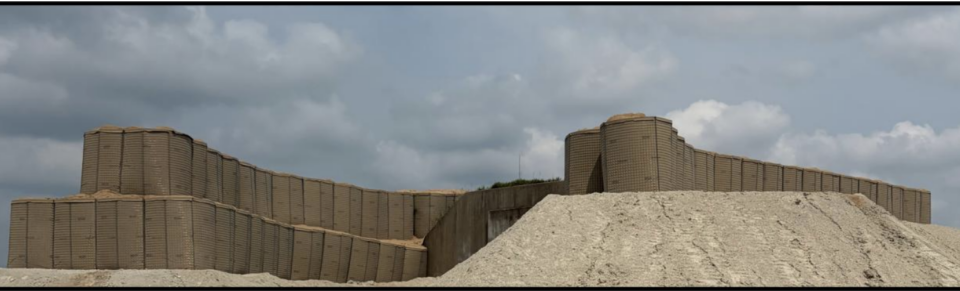
The detonation, which will occur inside concrete bunkers surrounded by approximately two-story sand barriers, according to press releases of the army, will cause a plume of air “containing particles containing lead”. Neighboring areas have been warned to stay indoors while lead particles are expected to be airborne and to spray outdoor materials once lead-containing dust has settled on surfaces.
In the lawsuit filed in the U.S. Court of Appeals for the Eighth District, the environmental groups are asking the court to either rule on the motion by 10 a.m. Friday or grant an administrative stay until the motion can be fully heard by the court.
Iowa Environmental Council Executive Director Sarah Green said in a statement Thursday that “the U.S. military may have no safe alternative other than eliminating toxic lead azide.”
“But our federal government must do better to communicate the potential health risks of lead contamination in our communities and allow more time to keep our communities and vulnerable groups, like children and pregnant women, safe,” Green said.
The petitioners allege that emergency permit EPA has failed to: incorporate applicable environmental performance standards, require all permits conditions necessary to protect human health and the environment, consider less dangerous alternatives that would avoid widespread dispersion and toxic lead deposition, and adequately inform the public of the plan.
“Military’s planned detonation of 9,700 pounds of lead explosive The material presents a significant risk of irreparable harm that will not be possible to subsequently remedy,” the lawsuit states.
The Army and EPA have stated that intentional detonation allows them to mitigate the “explosion risk” of degraded lead azide which presented an “imminent and substantial threat to human health and the environment.”
Essentially, they said that intentionally detonating the material allows for precautions and public awareness that would not be possible if the material exploded on its own.
The environmental groups said they “do not dispute the EPA and Army’s assertion that there is a risk in leaving lead azide at IAAP untreated” but said the Army had allowed the explosive “to degrade for about two decades until he decided the only safe option was to detonate them near populated areas.

According to the proposed action According to a report from the Iowa Army Ammunition Plant, the lead azide was submerged in a water/ethanol storage solution. The temperature fluctuations caused the material to “dissolve and recrystallize” into a form that was “extremely sensitive to shock, friction, static electricity and heat.” The Army determined in March that the material had degraded and had a briefing in April with the EPA, according to the emergency permit.
“This turned the Army’s failed stockpile management into a public health event for people in at least two states,” the lawsuit says. “This rushed past week is a symptom; the military has been aware of the risk since at least March, but made its plans public just five days before the planned detonation.”
The army held a open day in Middletown in mid-October to notify residents of the planned detonation, although Friday’s timeline was not announced until Nov. 15, when the Army also provided atmospheric dispersion models showing that lead particles could spread up to 100 miles from the detonation site, and dust deposition models showing a potential spread of about 40 miles.
Public health and environmental concerns
Newer maps, released Thursday by the Army, show the plume is expected to move more directly north, as opposed to northeast, from the detonation site, and not extend as far as the previous model showed. The military said it would continue to issue updated maps until the detonation with accurate information on the latest atmospheric conditions.
The initial map of the plume showed that atmospheric dispersion was expected to extend across the Mississippi River and into New Boston, Illinois. The lawsuit alleges that Illinois officials were not informed of the detonation and the potential risks.
On Thursday, the Illinois Department of Public Health issued public health guidelines regarding detonation. The Iowa Department of Health and Human Services job safety tips and information Thursday about the detonation of which she said she was “informed only very recently.”
Safety precautions include staying indoors, running air purifiers and turning off heating and cooling units while there is a risk of air dispersion, which the military estimates will last for about an hour. The military and state health departments also said residents in affected areas should consider washing outdoor surfaces, such as playground equipment, doors and cars, to minimize the risk of consuming lead dust.
The lawsuit pushed back against that opinion, emphasizing that there is no safe level of lead exposure for children.
“The idea that spilled lead dust can simply be rinsed away without harmful effect is absurd, counterfactual, and extremely harmful misinformation to share with the public,” the lawsuit states.
Media contacts for the EPA and the military did not respond Thursday to a request for comment regarding the lawsuit.
Environmental groups say the EPA permit “largely ignored” the potential for lead to spread into groundwater, surface water, soil and the atmosphere.
For example, environmental groups point out, the EPA permit contains no conditions regarding the potential for damage from detonation to domestic animals, wildlife, crops, vegetation and physical structures.
On Wednesday, the Iowa Department of Agriculture advice published for ranchers near the detonation site, urging them to move livestock elsewhere or to a barn if possible and to move or cover feed and water supplies to “prevent possible contamination.”
Sampling
While the EPA permit requires the military to take samples before, during and after the detonation at “all parks, public facilities and private properties” where they have been granted entry, the lawsuit argues that the testing requirements are not rigorous.
Researchers at the University of Iowa met with reporters Thursday afternoon and said they were conducting their own research. David Cwiertny, director of the Environmental Policy Research Program at the UI, said researchers will deploy air sensors, particle filters and collect soil samples and surface wipes throughout the affected area.
“We are doing all of this to add to the public record, not because we have any real doubts about the official oversight planned by the EPA or the military,” Cwiertny said. “In an unprecedented event with many unpredictable factors, we believe it is always better to have more independent data for public transparency and for public health. »
The suit urges the court to issue a stay and prevent the detonation because, it says, “once the lead dust is dispersed, it is no longer possible to undo the harm.”
“What the Court must balance are the risks associated with the possibility of an unanticipated detonation while allowing crucial additional time to take the necessary steps to protect human health, and the environment, from the known very significant harm from a massive plume of lead dust,” the lawsuit states.
Gn headline