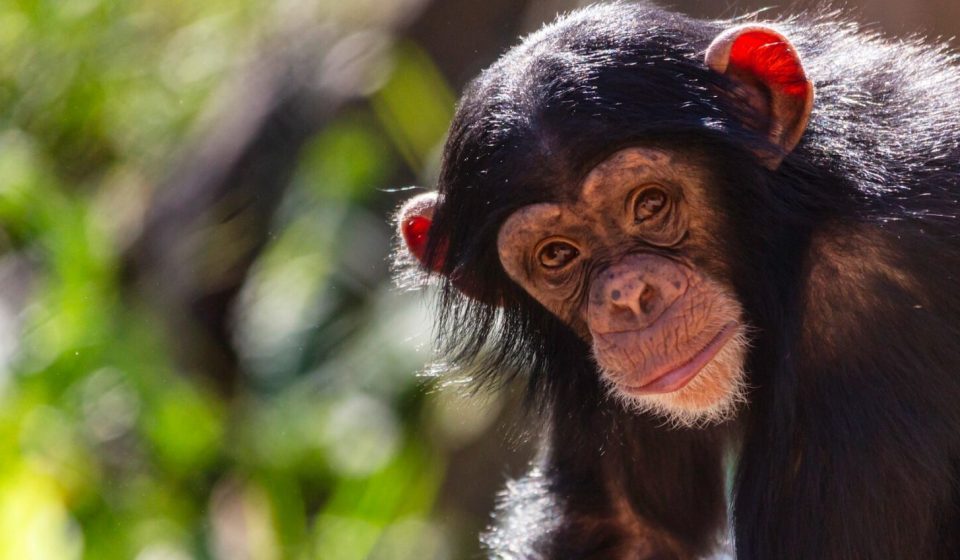
Millions of years ago, a retrovirus infected the ancestors of chimpanzees and left its DNA behind. This ancient vestige could still shape the differences between chimpanzee and human brains.
The study, titled “Retroviral insertions contributed to the divergence of human and chimpanzee brains,” was published in Science Advances (DOI: 10.1126/sciadv.aeg5791) by researchers at Lund University. Its subject is PTERV1an endogenous retrovirus: ancient viral DNA that entered the host genome a long time ago, was transmitted from generation to generation and remained integrated into the genome.
One gene, two very different results
The same long noncoding RNA is highly active in human brain models and silent in comparable chimpanzee models.
At the center of discovery is LINC00662a long non-coding RNA that contributes to early human brain development. Patricia Gerdes, a postdoctoral researcher in molecular neurogenetics at Lund University, described the contrast clearly: “The gene was highly expressed in human organoids, but not at all in chimpanzee organoids. » These organoids are three-dimensional structures grown from stem cells that replicate certain features of early brain development under laboratory conditions, not complete brains.
The discrepancy in LINC00662 activity between the human and chimpanzee models was not subtle. It was highly expressed in human organoids and undetectable in the reported chimpanzee models, which is precisely what attracted researchers to the viral insertion as a likely cause.
How a virus silences a gene
A methylation process triggered by PTERV1 insertion appears to have spread to a neighboring regulatory region, deactivating LINC00662 in chimpanzee cells.
The insertion of PTERV1 on chimpanzee chromosome 19 has acquired heavy DNA methylationa chemical modification that can suppress nearby genetic activity. These methylation marks spread to an adjacent regulatory region and silenced LINC00662. The researchers found that PTERV1 insertions were associated with more 150 chimpanzee-specific heterochromatin domains, genomic regions where gene activity is typically reduced.
This is not the story of a virus creating a new gene. This is the story of viral DNA acting as a regulatory switch, leaving existing transcription repressed in chimpanzee cell and organoid models while the equivalent human transcription continued to function.
CRISPR provides the clearest evidence
Deletion of viral insertion from chimpanzee cells restored LINC00662 expression, providing strong cellular evidence for a causal relationship.
The strongest causal evidence came from a CRISPR-Cas9 experience. CRISPR-Cas9 is a gene editing tool capable of locating and cutting specific DNA sequences with high precision. The team used it to remove the PTERV1 insertion from chimpanzee cells, and expression of LINC00662 was restored.
Gerdes was blunt about what this result means: “This shows that it is actually the viral insertion that is responsible for the gene silencing in chimpanzees. » Deletion of the viral sequence reversed silencing, providing strong evidence of causality in the cellular context tested. Experimentation alone does not allow us to establish effects at the organismal level on the anatomy or behavior of the chimpanzee brain.
Gene silencing in humans reveals its function
Knockout of LINC00662 in human brain organoids reduced the activity of genes related to neuronal maturation and the growth of neuronal connections.
A follow-up experiment answered a separate question: What does LINC00662 actually do? When researchers turned off transcription in human brain organoids, the activity of genes associated with neuronal maturation, axon growth, and the formation of neuronal connections decreased. This result proves that LINC00662 contributes to early human brain development in the experimental model, rather than acting as a passive bystander.
Its absence had measurable downstream effects on the molecular processes involved in building neuronal architecture. This finding should be understood as evidence from an organoid system, not evidence of altered anatomy in living humans.
Regulation, no new proteins
This finding adds a documented mechanism to the broader argument that differences in genetic regulation, not just protein differences, are driving species divergence.
The broader significance of this discovery relates to a long-standing question in evolutionary biology. Humans and chimpanzees share the vast majority of their genetic material, and significant biological differences between species may reflect differences in when and where existing genes are turned on or off rather than differences in the proteins encoded by those genes.
This study adds a documented mechanism to this argument. A chimpanzee-specific viral insertion altered the regulatory landscape around a developmental brain transcript, producing a species-specific difference not in the nature of existing genes, but in their activity in the models tested.
What the study doesn’t prove
Cellular and organoid experiments provide strong molecular evidence but cannot demonstrate effects on cognition, behavior, or intact brain anatomy.
The limitations of the results deserve the same attention. Restoration of LINC00662 activity in cultured cells does not demonstrate that PTERV1 insertion altered cognition, behavior, or brain anatomy in living chimpanzees. Cerebral organoids are simplified models; they do not replicate the complete architecture, blood supply, immune environment, or behavioral complexity of an intact brain.
The study identifies a regulatory pathway that may have contributed to human-chimpanzee divergence alongside many other genetic, developmental and environmental factors. This is not a general explanation for the evolution of the human brain, and researchers have not presented it as such.
What comes next
The results provide a framework for testing whether other inherited viral sequences have left comparable regulatory marks in primate genomes.
The researchers said future work will examine whether other inherited viral sequences influenced brain evolution or are relevant to neurological diseases. PTERV1 is one of several endogenous retroviruses scattered throughout primate genomes. The current results provide a framework for asking whether others have left comparable regulatory marks on brain development genes.
Gn Health