A little-known concept called a “computing multiplier” raises a potentially billion-dollar question surrounding the AI boom.
What if AI becomes so effective that companies no longer need as many data centers, chips, and power plants as investors expect?
This is a concern that is emerging in financial markets following the revelations from Anthropic, the company behind the most powerful AI models. That adds pressure to the AI business as some investors rethink their bets on the technology.
In its IPO filing, Anthropic explained how it is finding ways to make the most of the computing power it already has.
The company calls these advances “computation multipliers” – advances that allow its AI systems to accomplish more work using less computing power. Anthropic says these improvements help it deliver more value to customers and generate more revenue from its existing IT infrastructure.
More AI with less computing
This is great for Anthropic. But it could have huge implications for the AI sector’s spending plans.
Investors have poured hundreds of billions of dollars into companies that build data centers, manufacture chips and provide electricity to power the AI revolution.
Much of this investment is based on predictions about how quickly AI revenues will grow and how much computing power will be needed to support that growth.
Demand for AI remains strong. But what happens if these computer predictions are wrong?
Charles Zvibleman, vice president of strategic finance at AlphaSense, recently suggested on
According to Zvibleman, Anthropic told investors it could generate four times more revenue with a given amount of computing power than expected, with additional efficiency gains expected.
If AI companies could generate significantly more revenue with the same computing power, they could meet user demand and meet their financial goals with less infrastructure than investors previously anticipated.
IPO filing clues
Anthropic’s IPO filing describes how its researchers are finding ways to train and operate increasingly powerful AI systems more effectively.
The company also explains how Claude herself helps researchers develop better versions of the technology, potentially accelerating these improvements.
The company specifically highlighted this efficiency gain in its filing.
“Our researchers provided meaningful computational multipliers for inference, thereby reducing the computation required to achieve a given level of model performance,” he writes. “This allows us to deliver greater value to customers and generate more revenue from our compute base over time. »
This does not mean that the demand for AI is waning. Quite the contrary. Anthropic says customer demand continues to outstrip the computing capacity it has.
But there is a difference between the demand for AI services and the demand for the physical infrastructure needed to deliver them.
And some investors wonder whether the two will grow as closely as previously thought.
This brings us to memory chips.
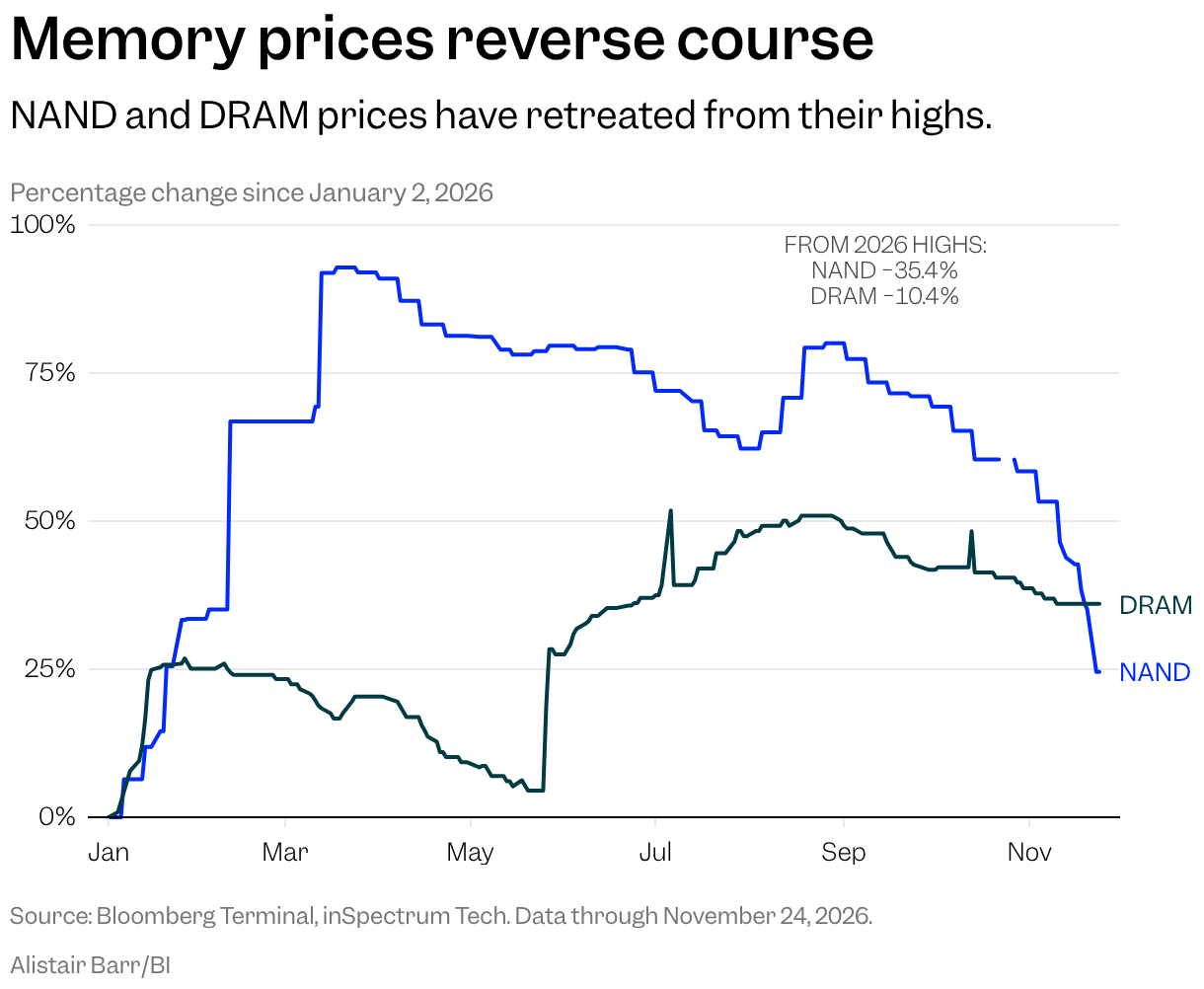
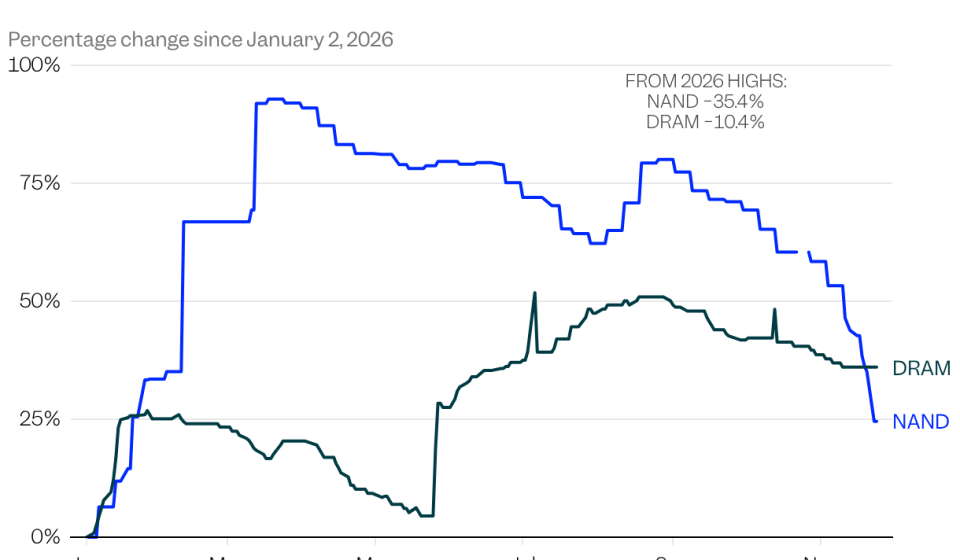
Memory prices have long been an early indicator of changes in the technology sector and, sometimes, the broader economy.
Prices soared earlier during the AI boom, as companies rushed to build IT infrastructure. Now they are falling.
Prices for a benchmark NAND flash memory chip are well below their peaks from earlier this year, according to data compiled by Bloomberg. Prices for a reference DRAM memory chip have also fallen.
The declines do not prove that Anthropic’s advances are responsible. Memory prices depend on many factors, including production levels, inventory and demand from consumer electronics manufacturers.
Still, the timing is intriguing.
For years, investors have been betting that AI will require ever more computing power.
Anthropic’s compute multiplier raises another possibility: AI could continue to grow dramatically while requiring far less hardware than expected.
It’s a potentially uncomfortable idea for the companies fueling the AI boom.
Sign up for the AI Insider newsletter here. Contact me by email at abarr@businessinsider.com
Gn bussni