
Within seconds, FaceAge displays the participant’s biological age – an estimate of the age of their body. Participants can add new images to track their aging over time.
Researchers use the uploaded photos to study which lifestyle habits and diseases are associated with looking younger or older. They emphasized that the prediction tool is intended for research and not diagnosis. More than 10,000 people have registered since the portal’s discreet launch in March.
As the database grows, it will help the team test and improve its algorithms in larger, more diverse groups. Until now, this tool has been largely limited to hospitalized patients. They are also collaborating with researchers outside of Boston to develop FaceAge.
The study, which tested whether the AI tool could read health signals from ordinary photographs, was published Monday in The Lancet Digital Health. The researchers first trained a base model, FAHR-Face, on more than 40 million images of faces. They then refined it for two tasks: FaceAge estimates biological age and FaceSurvival predicts survival after cancer treatment.
Among Harvard’s 38,000 patients, those who looked at least five years older than their actual age had a 21 percent higher risk of death, after taking into account age, sex, cancer type and other factors.
“To our knowledge, this is the first demonstration that an AI model can directly predict cancer survival from a simple photograph,” said Dr. Hugo Aerts, director of the Artificial Intelligence in Medicine program at MGB.
Pratik Shah, a professor of pathology at the University of California, Irvine, who directs its machine learning for health research program and was not involved in the study, called it an innovative use of AI.
Shah said estimating biological age from faces is not new. What sets this study apart, he said, is the base model trained on millions of images and its large sample of cancer patients.
But he cautioned that the results came from historical data and not a clinical trial, and that performance varied depending on the type of cancer. “The facial age model showed significant survival associations in 18 of 28 cancer categories,” he said. “The model may not work consistently across all cancer types.”
FaceAge is also being tested in two clinical trials. In one, at Brigham and Women’s Hospital, researchers are recruiting 60 patients aged 65 and older with early-stage lung cancer before radiation therapy. They are testing whether FaceAge can flag frail patients who need additional support, such as nutrition or physical therapy, before cancer treatment.
“The care gap we’re trying to close is that most older patients with early-stage lung cancer have geriatric vulnerabilities, but very few of them receive a formal geriatric assessment,” said Dr. Raymond Mak, a radiation oncologist at the MGB Cancer Institute and lead author of the study. “If a simple photograph could identify the most vulnerable patients, it would be a practical and scalable way to fill this gap. »
The second trial, led by MGB thoracic surgeons, combines FaceAge with data from wearable devices to flag patients at risk of surgical complications.
“This extends the work beyond radiotherapy and into the surgical setting, where estimating a patient’s physiological reserve before major surgery is equally important,” Mak added.
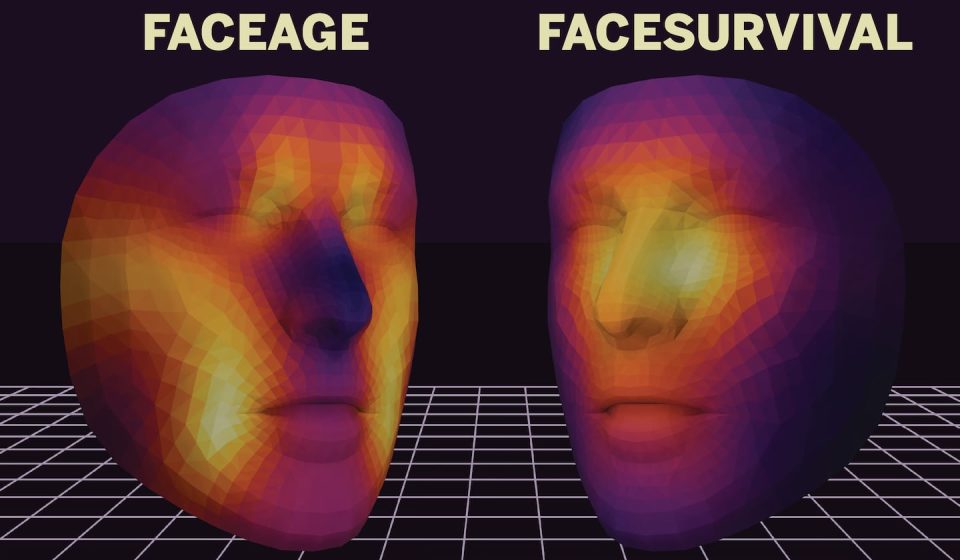
Initially, the researchers didn’t know what the AI was observing. But there you have it, attention mapping, a visual representation that resembles a heat map, shows FaceAge focusing on the nasolabial folds, the lines running from the nose to the corners of the mouth, and on the forehead above the eyes and temples. FaceSurvival primarily examines the area under the eyes and around the bridge of the nose.
“We don’t know exactly what these algorithms are looking at,” Mak said. “Attention maps tell us where on the face the algorithm is looking to make its prediction, but not precisely what underlying visual features drive the prediction. So we can’t say that the model is individually measuring crow’s feet, under-eye bags, wrinkles, pigmentation, skin texture, or temporalis muscle wasting.”
When the first study was published, people wondered whether makeup, lighting, or cosmetic surgery could skew the results. Researchers say this is generally not possible. Posing, lighting, expression and makeup had little effect, and neither did most plastic surgery procedures. Rhinoplasty caused people’s biological age to increase by about a year, which Mak said could reflect tissue loss from the operation. He said this suggests that AI doesn’t rely on the same signals as people.
A person’s lifestyle leaves significant traces. Heavy drinking, drug use, and smoking were associated with a biologically older appearance. Smoking showed the strongest trend: Current smokers looked older than former smokers, who looked older than people who had never smoked.
“As the population ages, doctors need better ways to estimate physical reserve and frailty before recommending intensive treatments such as radiation, surgery or systemic therapy,” Mak said. “Our goal is to make facial photography-based health assessment more quantitative, consistent and scalable so that it can support personalized treatment decisions rather than replacing physician judgment. »
Sarah Rahal can be contacted at sarah.rahal@globe.com. Follow her on @SarahRahal_ or Instagram @sarah.rahal.
Gn Health