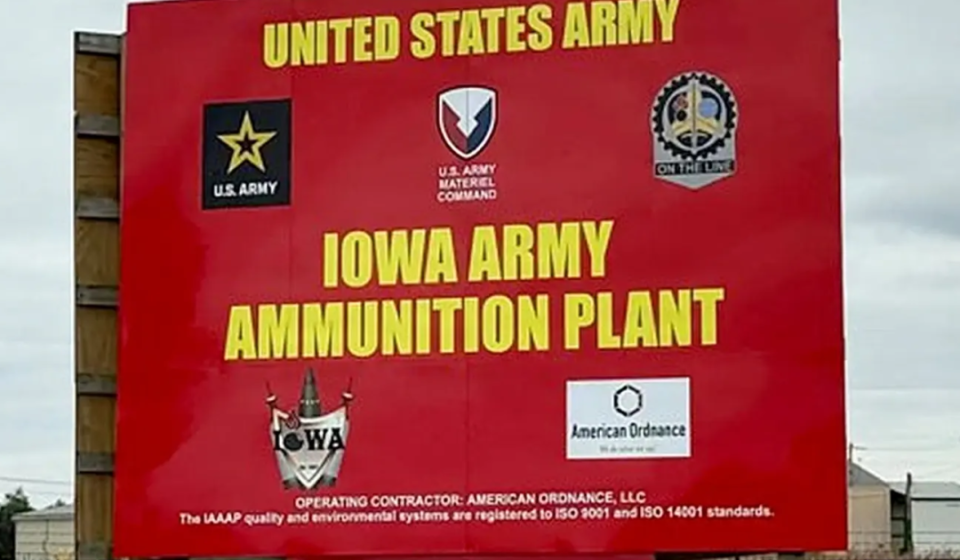
The U.S. Army announced Sunday evening that it had rescheduled for Wednesday the controlled detonation of nearly five tons of deteriorating lead-based explosives at the Iowa Army Ammunition Plant in Middletown.
In a social media post, the military said the change would allow for more favorable weather conditions and give crews time to put all safety measures in place. The message did not give a start time.
The controlled detonation at the Iowa Army Ammunition Plant is now scheduled for Wednesday, November 25, 2026 to allow for optimal weather conditions and implementation of all mitigation measures.
The military and our interagency partners worked around the clock to protect all…
– US Army (@USArmy) November 23, 2026
The explosions were initially planned for Friday, November 20. The military moved them to Monday after Gov. Kim Reynolds and lawmakers in Iowa and Illinois asked for more time. The U.S. Justice Department then told a federal appeals court over the weekend that the military intended to act by Tuesday, citing the risk that freezing temperatures could trigger an uncontrolled explosion.
A federal appeals court on Thursday issued a temporary stay that keeps the operation’s environmental permit on hold while it considers a request from the Iowa Environmental Council and the Iowa chapter of the Sierra Club to block the blasts. The DOJ argued that the court order only suspends the permit and leaves the military free to act under a separate emergency exemption for explosives, allowing it to act without a permit if it determines there is “an immediate threat to human health, public safety, property, or the environment.”
In statements filed early Sunday, the Iowa Environmental Council and the Iowa chapter of the Sierra Club took issue with the Army’s handling of the deterioration of the lead azide. They said residents received too little notice and federal officials had yet to show they were carefully considering alternatives to the detonation.
Michael Schmidt, general counsel for the Environmental Council of Iowa, said the DOJ filing suggests the stockpile is more dangerous than the military previously disclosed. He said detonation may now be the only option as the problem may have persisted.
“The public deserves to know immediately which communities will be impacted and how residents can most effectively protect themselves and mitigate impacts to their health and homes,” Schmidt said.
The military expects the explosions to release dust containing lead and says a controlled operation allows it to choose favorable weather conditions and monitor where the dust goes.
Reynolds activated the state’s emergency operations center Friday. The state also launched a resources page connecting residents to Army updates, public health guidance and information for ranchers.
Gn headline