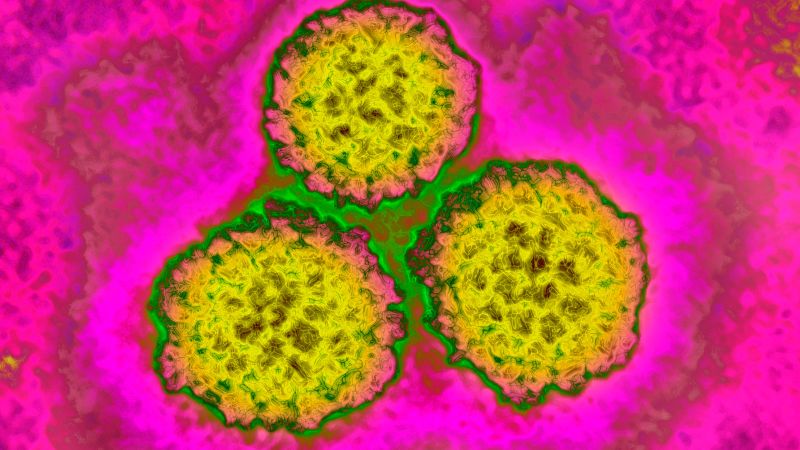
Around 1 in 8 cancer cases worldwide are linked to these infections – most of them preventable

Millions of new cases of cancer worldwide could be caused by treatable or preventable infections, suggesting that cancer could have been completely avoided.
That’s according to a new study published in the journal The Lancet Oncology, which reveals that about 1 in 8 cases of cancer worldwide may be linked to infections, many of which can be prevented with vaccines, screening or relatively simple treatments.
“We can intervene before it gets close to cancer,” said Gary Clifford, lead author of the study and an epidemiologist at the International Agency for Research on Cancer.
“We just need the policy, finances, public buy-in and communication to implement the programs. Prevention works,” Clifford said. “It’s a matter of awareness.”
About 2.3 million new cancer cases were attributable to infections worldwide in 2024, equivalent to 12% of all cancer diagnoses, according to the new study. And two infections particularly stood out: Helicobacter pylori, commonly known as H. pylori, which was primarily associated with gastric cancers, and human papillomavirus, or HPV, which was primarily associated with cervical cancer. Together, researchers estimate that these two infections accounted for more than 1.5 million cancer cases in 2024.
Other infections also contributed substantially:
-
Hepatitis B or HBV was linked to around 360,000 cases of cancer, mainly liver cancers.
-
The Epstein-Barr virus or EBV has been linked to approximately 260,000 cases of cancer, of which head and neck cancer beginning in the nasopharynx was the main culprit.
-
Hepatitis C or HCV was linked to 160,000 cases of cancer, mainly liver cancers.
“Some infection-related cancers, such as liver and stomach cancer, generally have a poor prognosis, meaning that a similar proportion of deaths from these cancers are likely attributable to infection. For other cancers, including cervical cancer and Kaposi’s sarcoma, infection is necessary for the cancer to develop,” said Harriet Rumgay, an epidemiologist at the International Agency for Research on Cancer and author of the study, in an email.
“However, very effective prevention measures already exist for four of the five leading infectious causes of cancer, as well as for HIV,” Rumgay said, referring to the human immunodeficiency virus. The four infections include HPV and hepatitis B, for which vaccines are available, as well as H. pylori and hepatitis C, for which tests and treatments are available.
Clifford, Rumgay and their colleagues analyzed data from the World Cancer Observatory’s Cancer Today database to estimate global cancer incidence in 2024. They looked at how many of these cancer cases could be attributable to infections, then analyzed each infection-cancer pair in their dataset.
The new analysis builds on previous work published in 2018, but researchers now better understand the relationships between certain infections and cancer. The new study incorporated 16 additional infection-cancer pairs compared to the previous 2018 global analysis, including some EBV-associated cancers.
“EBV is one of those agents that we knew was linked to certain cancers. In fact, EBV was the very first cancer-causing infectious agent to be discovered in Burkitt’s lymphoma,” Clifford said.
“That was almost 60 years ago, and that was the first time we realized that a virus could cause cancer. And since then, we’ve identified it in other cancers, including nasopharyngeal carcinomas,” he said. “We were already clear about the link to EBV, even in that 2018 data. So, it was there, but it wasn’t really addressed because we didn’t understand the full extent of the cancer burden that it was causing.”
The new research also reveals that the burden of infection-related cancers is not distributed equally around the world. Low- and middle-income countries accounted for 77% of all cancer cases attributable to infection, reflecting differences in the prevalence of cancer infections as well as access to vaccines, screening, tests and treatments.
But if health officials know which infections contribute to cancer and where those infections are most common, they can focus their resources on strategies that can save lives.
“Even in the United States, the burden of cancer from infections is not evenly distributed, and some populations have higher rates of infections like hepatitis B, hepatitis C, HPV or H. pylori, while others have less access to vaccination, screening or treatment. And these differences can translate into disparities in cancer incidence many years later,” said Veronika Fedirko, professor of epidemiology at the University’s MD Anderson Cancer Center. from Texas to Houston, which was not involved in the new study.
“Infection-related cancers are certainly a significant problem in the United States,” she said, referring to a separate American Cancer Society analysis that found in 2019 that 3.4% of all cancers in adults 30 and older — or about 60,310 cases — were attributable to seven infections assessed: EBV, H. pylori, hepatitis B, hepatitis C, sarcoma-associated herpesvirus of Kaposi, HIV and, the largest. contributor, HPV.
“Having a cancer infection does not mean a person will develop cancer. These infections increase the risk of certain cancers, but most infected people will never develop cancer,” Fedirko said. “Cancer usually develops only in a small proportion of people, often when an infection persists for many years and in conjunction with other factors such as age, immune function, smoking, genetics or other exposures.”
Cancer is an extremely complex group of diseases with many different causes and risk factors, including genetics, environmental exposures, aging and lifestyle. But new findings show that infections represent an area where prevention can make a significant difference.
Prevention efforts may include vaccination and, where appropriate, screening and treatment for infections that increase cancer risk. For some cancers, screening can also identify precancerous changes so they can be treated before an invasive cancer develops.
Getting tested and following up with a doctor “almost eliminates the risk of cancer,” Clifford said.
Once infections are diagnosed, “we know how to manage them,” he said. “The vast majority of these infections will not cause cancer. Some of them will, and we’re learning more about which ones, but it’s a work in progress. The point is, it doesn’t mean you have cancer just because you have the infection.”
For example, people can be screened for hepatitis C and treated if they become infected, helping to prevent the development of cancer in the future.
The same goes for H. pylori. The bacteria is relatively common, and many people who carry it do not immediately realize they have an infection. But H. pylori can cause chronic inflammation of the stomach and become a major risk factor for stomach cancer. Treating the infection with antibiotics can reduce this risk, giving doctors another opportunity to intervene before the cancer develops.
Additionally, HPV and hepatitis B are examples of how vaccination can help prevent cancer. Hepatitis B infection can damage the liver over time and increase the risk of liver cancer, but there is a vaccine that can help prevent viral infection.
HPV is a group of more than 200 related viruses that can be spread through sexual contact. In some cases, HPV infection can lead to six types of cancer: cervical, anus, penis, vagina, vulva, and oropharynx (mouth and throat). But the vaccine can protect against these cancers because it works by preventing HPV infection.
The new research “teaches us the importance of vaccination and how it can prevent different types of cancer,” Dr. Nancy Lee, a radiation oncologist at Memorial Sloan Kettering Cancer Center who was not involved in the new study, said in an email.
“It’s no different from getting a flu shot to prevent the flu. The public needs to be informed and vaccination needs to be stepped up,” Lee said. “Many types of cancer are caused by infection and if we prevent infection, the incidence of cancer should be lower. »
Other prevention measures that reduce the transmission of various infections attributable to cancer include “safe injection practices, condom use and HIV pre-exposure prophylaxis,” Rumgay said. “If implemented widely and equitably, these strategies could prevent hundreds of thousands, if not millions, of future cancer cases worldwide. »
Gn Health