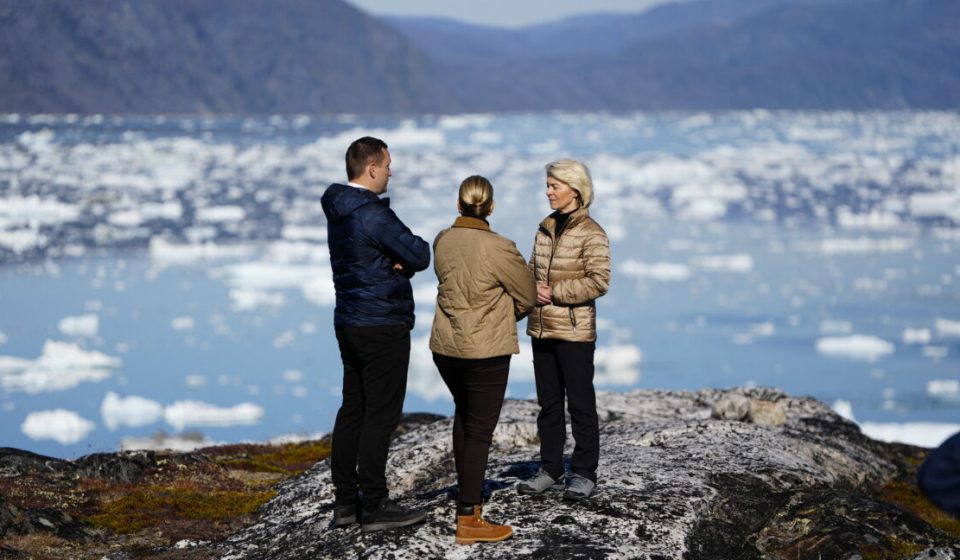
As relations between the United States and Greenland fray, Europe plans the first submarine cable link with Greenland.

New cable ambitions
The pan-Arctic cable took shape when European companies and research organizations teamed up with a Greenlandic telecommunications operator to sign an agreement to develop the project in 2025, according to Submarine Cable Networks.
Since then, the project has received support from the European Union through the Connecting Europe Facility Digital program. The European Union has already invested $119 million (€107 million) to “advance Greenland’s secure and sovereign connectivity” as well as to finance the Pan-Arctic Cable Plan, according to the European Commission’s new policy document on the European Arctic Strategy.
But the goal of eventually extending the undersea cable to Japan and South Korea via Canada faces considerable challenges, including requiring more European icebreakers to support the cable’s installation and maintenance in icy Arctic waters. Several pan-Arctic projects have been proposed in the past and some are still in development.
An earlier project, known as the Arctic Connect submarine cable, aimed to connect Europe and Asia using the Northern Sea Route that runs along Russia’s Arctic coast, but this project was ultimately halted in May 2021 before Russia’s large-scale invasion of Ukraine led to Russia’s increasing isolation from Europe.
Yet the pan-Arctic cable is not the only submarine cable project likely to strengthen Europe’s ties with friendlier countries. In September 2026, Norwegian company Bulk Infrastructure Group AS began looking for a Canadian partner to take a majority stake in a new transatlantic cable directly linking Europe to Canada, according to Bloomberg News. This proposed project was named the Leif Erikson system.
Internet economics gives way to geopolitics
In previous decades, “geopolitics played virtually no role as companies worried about where to place their cables and which countries to connect,” said Braw, whose book Undersea War explores why the world has become more dangerous for the Internet’s underwater backbone. But a focus on maximizing data connectivity and internet traffic has given way to more complex planning that also takes into account international relationships and the growing risk that adversaries will conduct cable surveillance or sabotage.
Gn world