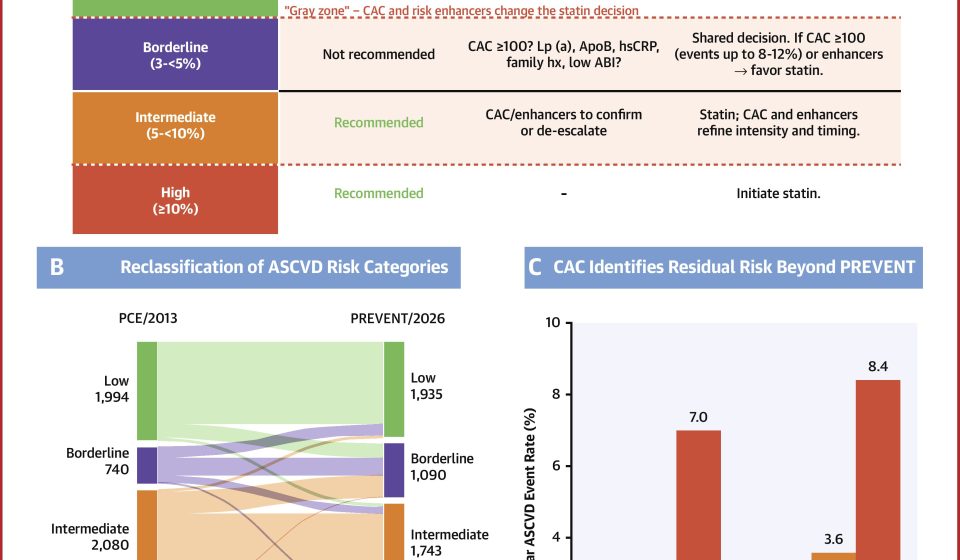
Using the Predicting Cardiovascular Disease Event Risk (PREVENT) equations along with the new risk category thresholds from the 2026 ACC/AHA Dyslipidemia Guidelines to estimate ASCVD risk resulted in an overall modest downward reclassification of predicted ASCVD risk and a slight decrease in statin recommendations, according to a recent analysis from the Multi-Ethnic Study of Atherosclerosis (MESA) published in JACC: progress. Brittany Saldivar Murphy, MDet al., note that these trends were not accompanied by a substantial number of subsequent ASCVD events.
Including 6,098 adults with a median follow-up period of 10 years, investigators compared ASCVD risk classification with Pooled Cohort Equations (PCE) and 2013 PREVENTION thresholds with 2026 thresholds. Their analysis explored the degree of directional reclassification, clinical events, and risk improvement with risk improvers and coronary artery calcium (CAC).
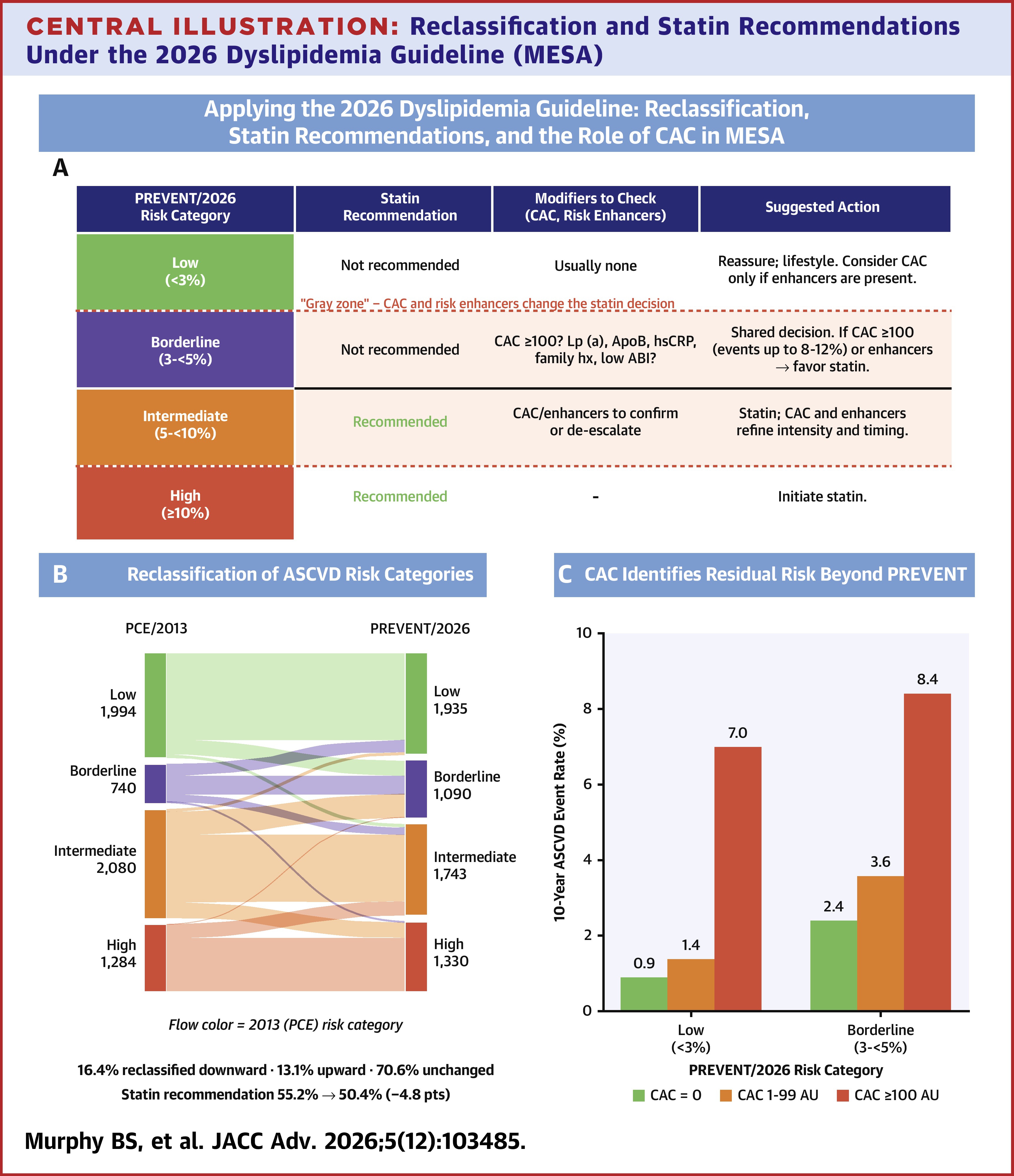
Overall, 6% of participants experienced an ASCVD event. Compared to the PCE, the PREVENT equations reclassified 16.4% of participants into a lower risk category and 13.1% of participants into a higher risk category. Statins were recommended in 50.4% of participants under PREVENT compared to 55.2% under CPE.
Evaluating these changes by race, the authors point out that “although reclassification was consistent across race and ethnicity, the percentage of downward reclassification and reduction in statin recommendations was greatest among black participants.”
Among those for whom statins were no longer recommended, 4.9% experienced an ASCVD event. Additionally, event rates were higher in patients with elevated CAC or other risk-increasing factors. “These observations, although exploratory given multiple comparisons, support prior MESA analyzes demonstrating that CAC burden is associated with increased risk of ASCVD event rates and support the 2026 guidelines’ endorsement of CAC as a risk amplifier in primary prevention decision making,” they write.
Keywords :
Hydroxymethylglutaryl-CoA reductase inhibitors, Dyslipidemia, atherosclerosis, Cardiovascular diseases
Gn Health