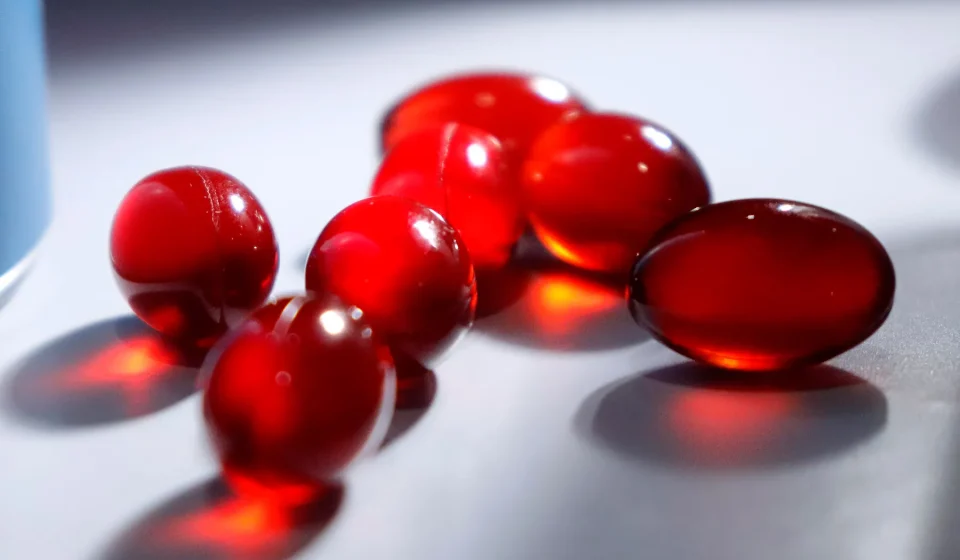
Astaxanthin is touted on social media as a “super antioxidant” that can keep skin youthful, reduce inflammation, improve eye health, boost metabolism and improve athletic performance. This red-orange carotenoid is biologically interesting and several human studies have examined its potential effects. However, what are the clinically relevant findings and where do the claims exceed the evidence?
What is astaxanthin?
Astaxanthin is a fat-soluble carotenoid from the xanthophyll group that is chemically related to lutein and zeaxanthin. It is produced by organisms such as microalgae Haematococcus pluvialis. Throughout the food chain, the pigment accumulates in shellfish and fish, giving salmon, trout, krill and shrimp a characteristic reddish color. In aquaculture, astaxanthin is added to feed, usually in synthetic form.
Unlike beta-carotene, astaxanthin showed no significant provitamin A activity. Researchers are interested in astaxanthin because of its antioxidant and potentially anti-inflammatory properties. Its molecular structure allows it to integrate into cell membranes. Experimental studies have reported effects on lipid peroxidation and redox signaling pathways involved in inflammation. Although these mechanisms are biologically plausible, they have not yet demonstrated benefits for human health.
Effects on metabolism: a potential option for diabetes?
One area of research interest concerns the potential effects of astaxanthin on glucose and lipid metabolism. A 2026 meta-analysis of nine randomized controlled trials involving 403 people with prediabetes or type 2 diabetes found that astaxanthin supplementation was associated with an average reduction of about 16 mg/dL in fasting blood sugar and 0.34 percentage points in A1c levels.
Levels of triglycerides, total cholesterol, low-density lipoprotein cholesterol, and high-density lipoprotein cholesterol also improved. However, body weight, BMI, and insulin resistance measured using the homeostatic model for assessing insulin resistance did not change significantly.
These results provide a preliminary indication; however, they must be interpreted with caution. Nine studies, most of which were small, were not sufficient to establish astaxanthin as a treatment for diabetes or dyslipidemia. An earlier meta-analysis published in 2015 found no significant effect on blood lipid levels, although it did not specifically look at people with diabetes. Evidence is also lacking on clinically relevant long-term outcomes, such as cardiovascular events or diabetic complications. Astaxanthin therefore remains a subject of research and not an alternative to established therapies.
Anti-inflammatory effects
Antioxidant and anti-inflammatory effects are among the most common claims about astaxanthin on social media. Human studies have reported changes in some markers of oxidative stress; however, the results are inconsistent.
A 2026 meta-analysis of randomized studies examining physical exertion illustrated these limitations. Astaxanthin reduced some markers of protein oxidation but had no significant effect on several other commonly assessed parameters, including malondialdehyde, superoxide dismutase, creatine kinase, and interleukin-6. The authors concluded that astaxanthin could reduce certain forms of oxidative stress; however, other physiological or clinical benefits have not been established.
Changes in laboratory markers do not necessarily indicate that a supplement prevents disease, relieves symptoms, or improves clinical outcomes. The popular claim that astaxanthin “fights chronic inflammation” is not supported by the available clinical evidence.
Effects on the skin
Astaxanthin is marketed not only as an antioxidant, but also as a “beauty supplement.” Clinical studies have suggested possible benefits, although the evidence has important limitations.
A systematic review of 11 clinical studies found that supplementation, typically at doses of 3 to 6 mg/d, can improve skin hydration and texture and, in some cases, the appearance of wrinkles. However, these studies were mostly small and involved healthy Japanese women. Additionally, commercial financing and conflicts of interest were common.
A meta-analysis reported similar mixed results. Astaxanthin improved skin hydration and elasticity compared to placebo, but did not significantly reduce wrinkle depth.
These results suggest that astaxanthin may have modest cosmetic benefits. However, describing it as an effective anti-aging treatment would be misleading. These studies primarily evaluated cosmetic surrogate markers, not biological skin aging, and did not establish that astaxanthin prevents age- or ultraviolet-related skin diseases.
Effects on the eyes
According to several small randomized studies, astaxanthin may also benefit eye health. In a double-blind, placebo-controlled study, 60 healthy adults received 9 mg/d of astaxanthin for 6 weeks. In participants aged 40 or older, corrected visual acuity improved after working on a computer screen. However, no significant differences compared to placebo were observed in younger participants or in functional visual acuity and pupillary response.
In another randomized, double-blind study, 64 children aged 10 to 14 years received 4 mg/day of astaxanthin for 84 days. Symptoms of digital eye strain improved to a greater extent in the astaxanthin group than in the placebo group.
However, a reduction in subjective eye fatigue during computer use does not necessarily indicate protection against macular degeneration or other eye diseases. Clinical evidence supporting these broader claims remains insufficient.
Effects on muscle recovery and performance
Astaxanthin is promoted among athletes for its potential to reduce oxidative stress, speed recovery, and improve performance. However, a 2026 meta-analysis of 24 randomized controlled trials presented a more nuanced picture.
Astaxanthin had beneficial effects on several markers associated with muscle stress and recovery, with the most pronounced effect observed for creatine kinase. However, the meta-analysis of oxidative stress discussed above revealed no significant effect on this marker. This difference highlights how the results depend on the specific studies included in the analysis. No significant benefit was observed for the following performance measures: maximum oxygen consumption, time trial performance, endurance performance and maximum power.
Current evidence does not support social media claims that astaxanthin is a natural “performance booster.” It may have limited effects on individual recovery processes, but results do not establish that it improves overall athletic performance.
Effects on the brain and “neuroprotection”
The gap between mechanistic plausibility and clinical evidence is particularly evident in brain health research. Antioxidant, anti-inflammatory and neuroprotective effects have been described in cellular and animal models. These findings have led to numerous claims about “brain health,” memory, and dementia prevention.
In humans, however, the evidence remains limited. Small studies have reported positive results for cognitive measures, but strong evidence of clinically relevant cognitive improvement is lacking. There is no convincing evidence that astaxanthin prevents neurodegenerative diseases.
Calling astaxanthin a “neuroprotective agent” goes beyond what current evidence supports. The reported effects are from preclinical research and an interesting mechanism of action does not establish clinical benefit.
Does astaxanthin help with weight loss?
Astaxanthin is often touted as a “fat burner” or weight loss aid, but compelling clinical evidence to support these claims is lacking. This is consistent with a 2026 meta-analysis of people with prediabetes or type 2 diabetes. Although the analysis found favorable changes in some metabolic markers, astaxanthin had no significant effect on body weight or BMI. Improvements in laboratory markers do not necessarily translate into weight loss.
How safe is astaxanthin?
Astaxanthin was generally well tolerated in clinical trials. However, assessing the safety of dietary supplements requires considering total intake and not just short-term tolerability in individual studies.
The European Food Safety Authority (EFSA) has established an acceptable daily intake (ADI) for astaxanthin at 0.2 mg/kg body weight. Taking into account the consumption of astaxanthin from fish and seafood, the EFSA considers that an additional dose of 8 mg/day is safe for adults. At this dose, adolescents aged 14 to 18 reach the ADI, while children aged 10 to 14 exceed it by approximately 28%. Therefore, only low-dose supplements have been approved for children and young adolescents in the EU.
However, safety does not necessarily imply effectiveness. A safe dose does not necessarily provide health benefits. Although some studies have used higher doses, these results do not establish the general long-term safety of these doses.
Conclusion
Astaxanthin is neither an ineffective lifestyle product nor the “super antioxidant” as it is often portrayed on social media.
The most promising data to date relate to glucose and fat metabolism in individuals with prediabetes or type 2 diabetes. Some studies have also reported favorable results on certain markers of oxidative stress and muscle recovery, as well as specific cosmetic parameters of the skin. People with realistic expectations might consider trying supplements.
However, current evidence is insufficient to support the use of astaxanthin for the treatment or prevention of any specific disease. Patients who wish to take the supplement should neither be promised established therapeutic benefits nor be told upfront that the supplement is ineffective. The evidence suggests a more nuanced picture, with encouraging results but insufficient evidence of clinical benefit to support the claims made on a social level…
Gn Health