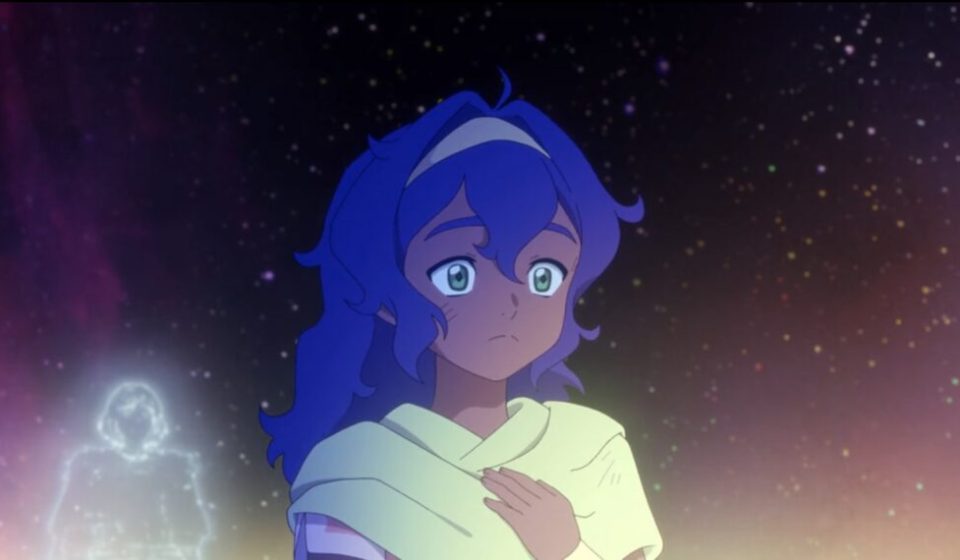
What you need to know
- In the Avatar: Seven Havens Season 1 finale, Pavi accepts being the Avatar and opens her root chakra to defeat the Anomaly.
- Angry, Pavi leaves her twin, Nisha, behind to open her next chakra in another Haven.
- Season 2 will follow the estranged sisters on different paths.
After bringing together twin Avatars Pavi (Saheli Khan) and Nisha (Aishu Devan), Avatar: Seven Havens Volume 1 separates them again in the final episode, paving the way for a very different volume 2, which has already been greenlit by Paramount+, with volumes 3 and 4.
At the end of Volume 1, Pavi is able to defeat the energy anomaly and save Ellora by overcoming her fear of being the Avatar, something Nisha has never struggled with before. Pavi unblocks her root chakra to do this, putting her on track to unblock the remaining six chakras. To do this, she must go to a new Haven. Pavi leaves Nisha behind, unable to forgive her for accidentally destroying their family years earlier.
Avatar co-creator Michael Dante DiMartino and Seven Havens Executive producers Sehaj Sethi and Ethan Spaulding sat down with TV Insider to break down all of Book 1’s biggest developments and reveal what’s to come as the sisters embark on “different journeys.”
Could you tell me about your decision to delve into this chakra concept and framework for the series? We have already seen the concept of chakra mentioned a little before. Avatar projects, but not as in-depth as this one.
Michael Dante DiMartino: That’s what was exciting for me and Bryan (Konietzko) and I hope you guys, when we pitched this idea of… The “Guru” episode, I know it’s some people’s favorite, and people really responded that learning about chakras and what they represent, and how it’s a path to self-understanding and growth and all that. And so when we were talking about this series, taking that idea and delving into it more felt right. But you know, that presented some challenges because on the one hand we have a structure and sort of a path for the progression of the story, but then we have the actual story that we’re trying to tell and trying to marry those two was really a challenge.
Ethan Spaulding: Yeah, I remember when I first heard about the story, when they were pitching it, I saw what you were working on, and I was like, “This seems really hard to do.” I was like, “How are we going to make this concept come true?” And so I’m happy with how it turned out. I think it went well. But at first it was intimidating for me to just think about the visuals and how we’re going to execute this.
Sehaj Sethi: What was most important to me was that I just wanted it to be organic. I wanted the character arcs to always feel like they came from the characters’ choices, and not from this predetermined feeling of what they needed to do on this chakra journey. And I think we got there. It took some details, but ultimately it was a good framework for us to build this, in many ways, more cosmic story.
A central element of the season 1 finale is Pavi unlocking her root chakra and overcoming the resulting anomaly. Why could she make it and Nisha couldn’t?
Seti: Pavi was the one willing to let go of fear, and it was truly the fear chakra. We had been trying throughout the first season to show how Pavi related to fear, and specifically, how she related to fear by taking on this moniker of Avatar. So in the end, much like Mike was saying, it wasn’t just a “Oh, and he opened his chakra” trip. It’s about, “Oh no, we started her in a place where she was so afraid of this, and in the end she adopted this title.”
And now, heading into season 2, it’s a question of what she’s going to do with that title? What will she do with this responsibility now? Nisha’s relationship to that, that’s something that will be revealed in season 2. But it was really, for us, a particularly emotional springboard that Pavi had to go through. This has been a big part of his inner journey.
Paramount+
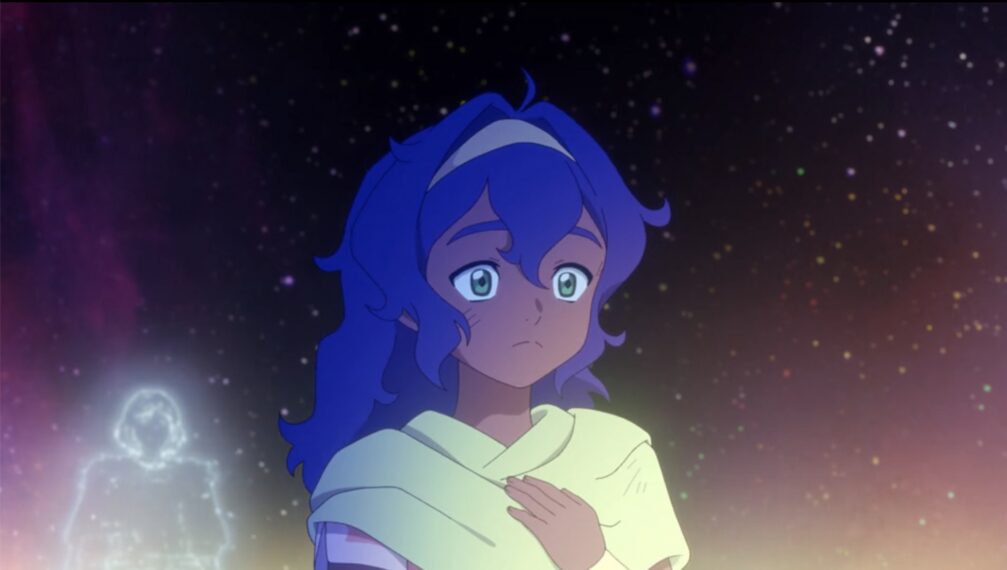
I remember Agam feeling that Nisha had a lot of energy in her, but when she read Pavi, she specifically said that she had blocked the chakras. Should Nisha take this journey alongside Pavi with the chakras?
Seti: They’re going to be going on different journeys, that’s probably the best way to put it. So Pavi is a little more chakra focused. Nisha focuses on a few other things. A big part of her journey, at the end of book 1, is what does she do now that this relationship that she held so dear to her heart has been severed, and also now that she is seen as a hero by her people? It’s almost a little monkey’s paw. For example, you get what you want, but this is by no means the atmosphere and circumstances in which you wanted to get it.
In the finale, Pavi also dissipated or redirected the energy created by Nisha. What is the difference between their avatar abilities at the end of volume 1? Do you see it as a yin and yang situation, like creation versus destruction?
Seti: Right now I think it’s more about them being avatars in different ways. That’s what I would say. They handle the situation from different points of view.
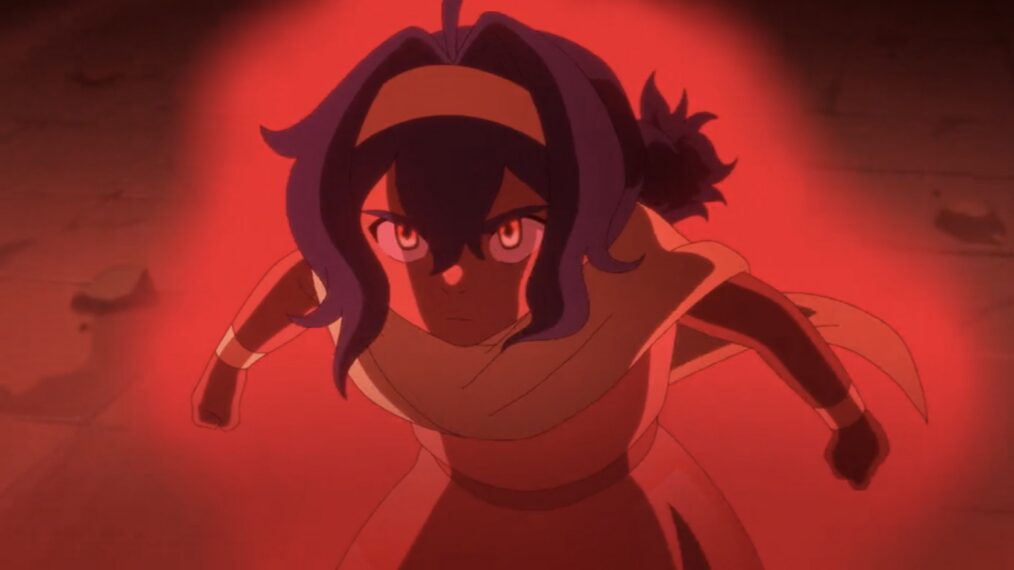
Another key element of the finale is that Pavi achieves something that sort of resembles the Avatar State when she defeats the Anomaly. What can you tell me about this new ability?
Spaulding: Yeah, I think it’s the chakra state.
Di Martino: Yeah, it’s not the Avatar State. Yeah, that’s what you called it, right?
Spaulding: Yeah, chakra state. Yeah.
Seti: We’re revealing a new type of state of being that the Avatar can enter, and it’s specifically tied to opening your chakra, so that’s what Pavi channels when she interacts and manipulates energy, and it gives her a little bit of power for a short time. A brief, brief moment.
Paramount+
Can Nisha potentially make it too?
Seti: You have to watch and see… We didn’t necessarily want to tell exactly the same story for the two girls.
With the finale, we also saw an emotional change in Pavi. In volume 2, can we expect a change in tone from her or a change in her personality?
Di Martino: We’re not going to make Pavi a very dark and brooding character. She’s still goofy and adorable and quirky and all that. But yes, now that she has accepted her role as Avatar, that she has unlocked her chakra and that she is no longer afraid… She still has some fears, but she has overcome this first stepping stone to accept this role. She’s still going to take on this role and figure out how to do it, what it means to her, and everything else in the future.
Pavi and Nisha also end volume 1 in different literal places. Going forward, are you focusing on both of their stories, even when they’re apart?
Seti: Yeah. A big part of one of the reasons we wanted them to split up is we wanted to see them split up from each other because they had a constant influence on each other throughout Season 1. We thought, “OK, let’s see what happens when Pavi is just an avatar on her own.” What does Nisha look like as an avatar alone? »
It surprised me a little that Pavi couldn’t forgive Nisha for the role she played in their past, even if it was by accident. What must Pavi go through to reach this point of forgiveness?
Di Martino: Some other stuff about the chakras.
Seti: I think something I hope people keep in mind when watching this is that we really wanted to understand that these characters aren’t perfect. They are defective. Maybe Pavi is wrong to be so harsh on Nisha, maybe Nisha was wrong to hide this from her sister. These are things we’re delving into as we move into Season 2.
As the stories diverge and Pavi moves to another Haven, are there still problems to resolve in Ellora since Nisha stayed there?
Di Martino: Storms always pose a threat. There is a bit more to do in Ellora. There are things to do, but yes, as we said, with Nisha, things are going to happen that will force her to take new actions. I’ll just say that.
There are seven Havens and seven chakras. Do you see yourself spending a season through Haven and Chakra in the future?
Di Martino: Book 1 focused on just one, but we’ll mix it up a little more as we go along. So I’m not going to tell you exactly how, but it won’t be seven books. I’ll just say that.
Seti: You heard it here for the first time. While we were making the series, we spent a lot of time building Ellora in terms of production. And I think that’s where girls come from. That’s where Jae comes from. It’s their house. It made sense to spend all that time there. I think as we looked at the later books we said, “Let’s give this a little more of the travel show vibe that we get from it.” Last Airbender.’ So you’re going to get to it a little bit more from here.
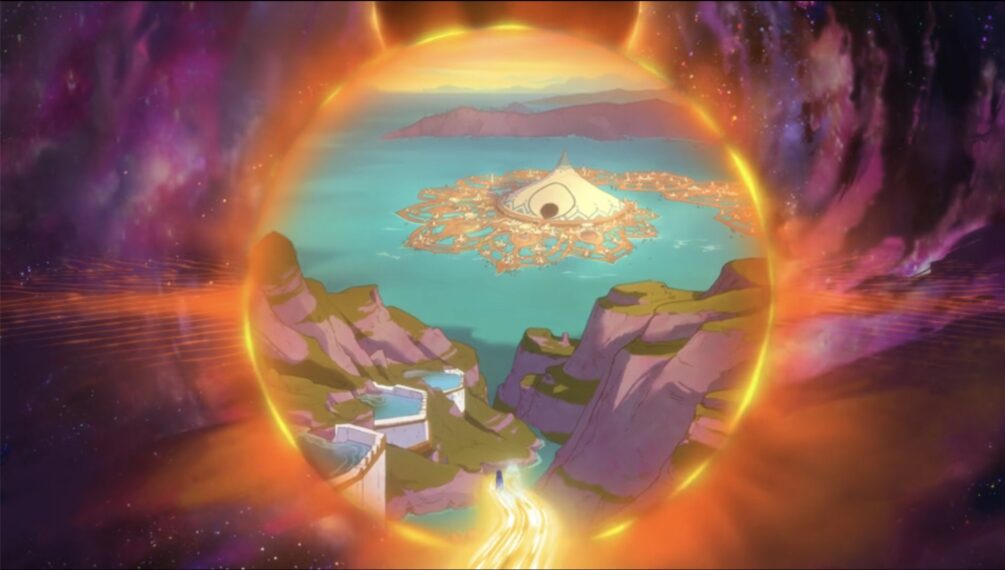
We know it’s the sacral chakra next, from the visuals. Can you say more?
Spaulding: It’s about pleasure and it’s blocked by guilt.
What does this imply?
Di Martino: The culture is moving towards a more fun and casual style.
Spaulding: Yes, floating islands are a fun place.
Seti: Yeah, it’s a relaxing place. Very different from Ellora in many ways in this regard.
Are they as afraid of the Avatar as Ellora? We saw this fear when the other Havens arrived in Ellora. But we haven’t seen anyone from the floating walkways, have we?
Di Martino: No, you haven’t met anyone.
Seti: You haven’t met anyone from there yet. You will have to wait and see.
Paramount+
Has volume 2 already been recorded?
Di Martino: We have been recording regularly since we started, so in recent years. So yes, all of volume 2 was recorded and produced. Everything is almost done on this one, and we are working on the others (Volume 3 and 4) to…
Gn entert