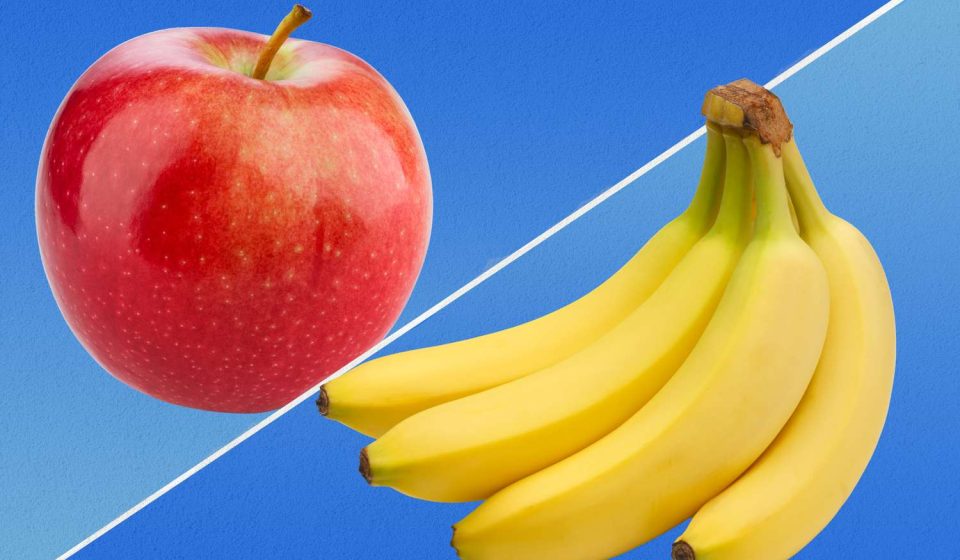

- Bananas and apples provide fiber, vitamins and other nutrients that can support a balanced diet.
- Apples provide a little more fiber, while bananas provide more potassium.
- Neither fruit is inherently better for weight loss: the best choice is the one you enjoy.
Fruit is an important part of a balanced diet, but it can sometimes get a bad rap when it comes to weight loss. Since fruit contains natural sugar, you may have heard that some varieties are better choices than others for weight loss, or even that you should avoid fruit altogether. So it’s no surprise that whether an apple or a banana is better for weight loss is a question dietitians hear regularly.
Does it really matter which one you choose when it comes to supporting weight loss? We asked two experts how bananas and apples compare nutritionally and whether one is really the better choice.
How Bananas Can Promote Weight Loss
They are a good source of fiber, potassium and magnesium
Bananas are a good source of nutrition, according to Tina Sergi, MS, RD, CSSD, CSCS, TSAC-F. A medium banana contains about 105 calories and 3 grams of fiber. Fiber supports digestion and helps you feel full longer. Sergi points to research that suggests people who lost weight also ate more fiber-rich foods, including fruits and vegetables.
In addition to its fiber content, a medium banana also provides 422 milligrams of potassium and 32 milligrams of magnesium, which also appear to play a role. Research suggests that higher intake of potassium and magnesium may help reduce body fat in adults. Magnesium may also support sleep quality, and better sleep tends to lead to healthier food choices during the day.,
Lavanya Kethamukkala, RDN, CLT, LDN, adds that bananas also provide antioxidants and carbohydrates for energy, along with their well-known potassium content.
Their natural sugar is nothing to worry about
A banana contains about 14 grams of sugar, leading some people to consider it too sweet for weight loss. Sergi does not agree with this logic. “Bananas contain sugar, but the natural sugar in a banana is not the same as the added sugar found in candy, soda, and ultra-processed foods,” she says. Unlike these foods, bananas also contain fiber, water, and resistant starch, which can affect how quickly carbohydrates are digested and absorbed.
Kethamukkala suggests a simple solution if you’re watching your sugar intake: choose a small banana rather than a large one. But there’s no need to avoid bananas just because they contain natural sugar.
Their maturity may affect their nutritional benefits
The riper a banana, the more of its resistant starch is converted into simpler carbohydrates. Less ripe green bananas retain more resistant starch, while ripe bananas tend to contain more readily available sugars.
This resistant starch also acts as a prebiotic fiber that feeds beneficial gut bacteria, notes Sergi. Since the amount of resistant starch changes as the banana ripens, green bananas may offer more resistant starch than ripe bananas, which may help maintain more stable blood sugar levels. But that doesn’t mean you should eat your bananas underripe to reap their other nutritional benefits. Bananas at different stages of ripeness can all be part of a balanced diet.
How Apples Can Support Weight Loss
They are a good source of fiber and water
A medium apple has about 95 calories, 4 grams of fiber and is about 86 percent water, Sergi says. This combination can make apples a hearty and relatively low-calorie option.
Apples are also a source of pectin, a type of soluble fiber that may support digestive health and contribute to a feeling of fullness.
Kethamukkala points out that apples also contain quercetin, an anti-inflammatory compound. She says these compounds may support gut health by protecting the intestinal lining and promoting the growth of beneficial bacteria.
They offer benefits peeled or unpeeled
An apple eaten without the skin provides around 2 grams of fiber. Eat it with the skin, and that number jumps to around 4 grams, according to Sergi. Kethamukkala agrees, noting that apple peels are full of antioxidants and fiber.
They are more filling than juice
A medium apple, half a cup of applesauce and half a cup of 100% apple juice can each count toward your fruit intake, but they are not equally filling. A whole apple eaten with the skin contains more fiber than applesauce or juice, making it the best option for satiety, says Sergi.
Kethamukkala ranks her preferences the same way: whole apple first, unsweetened applesauce second, and apple juice last, because juice tends to lose nutrients and may contain added sugar. Whole fruits also require more chewing and take longer to consume than juices, which can contribute to feelings of fullness.
Bananas or apples: which is better for weight loss?
“No fruit is better on its own. Apples offer more bulk and fiber, while bananas provide easy-to-use carbohydrates and potassium. Both can fit into a healthy weight loss plan,” says Kethamukkala.
If you’re exercising soon, the fast-digesting carbohydrates in a banana make it a convenient pre-workout snack. “If you’re looking for a high-fiber snack, whole apples have slightly more fiber than bananas and would be the better choice,” she says.
How to include both in a sustainable weight loss routine
Good news: you don’t have to choose. Both fruits can be part of a non-restrictive approach to weight loss.
- Keep them visible. “The easiest way to incorporate bananas and apples into a sustainable, non-restrictive weight loss approach is to keep them visible,” says Sergi. Fruit left on the counter is more likely to be eaten than fruit buried in the crisper drawer.
- Pair fruit with protein or fat. Sergi recommends topping a banana or apple with a tablespoon or two of natural peanut butter for a more satisfying and balanced snack.
- Bake bananas into muffins or granola. Kethamukkala suggests mashing banana into oatmeal muffins with nuts or chia seeds, or using it to naturally sweeten granola bars or homemade breakfast bars.
- Add the apples breakfast and dessert. Try chopped apples in a plant-based yogurt parfait with nuts and seeds, diced apples in granola, or baked apple slices with cinnamon and topped with yogurt.
- Don’t be afraid of whole fruits. According to Kethamukkala, a common mistake is avoiding fruit due to its natural sugar or using juice rather than whole fruit, which sacrifices fiber and volume.
Our expert opinion
Both bananas and apples can promote weight loss. Bananas offer fiber, resistant starch, potassium and magnesium, as well as fast-digesting carbohydrates that make them good fuel for workouts. Apples provide more fiber and water per calorie, as well as antioxidant compounds like quercetin that may support gut health. Rather than picking a winner, both dietitians recommend eating the fruits you actually enjoy and eating both when you can. “Don’t shy away from the natural sugar in fruit. A food label can’t reflect everything whole fruit has to offer, from fiber and essential nutrients to protective plant compounds that promote weight loss and overall health,” says Kethamukkala.
Gn Health