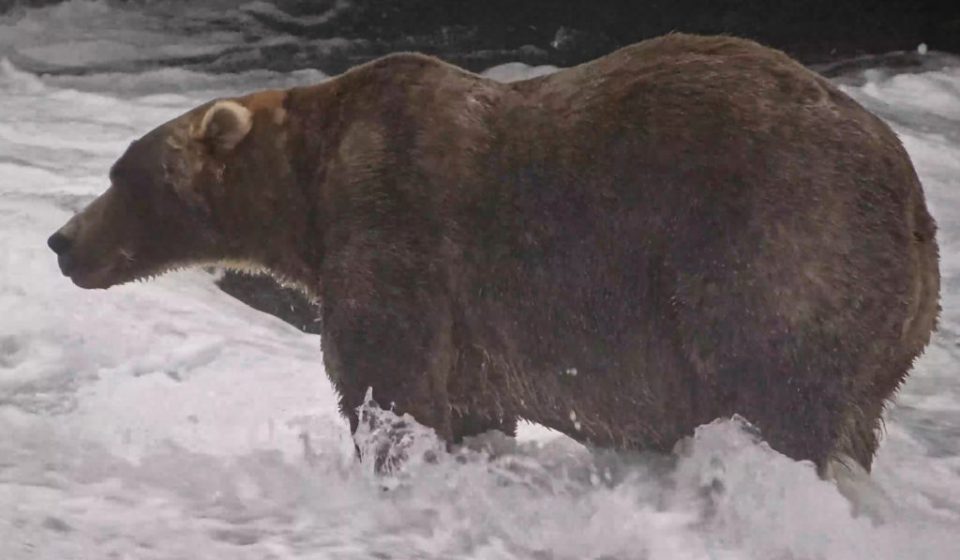

After a week of fierce competition, Bear 910 and Backpack became the final contenders for the title of toughest bear in Alaska’s Katmai National Park and Preserve.
LEARN MORE: Battle for heavyweight crown begins as Fat Bear Week opens in Alaska
There can only be one Fat Bear Week winner, and it’s up to the voters to decide on Tuesday.
The competition, now in its 12th year, celebrates the resilience of the 2,200 brown bears that live on the Alaska Peninsula Preserve, which stretches from the southwest of the state to the Aleutian Islands. Fat Bear Week was launched in 2014 as an interactive way to educate the public about brown bears, the coastal cousins of grizzly bears.
Last year’s winner, Chunk – known officially as Bear 32 – earned his victory at around 1,200 pounds. He was easily defeated in the first round of the competition this year by Bucky, who then lost a faceoff to Backpack, known officially as Bear 89.
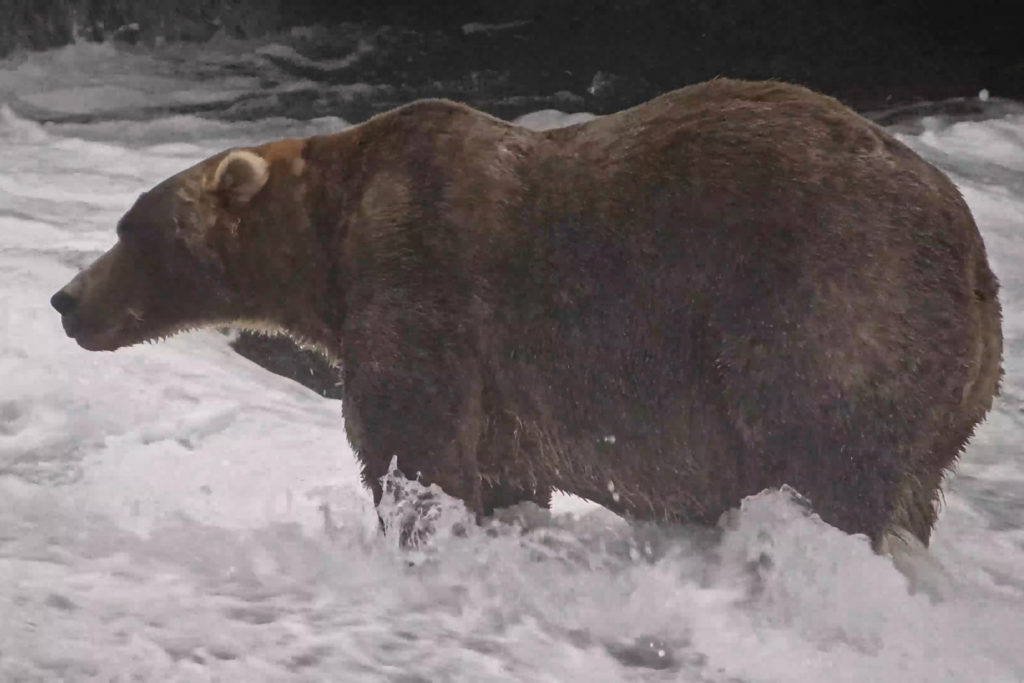
This image from a video provided by explore.org shows a brown bear known as “Backpack,” officially named Bear 89, wading in the Brooks River on September 8, 2026, in Alaska’s Katmai National Park and Preserve. Photo by explore.org via AP
This year’s event featured 16 Bears vying for the heavyweight title in a bracket-style single-elimination tournament. All voting is done online at www.fatbearweek.org, and a winner will be declared Tuesday evening after final voting closes. The public can watch the bears on explore.org’s live cameras before choosing their favorite.
“Big bears are successful bears,” the nonprofit says on its website. This group gorges on the abundant salmon that return to the Brooks River beginning in late June. This is where they can gorge themselves to build up the fat reserves they will need to get through the winter. To participate in the competition, bears must frequent the area around the river.
Adult male brown bears typically weigh between 600 and 900 pounds (about 270 to 410 kilograms) in mid-summer. By the time they are ready to hibernate after feasting on migrating and spawning salmon, large males can weigh well over 1,000 pounds (454 kilograms). Females are about a third smaller. The bears can each eat up to 30 fish a day at this time of year, working hard to eat a year’s worth of food in about six months.
During winter hibernation, bears do not eat or drink and lose a third of their body weight.
Fat Bear Week participants also include five bear families, in recognition of the record number of families and cubs at the river this summer. A mother must feed and protect her young while eating enough calories to survive during hibernation. Cubs are often at risk of being attacked by other bears due to their territorialism or lack of food.
Bear 132 and her three spring cubs advanced to the semifinals, but lost to Bear 910.
Bear 132 has become one of the largest and most experienced mother bears in Brooks River, according to nonprofit candidate profiles. In mid-July, one of her cubs became separated from the family for several days, wandering alone in the river corridor. They were reunited a few days later.
Jamie Stengle contributed from Dallas.
A free press is the cornerstone of a healthy democracy.
Support trusted journalism and civil dialogue.
Gn headline