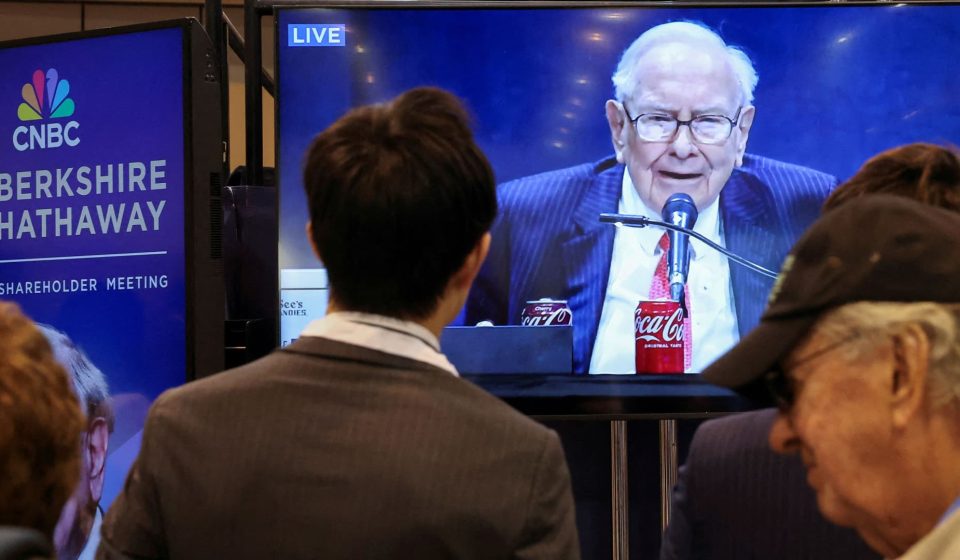

MEMBER OF THE PUBLIC: Mr. Munger, I know you like to evoke humility to promote rational thinking. So my question is: What is the most recent business mistake you made, Mr. Munger, and why did it happen? (Laugh)
WARREN BUFFETT: I’ll take notes on this one. (Laugh)
CHARLIE MUNGER: The most extreme errors in Berkshire history are errors of omission. They do not appear in our figures. They appear in opportunity costs.
In other words, we have opportunities, we almost succeed. In retrospect, we can say that we were wrong not to do so.
As far as shareholders are concerned, it is those in our history who have really cost the most. And very few leaders think or talk much about opportunity costs.
But Warren, we exploded…
WARREN BUFFETT: Billions and billions and billions. Might as well say it. (Laugh)
CHARLIE MUNGER: It’s true, it’s true. And we continue to do so. (Laugh)
WARREN BUFFETT: Some might say we are improving. (Laugh)
CHARLIE MUNGER: I don’t like to mention specific companies, because… you know, we might, when the time comes, want to buy them out and have the opportunity to do it at our price.
But almost everywhere in life, and in business life as well, what really costs, versus what could easily have been, is missed opportunities. I mean, it’s just… it’s an impressive amount of money…
WARREN BUFFETT: I might add that when we talk about errors of omission, of which we have had many, and some very significant, we don’t mean not buying stocks where we — a friend manages them, or we know the name and it went from one to 100. That doesn’t mean anything. It’s only…
We only view errors as things within our circle of competence.
So if someone knows how to make money in cocoa beans, or if they know how to make money in a software company or something, and we miss that, it’s not a mistake, as far as we’re concerned.
What constitutes a mistake is when it’s something we understand and we sit there and look at it and we don’t do anything.
Or even worse, what really gets me is when we do something really small with it. We make it a real pipette, whereas we could make it very large.
Charlie elegantly refers to this when I do this sort of thing, like when I suck my thumb. (Laugh)
And there really – I mean, we have sometimes been idiots with companies that we understood well.
And that might be because we started buying, the price went up a bit, and we waited hoping to get more at the price we initially started with – there could be a lot going on.
But these are huge mistakes. Of course, conventional accounting does not take them into account at all. But they are in our scorebook.
Gn bussni