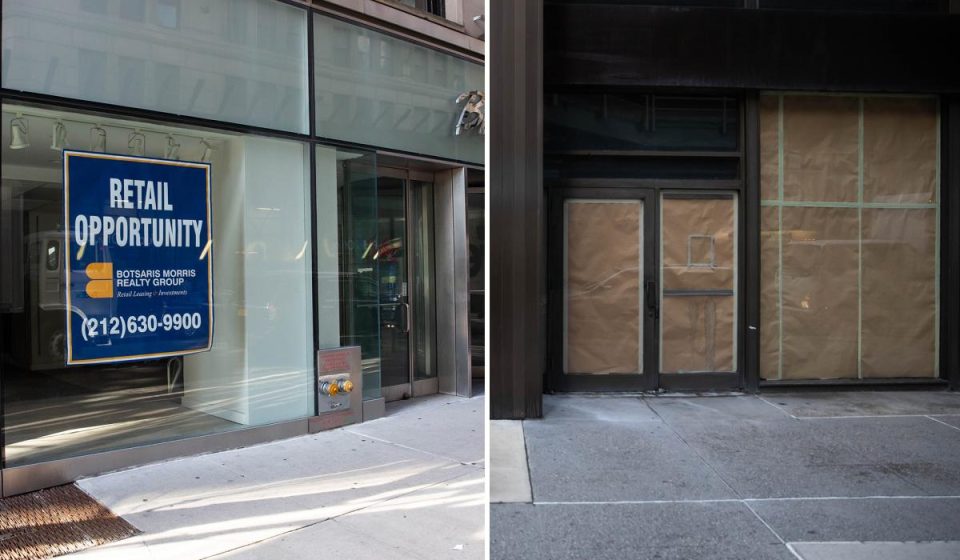
Big Apple retail blues: More than 16,000 New York storefronts remain empty as businesses struggle

As more and more shoppers abandon their local mom-and-pop stores for online stores, New York City’s storefronts are reaching shocking levels of vacancy.
More than 16,000 storefronts across the five boroughs are empty as business closings have outpaced openings for three straight years, according to new data from City Comptroller Mark Levine’s office.
The city’s retail vacancy rate jumped to 11.32% in the third quarter of 2026, up from 11.26% in the previous three months – Brooklyn and Queens fare worse than at the end of 2023.
The report “is another wake-up call,” Andrew Rigie, executive director of the NYC Hospitality Alliance, told the Post. “The city needs to focus not only on helping new businesses open, but also on preventing existing businesses from closing. »
Some 2,551 businesses closed their doors between July and September, while only 2,275 opened their doors, resulting in a net loss of 276, according to the comptroller’s new job vacancy dashboard.
Small businesses accounted for almost three-quarters of the net losses, with 2,201 closures and 1,996 openings.
The number of business openings decreased by 16.1% compared to the previous quarter, while closures decreased by 17.4%.
These latest figures mark the 12th consecutive quarter in which store closures have exceeded openings.
Meanwhile, more than 10,000 spots previously occupied by small businesses remain vacant.
Manhattan continues to have the highest vacancy rate among the five boroughs, at 13.12%, a considerable drop from its post-pandemic peak of 15.8% in late 2023.
Brooklyn, however, is closing in on Manhattan with a vacancy rate of 12.68%, while Queens saw the largest increase of any borough since 2023, reaching 9.8%.
About one in five storefronts is empty in parts of the Financial District, Tribeca, Ocean Hill, East New York and Old Astoria.
“Manhattan’s recovery is real, but it’s uneven, and the corridors that are still struggling tend to share some problems,” Jessica Walker, president and CEO of the Manhattan Chamber of Commerce, told the Post.
“Buildings with five-day office workers or a single anchor tenant lost their base, while neighborhoods with residents, tourists and nightlife rebounded more quickly.”
The challenges facing neighborhood merchants have persisted despite a rebound in tourism and a 6.4% increase in taxable sales citywide in fiscal 2026.
Business owners, meanwhile, are grappling with higher expenses on everything from utilities and insurance to labor.
The city’s minimum wage increased to $17 an hour in January, while consumer prices in the New York metropolitan area rose 4.5% in the 12 months through September.
A survey by the Federal Reserve Bank of New York found that utility companies in New York and northern New Jersey reported an average cost increase of about 7% in 2025.
Results of a subsequent survey identified employee health insurance, utilities and business insurance as expenses that are growing particularly quickly.
Vacancy rates were particularly high among stores classified as vape and cigar stores, at about 26 percent, and among furniture and home goods retailers, at nearly 16 percent, according to the comptroller.
About 13.5% of clothing storefronts are vacant, as are more than 10% of spaces previously occupied by bars.
In some neighborhoods, the problem is not just that businesses are closing, but also that finding new tenants can take years.
A separate report released by Levine’s office in June found that in parts of Williamsburg, Crown Heights, Astoria, Midtown and the Upper East and Upper West, more than 60 percent of vacant small business storefronts had been empty for at least two years.
Walker said some of the hardest-to-fill spaces were once occupied by pharmacies, banks and retail chains.
“These spaces are much larger than a local restaurant, salon or store can use, and dividing them up is expensive and slow,” she told the Post.
Even when landlords find tenants, regulatory hurdles can keep businesses from opening their doors for months, Walker added.
“Between building permits, inspections, liquor licenses and community board review, a new tenant can wait several months, often more than a year, to pay rent before making a dollar,” she said.
Walker also pointed to Manhattan’s long-standing scaffolding, large construction projects and commercial rent tax as deterrents.
“That’s why so many spaces sit empty for years, not months.”
The report also found little evidence that corporate chains were systematically displacing family-owned traders.
Of the approximately 96,500 storefronts occupied by small businesses at the start of 2020, only 2,150 had been taken over by chains.
The Mamdani administration announced more than 50 reforms aimed at helping small businesses, including efforts to streamline permitting and licensing and reduce the costs of rent, insurance and utilities.
Ashley Ranslow, director of the National Federation of Independent Business in New York State, placed the blame on the City Council’s regulatory agenda.
“From paid and unpaid leave requirements to the threat of further lawsuits, it’s becoming nearly impossible for a small business owner to operate in New York,” Ranslow told the Post.
Walker called for firm deadlines for permit approval, opportunities for merchants to correct violations before being fined, and commercial rent tax relief.
She also urged the city to help landlords subdivide larger vacant storefronts and provide incentives for long-term leases with independent businesses.
The comptroller’s office plans to update its storefront dashboard quarterly, tracking openings, closings and vacancies down to the neighborhood level.
“With 15,000 restaurant and bar jobs lost over the past year, high labor costs, insurance premiums, rents, inflation, costly litigation and red tape are crushing small businesses,” Rigie said.
“Our elected leaders must focus on reducing the costs and burdens of doing business here, not increasing them, if we want to fill empty storefronts and keep New Yorkers employed. »
Gn bussni