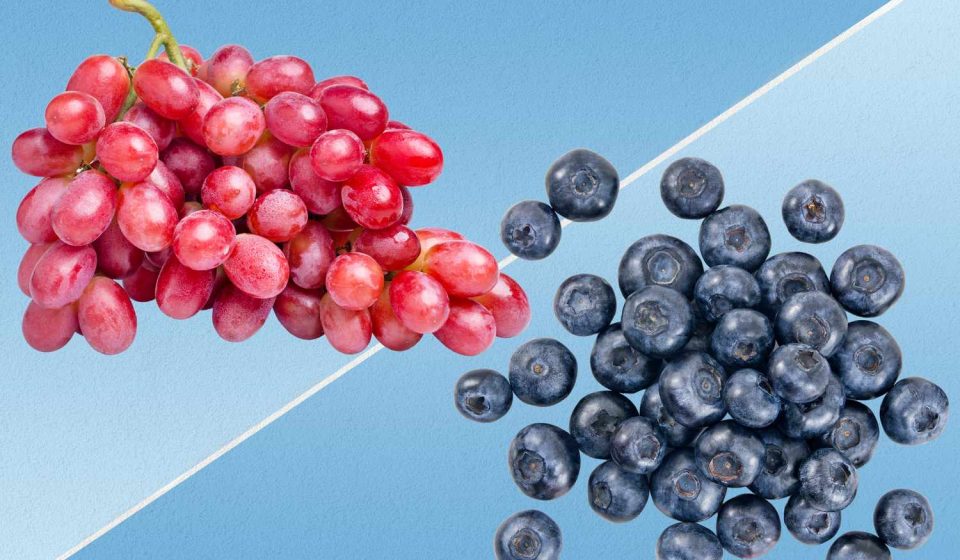

- Fruit contains sugar, but not all sugars in fruit affect blood sugar levels equally.
- Blueberries contain fewer carbs and more fiber than grapes, plus anthocyanins to control blood sugar.
- Pairing fruit with protein, fat, and other sources of fiber can help keep blood sugar levels more stable.
Blood sugar refers to the amount of glucose, or sugar, in the blood at any given time. “We need glucose to fuel our brains, muscles, and other organs, but persistently high blood sugar levels over time can increase the risk of complications, especially in people with diabetes,” says Caroline Thomason Bunn, RD, CDCES, registered dietitian and diabetes educator. Wide swings in blood sugar levels throughout the day can also negatively impact energy, mood and metabolic health.
Fruit often gets a bad rap for containing sugar in the form of fructose, but not all sugar-containing foods have the same impact on blood sugar levels. “The fiber in whole fruits helps slow digestion and may cause a more gradual rise in blood sugar compared to foods with added sugars and little fiber,” says Bunn. Fruits also contain antioxidants that support healthy blood sugar levels.
Grapes and blueberries are two popular fruits, and you may be wondering which one is better for blood sugar. We asked dietitians how each of these fruits affects blood sugar, as well as ways to enjoy them in a blood sugar-friendly way.
Blueberries and blood sugar
“Blueberries contain carbohydrates and natural sugar, so they cause some increase in blood sugar,” says Bunn. However, they also contain fiber and are relatively low in total carbohydrates for a serving of fruit. One cup of blueberries contains 84 calories, 22 grams of total carbohydrates, 15 grams of sugar and 4 grams of fiber. Fiber slows down how quickly food leaves your stomach, how quickly carbohydrates are broken down, and how quickly glucose is absorbed into the bloodstream. Since blueberries contain fiber, they won’t raise your blood sugar as much as drinking fruit juice, which is often lacking in fiber.
Research shows that blueberries and other berries have benefits for glucose regulation, says Vandana Sheth, registered dietitian and diabetes educator, RDN, CDCES, FAND. “A systematic review and meta-analysis found improvements in fasting blood sugar and HbA1c in people with diabetes consuming blueberries or cranberries,” she says. Some of the blood sugar benefits of blueberries appear to come from a group of plant compounds called anthocyanins. Anthocyanins are powerful antioxidants that give blueberries their dark blue hue. In addition to fighting inflammation and oxidative stress, research shows that anthocyanins play a role in the breakdown of carbohydrates, specifically reducing the amount of glucose released into the bloodstream.
Grapes and blood sugar
Grapes are higher in sugar and lower in fiber than blueberries. One cup of grapes contains 125 calories, 29 grams of total carbohydrates, 25 grams of sugar and 1.4 grams of fiber. So if you compare eating a cup of grapes to a cup of blueberries, grapes will cause a greater rise in blood sugar. “That said, grapes remain a nutritious whole fruit. They provide fiber, water, vitamins, and beneficial plant compounds, and there’s no need to avoid them just because they contain natural sugar,” says Bunn. Rather, it is a matter of combining them with other foods rich in fiber, protein and/or fat to reduce the blood sugar spike.
Similar to blueberries, red and purple grapes contain anthocyanins, and all grape skins contain resveratrol, another powerful plant compound. “Research on grape products and grapes has shown some potential benefits for insulin resistance. However, fasting blood sugar and A1C have been mixed. Much of the research has focused on grape products rather than fresh grapes,” says Sheth. Still, grapes can be enjoyed and incorporated into a blood sugar-friendly diet, she says.
Which is best for blood sugar?
When it comes to balancing blood sugar, dietitians say blueberries have a benefit. “They provide a little more fiber and a little less carbohydrates than grapes. Plus, we have more research on berries and glucose regulation,” says Sheth. This is not to say that grapes are a “bad” choice or that they should be avoided. “The difference between these two fruits is relatively small compared to the whole meal, the portions and what you’re eating,” says Bunn.
Ultimately, Bunn says, most Americans don’t eat enough fruit for the day. And research shows that eating fruit can protect against type 2 diabetes. Additionally, those who eat 1.5 to 2 cups of fruit per day are less likely to die from chronic diseases. “The key is portion size, what you pair your fruit with, and your individual glucose response,” says Sheth.
How to Benefit from Blueberries and Grapes for Better Blood Sugar
The combination of protein, fiber and fat helps keep blood sugar levels stable. Here’s how to enjoy both blueberries and grapes for better blood sugar levels.
- Add to Greek yogurt. For breakfast or a snack, add blueberries to strained (Greek) yogurt, which is high in protein. “Pairing carbohydrate-containing fruits with protein, fat, and/or fiber can help make a snack more satisfying and lead to a more gradual rise in blood sugar,” says Bunn. For more protein, fiber and fat, add nuts or chia seeds.
- Pair it with protein and fat for a balanced snack. Enjoy grapes with cheese or a handful of nuts for a healthy snack or appetizer, says Sheth. Cheese and nuts contain proteins and fats that together slow the rise in blood sugar levels.
- Blend into a smoothie. Blend blueberries or grapes into a smoothie with strained yogurt (Greek style) or protein powder, milk and a tablespoon of almond butter for a balanced meal or snack you can take with you.
- Add to your lunch. Spread out a 1-cup serving of blueberries or grapes to accompany your lunch. Just make sure your lunch contains a protein source to make the deal blood sugar-friendly. Or add a little sweetness to your lunch by adding blueberries to a salad or grapes to a chicken salad.
Our expert opinion
While blueberries and grapes both contain sugar, they also contain fiber, which slows the rise in blood sugar levels. Dietitians say blueberries have a slight advantage over grapes when it comes to maintaining healthy blood sugar levels because they contain fewer total carbohydrates and more fiber, as well as powerful anthocyanins that have a favorable impact on glucose regulation. But all fruits, including grapes, can be part of a balanced diet, even if you have high blood sugar or diabetes. It involves pairing fruit with protein, fiber and healthy fats to slow the rise in blood sugar and insulin release. This combination will also keep you feeling fuller for longer and give you consistent energy throughout the day.
Gn Health