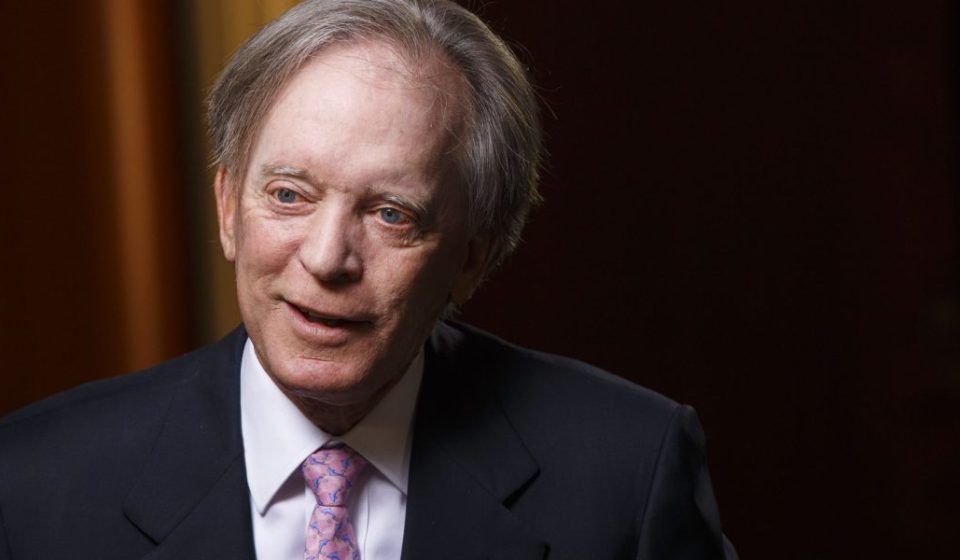
Bond king Bill Gross warns against owning bonds as long-term debt enters a new era of volatility.

PIMCO co-founder Bill Gross, who revolutionized bond investing with active trading strategies, warned that the overall credit landscape had become unbalanced and warned against holding long-term debt.
In a Financial Times In an opinion piece published Wednesday, he pointed out that credit to government, mortgages and businesses now totals about $84 trillion.
“Too much debt can lead to too much risk and too much equity can lead to less earnings per share growth in some underperforming productivity cycles,” Gross wrote. “Move them both at the same pace, consistent with industry standards, and economic growth will most likely expand as well.”
But balance sheets have become too unbalanced, putting growth at risk, he said. The AI sector’s debt boom is an anomaly by historical standards, and federal debt has already reached record peacetime levels, now reaching 100% of GDP.
Even though all that debt fuels growth today, it has led to higher inflation today and will likely slow growth in the future, Gross added.
“In such an environment, my view is: don’t hold bonds, except for one-year Treasuries, which are now at 4.55%,” he said. “Be careful with stocks at record highs, as higher yields over time will reduce profit margins. Prepare for the end of ‘what you’re used to’ stock markets and greater volatility in benchmark 10-year Treasury bond prices.”
His warning is notable given his career in bond investing, which earned him the nickname “Bond King.” For decades, he dominated a corner of the financial markets considered dormant before he arrived on the scene.
Rather than simply buying bonds and holding them to maturity to earn interest, his investment strategies generated returns far greater than those provided by “discount coupons.”
But in recent years, the market has also undergone its own transformation. Central banks around the world are no longer reliably buying and holding Treasury securities as they seek to diversify their reserves. At the same time, price-sensitive hedge funds have become bigger players in the bond market and are quicker to sell.
So-called basis trading, which has become popular among hedge funds, where they take advantage of small price differences between Treasury bonds and Treasury futures, has made the market more volatile.
In fact, basis trading has grown so much that hedge funds’ share of total Treasury holdings has nearly doubled since 2023 to 8.5%, surpassing the share held by depository institutions and mutual funds.
A new era of volatility has emerged this year, as 10-year Treasury yields have climbed more than 100 basis points since the start of the Iran war and recently hit their highest levels in 24 years.
Although hedge funds are a key source of liquidity in the market, they could weaken bonds’ reputation as a safe haven, Joe Maher, markets economist at Capital Economics, said in a note in August.
“In a risk-averse environment, safe-haven flows into sovereign bonds may be offset by hedge funds unwinding their leveraged trading positions as funding conditions tighten,” he writes. “And given that they have no obligation to act as market makers, it is more likely that liquidity will dry up in these markets during times of stress.”
Additionally, hedge funds could transmit stress to different assets, Maher warned. For example, a stock market sell-off could force hedge funds to dump their bond positions to cover their stock losses.
For his part, Gross said he’s wary of AI hyperscalers unless they have a price-to-earnings ratio below 20. And while stocks like Verizon and AT&T have decent returns, their mobile businesses are threatened by SpaceX’s Starlink.
Some income funds that trade at a discount to net asset value may offer some opportunities, but they would suffer if short-term interest rates rise more than expected, he added.
“Preserve and protect is my current investment motto,” Gross wrote.
Gn bussni