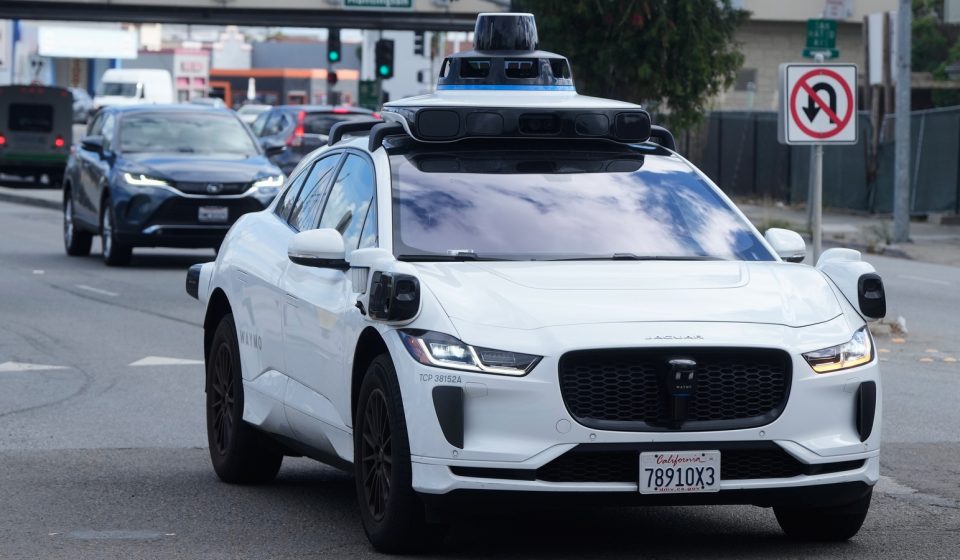
California DMV bans Waymos from state highways after series of traffic incidents

The California Department of Motor Vehicles (DMV) has ordered Waymo to stop operating its autonomous vehicles on California highways, citing concerns that the vehicles pose an imminent danger to public safety.
The DMV’s decision follows a series of incidents involving Waymo vehicles on Bay Area highways, specifically citing two of them.
One of the incidents noted by the agency involved three Waymo vehicles that entered an active construction zone on U.S. Highway 101 near Burlingame, endangering workers, equipment and other vehicles. According to the DMV, similar incidents have occurred several times.
The other incident cited by the DMV gained additional attention after video showed a Waymo vehicle attempting to pass California Highway Patrol cruisers conducting a traffic stop on Interstate 280 earlier this month.
In a statement, Waymo said safety remains its top priority.
“Our rideshare service continues to operate safely on surface streets, providing more than half a million trips each week. We are working with the California DMV and other state officials diligently and responsibly to resume operations on highways,” said a spokesperson at our sister station in the Bay Area.
SEE ALSO: California passenger stuck in Waymo self-driving car in construction zone, followed by police
A San Francisco man recounts the terrifying moment the Waymo he was riding in went haywire in a construction zone.
The DMV said concerns about Waymo vehicles on highways are not new.
This is the second time this year Waymo has faced highway restrictions. In May 2026, Waymo announced it was suspending highway operations in several cities, including San Francisco and Los Angeles, to improve how its vehicles respond in construction zones.
The California DMV says the new restrictions took effect on November 11 and “will remain in place until Waymo demonstrates department that it was necessary effective patch actions…”
“I see this as an opportunity to continue to improve a technology,” said Billy Riggs, a professor at the University of San Francisco.
Riggs said data shows that autonomous vehicles remain safer overall than human drivers, but added that challenges are expected as the technology continues to develop.
“An automated vehicle can understand and identify all aspects of the road and make very sophisticated judgments about them. But a lot of times it can’t understand the context,” Riggs said.
Earlier this year, San Francisco resident Elliot Slade said he was riding in a Waymo vehicle when it veered off course and entered a construction zone. KGO-TV, our sister station in the Bay Area, previously spoke with Slade about the incident and interviewed him again on Monday.
“I used to use it all the time, and now it’s like, hey, I’m going to walk or I’m going to take the (bus),” Slade said.
Slade said the experience left him skeptical about using Waymo vehicles in the future. While recognizing that accidents can happen with any vehicle, he remains concerned about the potential consequences if similar incidents occur again.
“You had a chance to fix it if it went viral. And if they didn’t make sure it was completely safe, then I’m disappointed. Super disappointed,” Slade said.
RELATED: Waymo expands service to Torrance, El Segundo and Manhattan Beach
Residents of three South Bay communities can now call a Waymo.
Copyright © 2026 KGO-TV. All rights reserved.
Gn headline