
As longevity research advances, scientists are finding new ways to test a once-speculative idea: Aging itself could become a target of medicine.
Researchers are studying whether, instead of doctors waiting for age-related diseases to appear, it would be possible to measure and influence the biological changes that occur with age.
The goal would be to intervene in the biological processes of aging before they contribute to disease, so that people not only live longer, but also have more healthy years, known as life expectancy.
“Aging has a biology. That biology causes disease,” Nir Barzilai, director of the Aging Research Institute at Albert Einstein College of Medicine in New York, told CNN.
Instead of waiting for diseases such as diabetes, cardiovascular disease or cancer to appear and treating them separately, he argues that medicine could eventually target the biological processes associated with aging that contribute to multiple pathologies at once.
Daniel Belsky, associate professor of epidemiology at Columbia University’s Mailman School of Public Health and the Robert N. Butler Columbia Aging Center, said the hypothesis has not been tested in humans.
“We don’t know yet if we can really do this. But we have a body of evidence that this is possible. And we now have a mobilization of resources to test it,” Belsky said.
In laboratory experiments, researchers have been able to manipulate the biology of aging in organisms ranging from roundworms to mice. Medications, exercise, restriction of calorie intake and other interventions can slow the accumulation of cellular changes associated with aging, Belsky said, thereby extending animals’ lives.
“For humans, we do not yet have evidence from clinical trials demonstrating that intervention on this biology to extend lifespan is possible,” he added. “But – and this is where I think the excitement is coming from – we are seeing a step change in the progression towards these human clinical trials.”
Read the body
Scientists are looking beyond chronological age – the number of years a person has lived – at biological measures that reflect how their body is aging. Their task is not simply to measure biological aging, but to identify measurable changes in the body that can reveal its evolution.
One approach focuses on epigenetics – that is, changes in the way genes are regulated without altering the underlying DNA sequence. Belsky said that by looking at chemical tags known as methyl groups linked to DNA, researchers “could track the passage of time in a human body.”
” data-fave-thumbnails=”{“big”: { “uri”: “https://media.cnn.com/api/v1/images/stellar/videothumbnails/16832478-85761695-generated-thumbnail.jpg?c=16×9” }, “small”: { “uri”: “https://media.cnn.com/api/v1/images/stellar/videothumbnail/16832478-85761695-generated-thumbnail.jpg?c=16×9″ } }” data-vr-video=”false” data-show-html=”“data-byline-html=”
“data-timestamp-html=”
” data-check-event-based-preview=”” data-is-vertical-video-embed=”false” data-network-id=”” data-publish-date=”2026-09-25T06:15:21.912Z” data-video-section=”science” data-canonical-url=”https://www.cnn.com/2026/09/25/science/video/answering-tomorrow-healthier-living-hanako-montgomery-spc” data-branding-key=”destination-abu-dhabi” data-video-slug=”answering-demain-healthier-living-hanako-montgomery-spc” data-first-publish-slug=”answering-tomorrow-healthier-living-hanako-montgomery-spc” data-video-tags=”healthcare, abu dhabi, single cell omics, research, wellness, longevity, aging” data-breakpoints=”{” video-resource–media-extra-large”:=”” 660}”=”” data-display-video-cover=”true” data-details=”” wp_automatic_readability=”5.8144329896907″
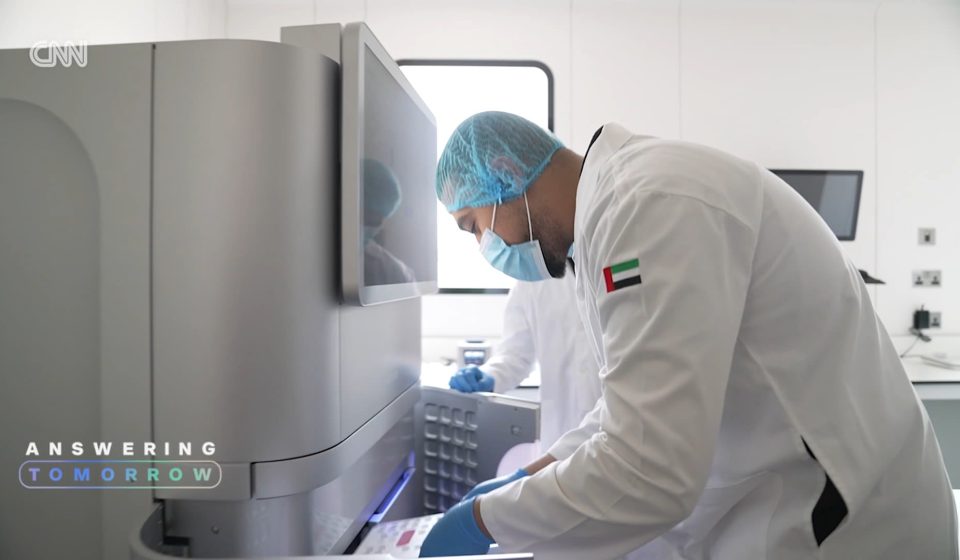
Abu Dhabi’s Institute for Healthier Living is working toward a more personalized approach to healthcare, and CNN’s Hanako Montgomery visits their lab to learn more.
” data-check-event-based-preview=”” data-network-id=”” data-publish-date=”2026-09-25T06:15:21.912Z” data-video-section=”science” data-canonical-url=”https://www.cnn.com/2026/09/25/science/video/answering-tomorrow-healthier-living-hanako-montgomery-spc” data-branding-key=”destination-abu-dhabi” data-video-slug=”answering-demain-healthier-living-hanako-montgomery-spc” data-first-publish-slug=”answering-tomorrow-healthier-living-hanako-montgomery-spc” data-video-tags=”healthcare, abu dhabi, single cell omics, research, wellness, longevity, aging” data-media-metadata=”{“adKeyValuePairs”:{“spec”:”destination_abu_dhabi”},”boltId”:”17a35043-0d04-544f-ab6c-ee30 7f094e51″,”branding”:”destination-abu-dhabi”,”cepFedSegs”:”wbd:655,wbd:657,wbd:16BB,wbd:KKV,wbd:6G3,wbd:6FW”,”c epParams”:”655=cep_tags&657=cep_tags&16BB=cep_sent&KKV=cep_tags&6G3=cep_tags&6FW=cep_tags”,”cepTopics”:{“655″:” cep_tags”,”657″:”cep_tags”,”16BB”:”cep_sent”,”KKV”:”cep_tags”,”6G3″:”cep_tags”,”6FW”:”cep_tags”},”description”:”
Abu Dhabi’s Institute for Healthier Living is working toward a more personalized approach to healthcare, and CNN’s Hanako Montgomery visits their lab to learn more.
“,”firstPublishSlug”:”answering-tomorrow-to-a-healthier-life-hanako-montgomery-spc”,”headline”:”Can we control the way we age ?”,”id”:”me9f053be6d7830dcb3b2e916da16eae3b7d59fa51″,”isAdSensitive”:false,”mediumId”:”me9f053be6d783 0dcb3b2e916da16eae3b7d59fa51″,”sectionName”:”science”,”source”:”CNN”,”stellarId”:”L19jb21wb25lbnRzL3ZpZGV vLXJlc291cmNlL2luc3RhbmNlcy9jbXVnanF3b2swMDAzM2I2cWtwZXlvam5k”,”trt”:”84.418″,”videoTags”:(),”videoUrl”:” https://www.cnn.com/2026/09/25/science/video/answering-tomorrow-healthier-living-hanako-montgomery-spc”}” class = “video resource”
 Abu Dhabi’s Institute for Healthier Living is working toward a more personalized approach to healthcare, and CNN’s Hanako Montgomery visits their lab to learn more from COO Allan Boston.
” class=”image__dam-img image__dam-img–loading” onload=”this.classList.remove(‘image__dam-img–loading’)” onerror=”imageLoadError(this)” height=”1080″ width=”1920″/
Can we control how we age?
Abu Dhabi’s Institute for Healthier Living is working toward a more personalized approach to healthcare, and CNN’s Hanako Montgomery visits their lab to learn more from COO Allan Boston.” class=”image__dam-img image__dam-img–loading” onload=”this.classList.remove(‘image__dam-img–loading’)” onerror=”imageLoadError(this)” height=”1080″ width=”1920″ loading=”lazy”/
Belsky’s work also involves the analysis of several types of biological data. His project Finding Aging Biomarkers by Searching Existing Trials (FAST) collects what researchers call multi-omics data – combining different layers of information about the body – including proteins, metabolites and epigenetic marks on white blood cells. The goal is to identify biological indicators that respond to different interventions and could potentially help researchers measure the impact of these interventions on the biology of aging.
But Belsky said the critical link between manipulating these biomarkers and extending healthy lifespan has not yet been established.
The difficulty is that the results researchers want to measure may take decades to manifest. Belsky said a trial designed to test whether an intervention taken at age 40 or 50 could prevent chronic disease might require following participants for two or three decades.
Researchers are therefore trying to determine whether biomarkers of aging can potentially be used to predict long-term health outcomes. If a biomarker can be shown to reliably predict whether an intervention will prevent disease or extend a healthy lifespan, it could serve as a “surrogate endpoint” in clinical trials – a measurable sign that a meaningful health outcome is likely to follow.
As the science develops, longevity clinics are beginning to appear, where patients are offered conventional medical assessments combined with a much wider range of tests intended to paint a detailed picture of an individual’s health.
In the United States, the Mayo Clinic launched its Healthy Longevity Clinic in 2023, and Singapore’s National University Health System has established a similar program, combining detailed assessment with personalized lifestyle or medical interventions.
But as longevity clinics begin to become more common, some scientists have warned that this area needs improvement…
Gn Health