TORONTO (AP) — Canada threatened Thursday to sue automaker Stellantis and claw back hundreds of millions of dollars in government funding after the company shifted planned vehicle production to the United States during President Donald Trump’s trade war and agreed to sell its idled assembly plant in Brampton, Ontario.
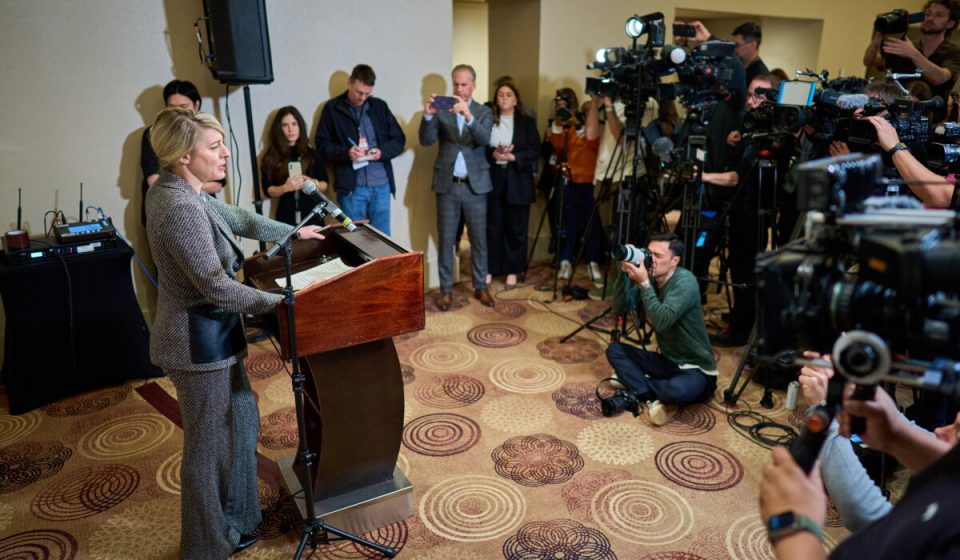
Industry Minister Mélanie Joly said Ottawa had issued Stellantis a formal notice alleging violations of its financing agreement, giving the automaker 30 days to remedy the violations or face legal action.
“We sent out a notice of default and basically they have 30 days or more. Of course we will take them to court,” Joly told reporters in Toronto.
Joly said Stellantis violated the agreement by abandoning production in Brampton without identifying a replacement vehicle.
Trump’s tariffs put pressure on The Canadian automotive industry, which is deeply integrated into the American manufacturing industry. Trump has repeatedly pushed automakers to move production south of the border.
Stellantis, the the fourth largest automobile manufacturer in the worldabandoned plans to build the Jeep Compass at its Brampton plant and shifted production to Illinois, leaving more than 2,000 Canadian workers jobless.
Canada has committed up to C$529 million (US$380 million) in 2022 to help Stellantis retool its Brampton and Windsor factories for electric vehicle production.
“Stellantis has to pay hundreds of millions of dollars,” Joly said.
A message left with a Stellantis spokesperson was not immediately returned.
Stellantis announced Monday that it had agreed to sell the Brampton factory to Canadian armored vehicle manufacturer Roshel. The company has offered to repay government funding received for the Brampton project, but declined to disclose the amount.
Prime Minister Mark Carney accused Stellantis of betraying Canadian workers, calling the sale a partial solution that fell short of the company’s obligations.
Joly said federal and Ontario officials planned to meet with Stellantis’ global chief executive.
Unifor president Lana Payne said a meeting Thursday involving Stellantis, the union and the two governments did not produce a resolution.
“It was time to stop this last week, the week before that and the week before that,” Payne said. “Now we find ourselves in a different situation. We can’t stop the sale. The sale happened, so we would have to cancel it, which is obviously doubly difficult.”
Automobiles are Canada’s second-largest export, and Carney noted the sector directly employs 125,000 Canadians and nearly 500,000 more in related industries.
Gn bussni