“Charming and disarming”…how Meta’s tech-rich Muse harnesses the power of kindness | Fashion

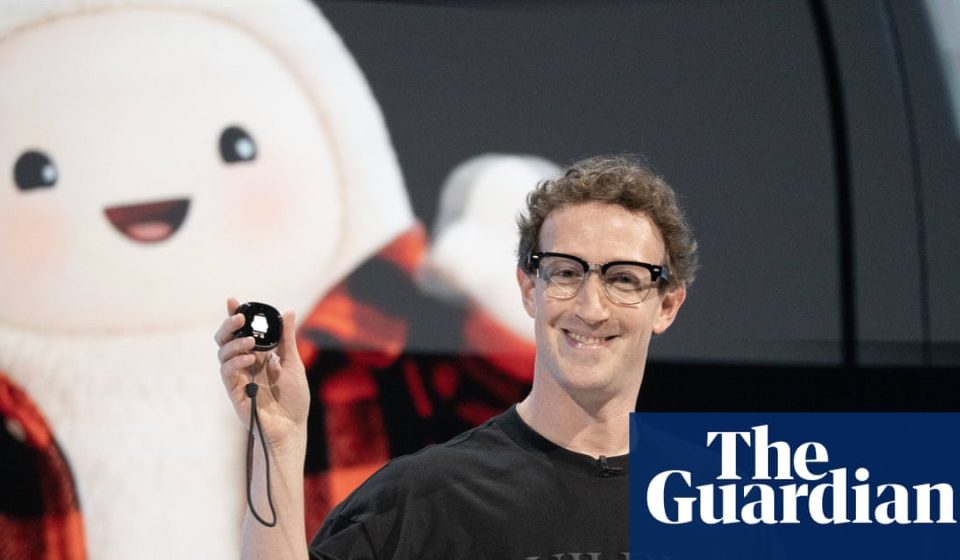
After the recent backlash against Meta’s so-called “perverted” smart glasses, Mark Zuckerberg this week launched a much cuter alternative: the Muse “charm” device.
With a screen that shows a cutesy little avatar, it has drawn comparisons to Tamagotchis. “We packed a lot of technology into this little guy,” the Meta founder told the San Francisco audience.
The “little guy” could fit, like a Labubu, on a key ring or a bag. But unlike a Labubu, the interactive AI assistant will have significant capabilities, including the ability to have live conversations. He can answer your emails, book a trip or do your weekly food shopping.
According to Katie Seaborn, an associate professor at Cambridge who has researched cuteness – creating the science of cute voices in the context of computer science – it’s cute because it “basically looks like a baby.”
For Joshua Paul Dale, professor at Tokyo’s Chuo University and author of Irresistible: How Cuteness Wired our Brains and Conquered the World: “It’s really significant that in addition to the wearable charm, Meta has also introduced a new pair of smart glasses without a camera. Everyone hates cameras in smart glasses. But if the camera is contained in a charm that you wear around your neck, that changes the agency. So you’re no longer recording people. It’s just a cute little animated avatar looking out at the world.”
An individualized, customizable and, in this case, adorable AI companion, it follows Zuckerberg’s commitment to the idea of personal, wearable super-intelligence that you can chat with. As well as a broader shift toward cute technology, cited by WGSN forecasters as one of the top trends for 2026.
“Obviously,” Dale says, “what Meta is trying to do is make Muse a companion. And he does it in the simplest way possible… He uses a small, very simplified 2-inch screen to encourage you to anthropomorphize the figure on it so that you treat it as if it were human even though you know it’s not.”
His kindness is, according to Seaborn, “strategic”. “It’s very natural to come out of this controversy with technology that uses kindness because… it’s so weak. Don’t worry. You can trust us.”
According to Seaborn, trying to harness the power of kindness “makes sense, especially from a big tech perspective, because maybe people are starting to understand the current strategies when it comes to people’s attention, their personal data and everything else. And now they’re trying new things that may or may not work.”
Seaborn, who has just arrived at Cambridge University from Japan, points out that “this is a very normal thing in Japan. So the first thing you notice when you go there is that everything has a mascot. Government organizations, media companies, businesses, they all have a cute mascot.”
Seaborn studied the “impacts that kindness can have on people.” “We’ve seen kindness being applied as a design strategy for different purposes. We know (it) has certain impacts on people.” On the one hand, “kindness is a way for certain social interactions to take place or to be softened.”
There’s also a “natural connection between kindness and deception…I call it ‘charming and disarming,’ because one of the things that kindness does to us unconsciously, is just the way our brains process it, lets us let our guard down. We can’t really help it.”
Whether Muse will catch on when it releases in December, or whether such a blatant attempt to gain trust via an on-screen avatar with cheeks you want to squish will come to pass, remains to be seen. But different generations will likely react differently. “It’s so AI!” is the phrase Generation Alpha uses to reject anything they think is inauthentic.
For many Gen Zers who are By the way With a stuffed animal hanging from their bag, usually in the form of a Labubu, this may seem less difficult. For older generations, there will be nostalgic associations given its resemblance to older technologies. Integrated, Seaborn says, “(is) this legacy of those adorable gamified pets like Tamagotchi and Pocky Pikachu.”
Additionally, different cultural contexts will affect how it is received. Seaborn’s research found that “Americans were actually less likely to be cheated than Japanese people… Because in Japan, robots are heroes, they’re like babies.” Whereas “in Western culture, they are often presented in the public imagination as some kind of frightening, potentially broken and sinister devices.” In British focus groups, people reported having a “gut feeling” that something was wrong when kindness was part of a deceptive design idea. “People felt like something was wrong, but they couldn’t articulate what it was. »
But the situation, Seaborn says, is changing. “Because kindness (or kawaii) has been a cultural export from Japan and other countries for some time now…there might be a slow cultural shift in terms of how we orient ourselves toward kindness and what we accept as adults.
Although Dale “isn’t rushing out to buy one,” he will “say, however, that when I’m 80, I’ll definitely want one of these things. I always want to wear it around my neck, and I want the camera on all the time, so it can tell me where I left my glasses.”
Gn tech