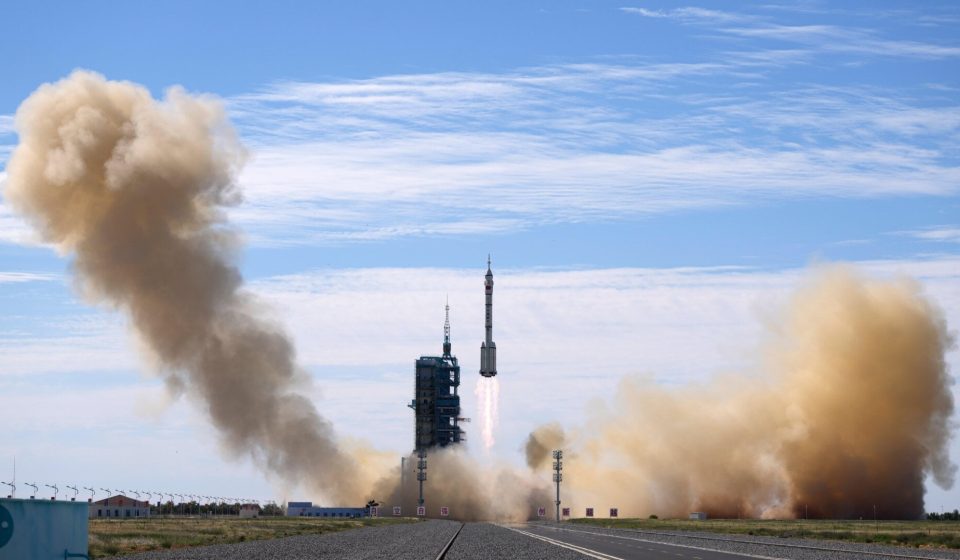
In a rare public statement, China outlined its detailed plan to land a crew of astronauts on the Moon within three years. The newly revealed roadmap offers the most comprehensive look yet at the country’s lunar ambitions, outlining the steps it plans to take to get its crew to the Moon’s surface as the new space race heats up.
At the 7th Manned Space Symposium in Beijing, Wang Xiang, chief designer of China’s lunar exploration program, presented a comprehensive overview of a series of missions leading to a crewed landing on the lunar surface before 2030, China’s Global Times reported.
Plans include a full-scale landing rehearsal, which will not involve a crew on board, as well as a rendezvous in lunar orbit ahead of China’s first attempt to land astronauts on the Moon.
A roadmap to the Moon
To carry out its Moon missions, China plans to begin testing in Earth orbit with its Long March 10A, a single-stick variant configured without side boosters. The rocket is initially expected to launch the Mengzhou spacecraft to China’s Tiangong space station for cargo missions in early 2027 to collect data and demonstrate its reliability.
The following year, China plans to conduct an uncrewed test flight of the largest three-stage rocket Long March 10 and the Lanyue lunar lander. The uncrewed lander will attempt to land on the Moon and take off again.
Lanyue and Mengzhou will then launch two separate Long March 10 rockets and attempt to dock in lunar orbit for a full-scale repeat mission planned for 2029. The same orbital rendezvous was used during the Apollo program, except that the Saturn V rocket launched both the Apollo Lunar Module (lander) and the Command and Service Module (the spacecraft that carried the astronauts) together on a single rocket.
For China, docking the lander and spacecraft would pave the way for an attempt to land astronauts on the Moon. The crew should consist of three taikonauts, two of which will be responsible for landing on the lunar surface.
The surface mission is expected to last three Earth days, with astronauts performing extravehicular activities each day.
The new space race
The four-year sequence, while ambitious, is a major departure from previously vague timelines released by Chinese officials regarding the country’s lunar projects.
Shortly after Wang’s statement, videos posted on Chinese social media appeared to show preparations for upcoming test flights at the Wenchang spaceport, SpaceNews reported. The images showed large containers, believed to contain materials for an upcoming rehearsal, being lifted from a cargo ship.
China is apparently wasting no time putting its plan into action as it embarks on a race alongside the United States to land astronauts on the Moon. NASA aims to land astronauts on the Moon in early 2028 as part of Artemis 4.
There is, however, still speculation as to whether the US space agency will be able to achieve this by then. The biggest concern is whether NASA’s commercial partners SpaceX and Blue Origin will have a lander ready in time.
China, meanwhile, is working toward its own 2030 goal, paving the way for a new chapter in the race to return humans to the lunar surface. For now, both programs still have many technical hurdles to overcome.
Gn world