Christa Pike’s Execution Fails: What Happens When a Lethal Injection is Botched? | Death penalty news

Two doses of a lethal injection drug failed to kill Christa Gail Pike, a 50-year-old woman who was scheduled to be executed Wednesday. Pike was taken to hospital after finding her heart was still beating after the procedure.
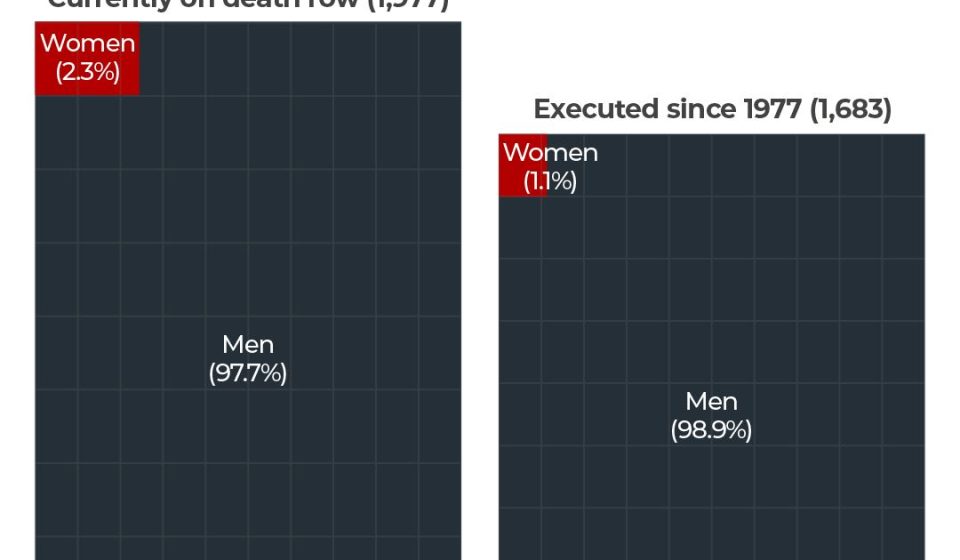
Pike would have been the first woman in more than 200 years to be put to death in Tennessee and the only woman on the state’s death row. His attempted execution with doses of the sedative pentobarbital went ahead despite a last-minute stay by a federal appeals court on Wednesday, which was overturned just an hour before his execution by the Supreme Court.
Recommended Stories
list of 3 itemsend of list
Human rights experts said the botched execution illustrates why the death penalty is inhumane and should be abolished.
Clive Stafford Smith, a human rights lawyer who has represented many US death row inmates as well as inmates at the notorious Guantanamo Bay detention center, told Al Jazeera: “I’ve been in the execution chamber with six of my clients and it’s never the clinical process they want you to believe. And it’s always a desperate struggle at midnight to stop it.”
He added: “At the end of the day, you have to ask yourself whether this makes the world a better and more civilized place. Why, indeed, are we killing people to prove that killing people is wrong?”
Before the planned execution, Morris Tidball-Binz, the UN special rapporteur on arbitrary executions, told Britain’s Times newspaper: “If executed, Christa Pike would be tortured to death. This would be a flagrant violation of human rights.”
Here’s what we know about what happens when an execution goes wrong.
What is the case against Pike?
Pike was convicted of murdering another young woman she considered a romantic rival when she was 18, more than 30 years ago.
In January 1995, Pike, her boyfriend Tadaryl Shipp, 17, and Shadolla Peterson, 18, lured Colleen Slemmer, 19, to a wooded area, tortured and killed her. All four were students at a Job Corps career center in Knoxville.
The case attracted enormous public interest, especially after it was revealed that the attackers had carved a pentagram into Slemmer’s chest, which Shipp later admitted. Pike, who delivered the fatal blow to the victim’s head, shattering his skull, later retained a piece of Slemmer’s skull.
Pike and Shipp confessed and were convicted of first-degree murder in 1996. Pike was sentenced to death; Shipp, who was 17 at the time and therefore ineligible for the death penalty, was sentenced to life with the possibility of parole.
Her case is very unusual in that she is a woman and she was a teenager when she committed the murder. Other death row inmates sentenced at the age of 18 – all men – had their sentences commuted to life in prison without the possibility of parole.
“Christa is a 50-year-old woman who is remorseful and understands her actions,” her lawyers wrote. They also argued that Pike was the victim of horrific abuse as a child, including two rapes when she was 11 and 17.
Stafford Smith told Al Jazeera: “Very few women are executed, but even fewer in Tennessee – it’s been 200 years. So it’s a throwback to 1820. Christa was just a teenager and had suffered horrible abuse as a child. Now she’s 50, she’s a totally different person. It’s so unnecessary – is this really going to make the world a more civilized place?”
Slemmer’s mother, May Martinez, however, spoke in favor of the execution.
On Wednesday, a federal court temporarily stayed the planned execution, citing legal and technical reasons. But an hour before the midnight deadline for his execution expired, the U.S. Supreme Court overturned the stay of his execution, clearing the way for prison officials to proceed.
Pike had asked to be shot by an all-female firing squad rather than by lethal injection, which she said she feared would be too painful.
Her lawyers had also argued that the injection would be torture for her because she has “small veins.” This request was, however, refused.

How did the execution go wrong?
Following the Supreme Court’s order to carry out the execution, Pike was given two doses of the sedative pentobarbital at the Riverbend Maximum Security Institution in Nashville, Tennessee, on Wednesday evening, according to media witnesses.
From outside the prison, Associated Press reporter Kim Chandler reported that initially, when the injections were administered, Pike appeared visibly awake.
“The blinds were first closed in the execution room at 7:46 p.m. (11:46 p.m. GMT), they were reopened at 7:49 p.m. (11:49 p.m. GMT),” Chandler said.
“Her mouth opened several times and she started snoring loudly. She gasped several times,” she noted.
“The curtain of the execution chamber closed for the last time at 8:06 p.m. (00:06 GMT), and she could be heard snoring loudly, clearly very much alive, in the chamber until media witnesses were ordered to leave the area around 8:53 p.m. (00:53 GMT),” Chandler added.
The Tennessee Department of Corrections did not immediately say why the execution was not completed.
According to NBC News, on Wednesday evening, Pike’s lawyers filed a motion in federal court during the process to again stay his execution, citing testimony that “the executioners had injected deadly chemicals into both syringes and Pike was still alive and snoring.”
“Ms. Pike has not lost consciousness, her heart is still beating and she is audibly snoring,” they said, according to court documents seen by the media.
Her lawyers also told US media that while she was being treated at a hospital, she needed “immediate medical attention”.

Why didn’t the execution work?
Tennessee authorities have not yet explained this.
However, Stafford Smith, who has attended several executions in support of his clients in the past, told Al Jazeera there were two likely reasons why the injection failed to kill Pike.
“The first is that the drugs were probably obsolete. What we’ve been seeing a lot over the last 10 years is that they’re giving drugs that are no longer valid,” he said.
Stafford Smith noted that there is a valid reason for this, however, and that is that pharmaceutical companies make sedatives like pentobarbital to help people and save lives and are often opposed to their drugs being used to execute people.
“So the states have a real problem getting drugs to kill people and they went all the way with very unreliable suppliers. So you might suspect that they just had an invalid batch of drugs in Pike’s case,” Smith explained.
“The other thing about Pike is that, as is very common for people in his situation, they went through a lot of abuse and drug addiction. So it could have been very difficult to find his veins and put a needle in there. Additionally, doctors are also not allowed to participate in this process in the United States. So they have incompetent people administering such drugs to them, which could have caused the injection to fail,” he added.
Defending its handling of the case, the Tennessee Department of Corrections said in a statement Wednesday evening that the agency had “followed every step of the state’s statutory and established execution protocol, approved by the Attorney General’s Office.”
“The lethal chemical injection called for in the protocol has always been effective, and the protocol does not allow for additional procedures beyond what was performed this evening. Christa Pike was transported to an off-site medical facility,” the statement concluded.
What happens to Pike next?
At the moment, it’s unclear, as Tennessee Gov. Bill Lee suspended all remaining 2026 executions in the state following Wednesday’s incident with Pike and requested a full third-party review. She is currently in the hospital. She could return to death row, but Stafford Smith said that remains uncertain.

Has this already happened?
Yes. Botched executions do occur, but their frequency varies widely depending on the method, according to data compiled by legal scholar Austin Sarat and the Death Penalty Information Center.
In his 2014 book, Gruesome Spectacles: Botched Executions and America’s Death Penalty, Sarat noted that from 1890 to 2010, 8,776 people were executed in the United States and that 276 of those executions (3.15%) went wrong in some way. Sarat also noted that lethal injection was the method with the highest rate of botched executions, at 7.2 percent during this period.
Previous cases of botched lethal injection include the case of murderer Alva Campbell in November 2017 in Ohio. According to the Death Penalty Information Center, “the execution team first worked on both of Alva Campbell’s arms for about 30 minutes… while he was on a gurney in the state’s death chamber, then tried to find a vein in his right leg, below the knee… About 80 minutes after the execution was scheduled to begin, Campbell, 69, shook hands with two guards after it appeared the insertion had successful.
“About two minutes later… Gary Mohr, head of the Ohio Department of Rehabilitation and Correction… called off the execution after speaking with the medical team, (saying) ‘It was my decision that it was unlikely we would have access to the veins.’ » But a few months later, in March 2018, Campbell died on death row due to terminal health issues.
“Botched executions have happened numerous times. I’ve had six of my clients executed over the years. Two with the gas chamber, two with the electric chair and two with lethal injection, and there’s almost always some form of botched execution,” Stafford Smith said.
“But this is just an uncivilized process carried out by people who are not civilized at all,” he added.
Gn usa