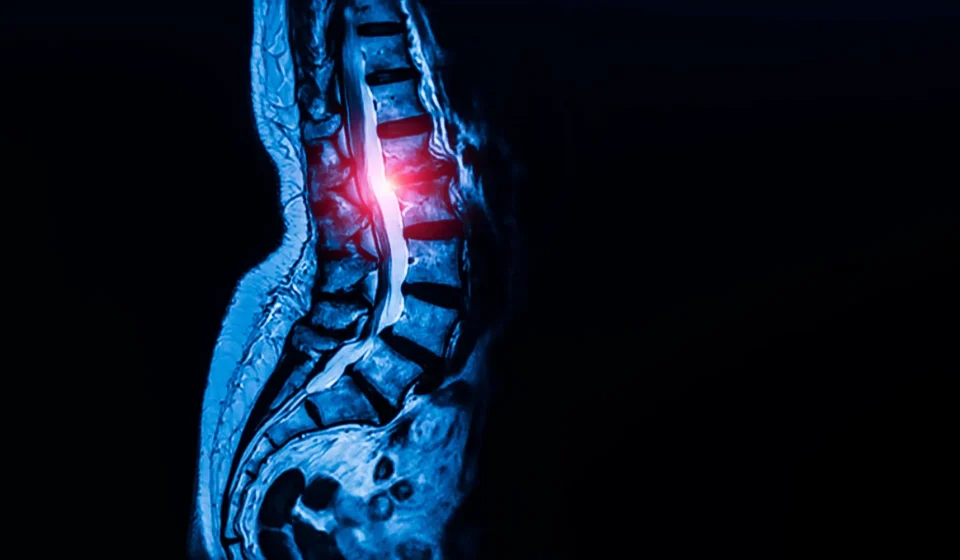
An existing osteoporosis drug has shown surprising promise in protecting the spine from damage, raising hopes for new treatments for chronic neck and back pain. In experiments involving zebrafish, researchers found that the drug prevented the formation of abnormal mineral deposits in the spine, a process that can cause spinal tissues to harden and vertebrae to fuse.
This discovery could help scientists combat one of the underlying causes of back pain: the progressive deterioration of the discs that cushion the bones of the spine. The researchers also identified changes in gene activity and metabolism that appear to contribute to this damage, revealing several possible targets for future treatments.
Although the results have not yet been confirmed in humans, they suggest that drugs already used for other conditions could offer new ways to slow spinal degeneration. The research also demonstrates how zebrafish could help scientists study the causes of spinal diseases and test potential therapies.
Why spinal discs break down
Most people experience back pain at some point in their lives, and a common cause is the deterioration of the spine’s natural shock absorbers. These structures, called intervertebral discs, sit between the vertebrae and help the spine absorb pressure, distribute weight, and move comfortably.
Over time, discs can lose their ability to cushion the spine, a condition known as intervertebral disc degeneration (IVDD). As discs deteriorate, they can contribute to pain, stiffness and reduced mobility.
Despite the widespread impact and considerable economic burden of this disease, no drugs are currently available to stop or reverse the degenerative process. Surgery remains the only established long-term intervention for some severe cases, creating an urgent need for treatments that address the underlying damage.
Researchers have long known that genetics influence the risk of developing disc degeneration. One particularly interesting gene is associated with collagen IX, a protein that helps maintain the structural integrity of intervertebral discs by supporting the network of fibers that holds them together. Variations affecting this gene have repeatedly been linked to disc problems that develop earlier in life.
To study how these genetic changes contribute to spinal damage, scientists from the Universities of Edinburgh and Bristol turned to zebrafish. They studied fish raised without a functional copy of the gene, which allowed them to observe how its absence affected the spine as the animals grew.
Hidden process causes spine to harden
The results revealed striking similarities between genetically modified zebrafish and people with degenerative spinal disease.
As the fish aged, abnormal mineral deposits built up in the tissues separating their vertebrae. This process, known as mineralization, involves minerals accumulating in tissues where they do not normally belong. In the spine, the buildup can cause normally flexible structures to become unusually stiff, much like unwanted bone forming in the wrong place.
Researchers have also observed spinal fusion, in which neighboring vertebrae come together. Such changes can interfere with the normal flexibility and movement of the spine.
Importantly, scientists found that the damage began long before the mineral deposits appeared. An underlying layer that provides structural support during spinal development began to break down first, suggesting that the deterioration of this protective framework could pave the way for later hardening.
This discovery could help explain how genetic changes trigger a chain reaction that ultimately damages the spine.
Surprising links to fat metabolism and vitamin A
To understand what was happening at the molecular level, the team looked at patterns of gene activity in zebrafish. This allowed them to identify biological processes that became unusually active or disrupted as spinal degeneration developed.
Several unexpected connections emerged.
Researchers have discovered alterations in fat metabolism, the processes by which the body breaks down, stores and uses fat. They also detected disruptions in a cellular signaling system called mTOR, which helps regulate cell growth, metabolism and responses to nutrients.
Additional changes involved phosphate regulation and vitamin A signaling. Phosphate is an essential mineral involved in building bones and teeth, but its accumulation in the wrong tissues can contribute to abnormal hardening. Vitamin A signaling helps control cell development and function.
Together, these results suggest that spinal disc degeneration involves more than progressive tissue wear. Changes in how cells process nutrients, regulate growth, and process minerals may also play an important role.
Osteoporosis drug blocks mineral buildup in the spine
One of the most promising discoveries came when researchers tested ways to reduce spinal abnormalities.
A drug belonging to a class of drugs called bisphosphonates successfully blocked abnormal mineral accumulation in zebrafish. Bisphosphonates are already used to treat osteoporosis, a disease in which bones become weaker and more vulnerable to fractures. These medications help protect bones by slowing down the processes of bone tissue breakdown.
This finding is particularly intriguing because it suggests that a treatment already used in patients could also help researchers develop therapies for spinal degeneration.
The team identified other approaches to reducing spinal injuries. Limiting the amount of food the zebrafish consumed resulted in fewer spinal fusions, as did drugs that suppressed fat metabolism.
These results suggest that fat metabolism and phosphate regulation are potentially important targets for future drugs.
However, the experiments were conducted on zebrafish and not humans. Further research will be needed to determine whether the same biological mechanisms work in humans and whether targeting them can safely prevent or slow intervertebral disc degeneration. Dietary results also do not establish that restriction of food intake can prevent spinal injuries in humans.
New hope for treatments for chronic back pain
The study was published in the journal Communication biology and has received support from Arthritis UK and the BBSRC.
Dr Erika Kague, who led the research at the University of Edinburgh’s Institute of Genetics and Cancer, highlighted the potential importance of identifying treatments that target the underlying causes of spinal damage.
“For decades, surgery has been the only real answer to disc disease. By understanding the biology that causes the spine to harden, our zebrafish studies point to several ways to slow it down, including a drug already used safely in patients. There’s still work to be done, but for a disease that has affected people for generations with no cure in sight, it’s super exciting.”
The findings could be particularly important for the millions of people who live with persistent back pain and have limited options to prevent their condition from getting worse.
Dr Caroline Aylott, head of research at Arthritis UK, highlighted the potential benefits for patients.
“For the 9.5 million people living with back pain in the UK, this research brings new hope that potential new treatment approaches are on the horizon.
Dr Erika Kague and her team at the University of Edinburgh have discovered important genetic evidence that could pave the way for new treatments, bringing us closer to a future where fewer people have to live with the daily pain and challenges that back pain can bring.
The research also illustrates the broader interest in studying fundamental biological processes to understand diseases that affect large numbers of people.
Mr Jef Grainger, Executive Director for Advancing Bioscience Knowledge at the BBSRC, said:
“This research shows how publicly funded bioscientific discoveries can generate the knowledge needed to address major health challenges. By revealing new insights into how healthy biological processes break down in age-related spinal disc degeneration, the study opens promising avenues for future treatment development.
By identifying the genetic and metabolic changes that contribute to spinal hardening and demonstrating that some damage can be avoided in zebrafish, researchers have opened several new avenues for studying intervertebral disc degeneration.
For a disease that affects millions of people and for which there are no approved drugs that can stop its progression, these early findings offer an encouraging starting point for developing treatments that could one day protect the spine before serious damage occurs.
Gn Health