The fall in copper could be a major warning for the economy.
Copper, one of last year’s hottest investments, is on a downward slide, a trend that is starting to worry forecasters more and more about its impact on the U.S. economy. The metal is known to be a discrete economic indicator, given that it reflects industrial activity and its price fluctuations often follow changes in construction and manufacturing.
The price of copper was hovering around $5.48 per pound on Friday. The metal is down 17% from its September high, when it traded at around $6.89 per pound.
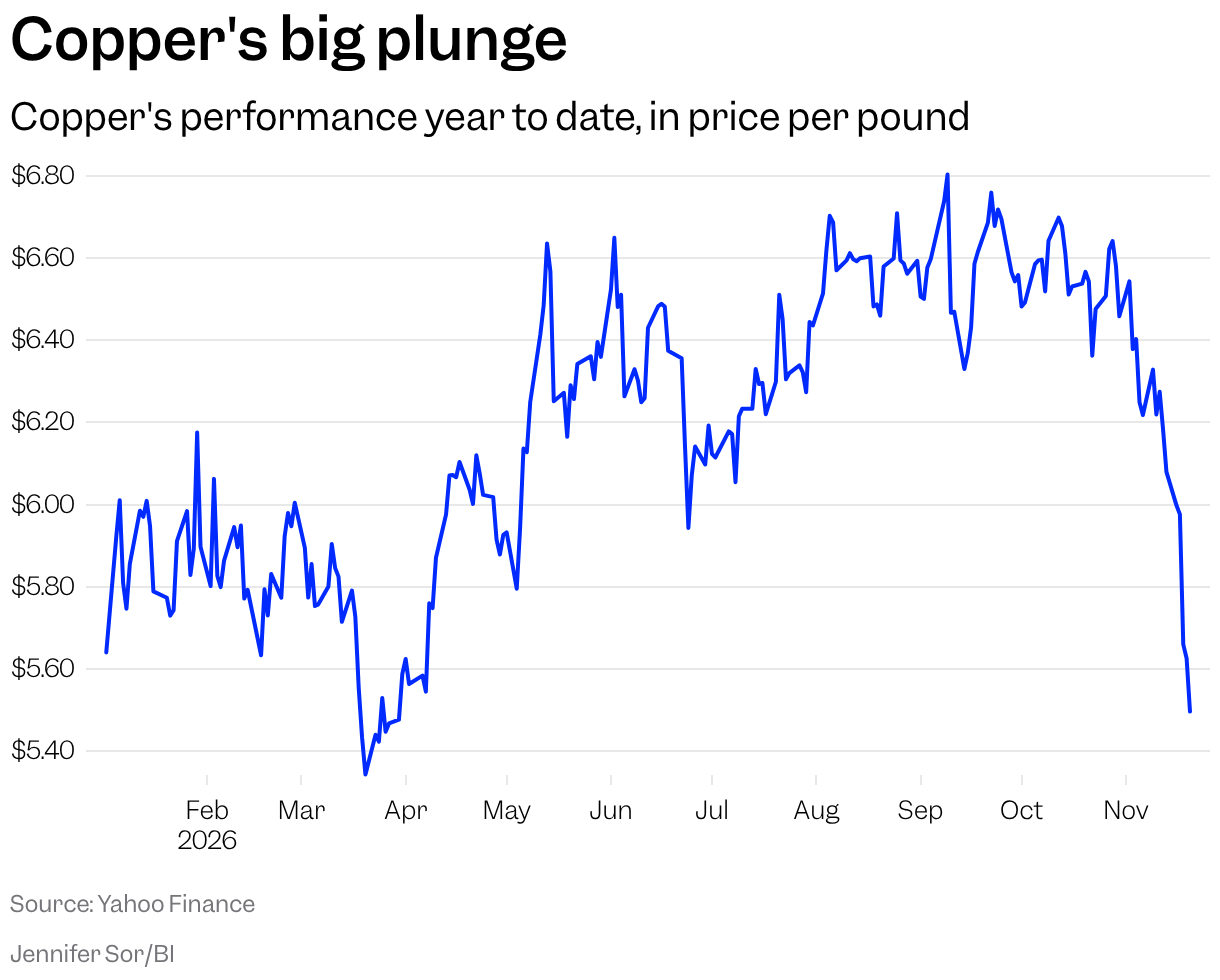
The metal has just experienced its worst weekly performance in about a decade, according to an analysis by leading economist David Rosenberg. The move marks a stark reversal from copper’s record rally last year, when investors couldn’t stop discussing the metal’s use in data centers and lumping it into the broader AI business.
The Bloomberg Industrial Metals Index, in which copper makes up more than 40% of holdings, is showing a death cross, a dire technical signal that occurs when an asset’s 50-day moving average falls below its 200-day moving average. Renaissance Macro called this a “warning signal for economic growth.”
“Copper has no opinions and tells no stories. It is in the wiring of every house, in the engine of every car, in the transformer at the end of every street, and in the compressor of every air conditioner,” wrote Henrik Zeberg, an economist who studies business cycles, in a recent note on Substack.
“This is how a metal deserves a doctorate in economics. When people build, buy and invest, the copper order is among the first to be placed. When they stop, it is among the first to be canceled,” he added.
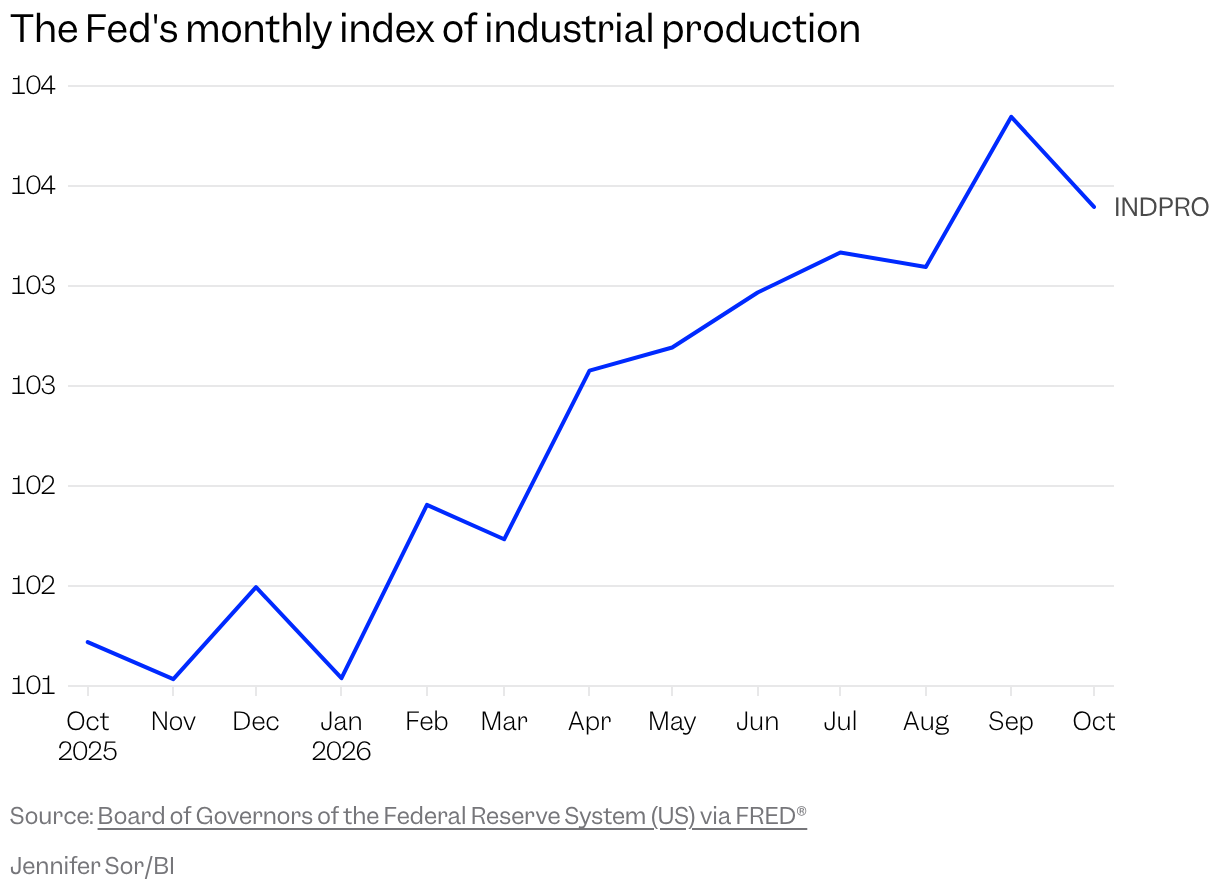
Manufacturing activity continued to grow in October, but industrial activity began to slow. The Fed’s industrial production index returned to 103.39 in October, down slightly from its September peak.
Growth expectations in the United States have also cooled. The economy is expected to grow at a pace of 3.2% in the fourth quarter, according to the latest GDPNow data from the Atlanta Fed, compared to 3.4% in advance estimates for third-quarter GDP.
In the past, when copper has fallen at least 10% in the past 10 days — consistent with the extent of its recent selloff — the U.S. has consistently seen weaker growth and the S&P 500 index has fallen, the bank wrote in a client note, adding that it had “some confidence in copper as a signal of the business cycle.”
“We show that the sharp decline in copper is a worrying signal for the economic cycle,” the analysts write.
Zeberg said copper’s decline confirmed his broader view that the U.S. economy is heading toward a recession. He pointed to another indicator of economic weakness: the 12-month average of new jobs created in the United States, which hovers around 16,000 per month after accounting for revisions to job growth.
This figure paints a different picture of the job market compared to the official jobs report, which recorded 165,000 new jobs last month.
“From the job market, it’s only a short walk to the copper market. A household that’s worried about its job doesn’t buy a car or a house,” Zeberg said. “A top in copper simply indicates that demand for the metal has changed. It takes the business cycle to understand why.”
Rosenberg pointed to the recent sharp decline in U.S. transportation, adding that this decline, combined with the recent fall in copper, constituted “negative economic signals.”
Rosenberg, a prominent market bear who has signaled the risk of recession for years, added that the Fed further raising interest rates to control inflation could be a “big mistake.”
“We will enter a recession if the Fed attempts to cut headline inflation in half by combatting a supply shock with its brutal interest rate tool,” he wrote in a client note Friday.
Gn bussni