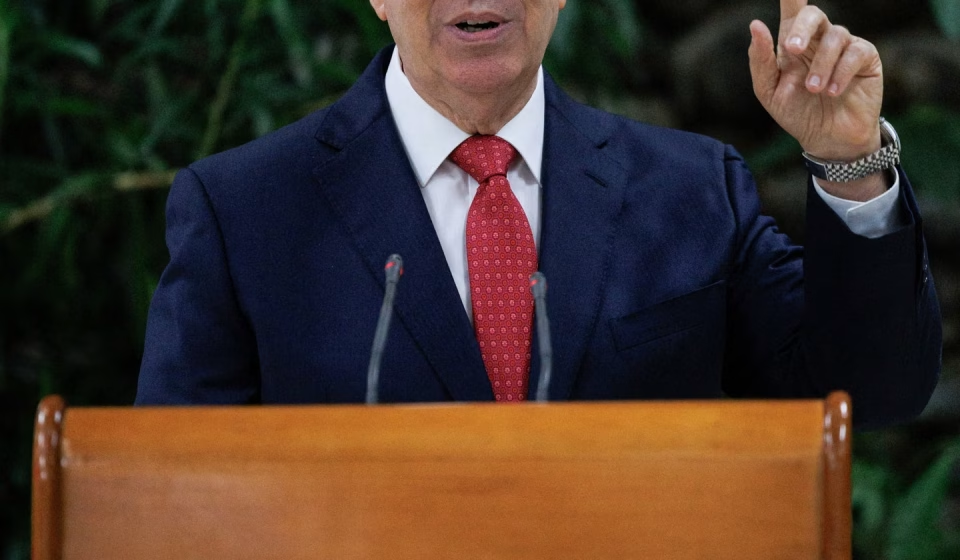

Cuba accused Monday, September 7, the American embargo, in force since 1962, of having caused historic financial losses of 8 billion dollars (around 6.9 billion euros) between March 2025 and February 2026.
This amount, presented by the Minister of Foreign Affairs, Bruno Rodriguez, in view of the annual vote on the embargo at the General Assembly of the United Nations (UN) scheduled for October, constitutes over one year a ” record “ and is superior “7% compared to the previous year”he declared at a press conference.
This figure “does not include damage caused by energy siege, nor damage caused by secondary sanctions”also underlined the minister, referring to the coercive measures taken since the beginning of 2026 by the government of Donald Trump. Since the end of January, he has threatened customs duties on any country wishing to deliver oil to Cuba, imposing a de facto oil blockade on the island. Only one Russian tanker has arrived since that date.
In May, Washington also enacted a regime of “secondary sanctions” concerning foreign companies collaborating with Cuba. These threats of sanctions have led to the departure of many foreign companies, particularly in tourism and mining, two sectors that provide strong foreign exchange for the island of 9.4 million inhabitants.
“The blockade does not punish a government, it punishes the daily life of a people in all areas”accused the head of Cuban diplomacy. He denounced a “coldly calculated plan” which has worsened the energy crisis affecting the island for several years, with incessant power cuts, consequences on the distribution of drinking water, transport and health services.
As an example, he claimed that some surgical operations had to be completed in light of medical staff’s cell phones. According to Bruno Rodriguez, the infant mortality rate in Cuba increased from 4 per 1,000 in 2018 to 9.9 per 1,000 in 2025. “There will be no humanitarian crisis in Cuba”however, he assured, emphasizing the solidarity of Cubans in the face of the situation.
Increase in American imports
Mr. Rodriguez assured that Havana remained in contact with the US State Department, but reiterated that there was no progress in the talks. According to the minister, the American government has only delivered a small part of the humanitarian aid promised in May by Secretary of State Marco Rubio. “Of the 100 million dollars offered, only one shipment took place, a batch of food and hygiene products for 700 Cuban families”he said.
The announcement of the financial losses attributed by the Cuban authorities to the embargo coincides with an unprecedented increase in imports from the United States by the constantly growing Cuban private sector.
According to data released a few days ago by the US Census Bureau, Cuba imported $149 million worth of goods in July, the highest monthly amount recorded since 1992. Between January and July 2026, purchases amounted to $674 million, almost all of 2025 imports.
It’s a “a paradox that very few people could have predicted: while Washington applies some of the harshest measures against Cuba in decades, American exports to the island are breaking historic records”analyzes Cuban economist Daniel Torralbas, based in London, for Agence France-Presse. According to him, if the current pace continues, 2026 could become the first year in which bilateral trade exceeds $1 billion since statistics began, thanks in particular to fuel purchases by the private sector, which have increased significantly. “exorbitant”.
The oil blockade forced the communist government to end its fuel import monopoly, now in the hands, on a smaller scale, of the private sector which received authorization from Washington to import from the United States. Subsequently, in July, the government approved the liberalization of entire sections of the economy, until then dominated by state enterprises, and is beginning to include in its legislation this unprecedented shift since the establishment of communism almost 70 years ago.