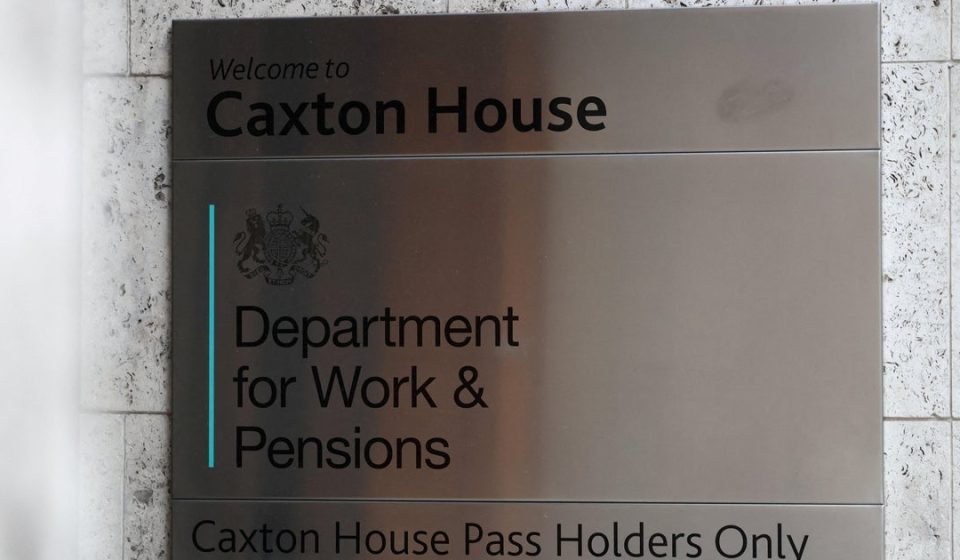
The British department that manages benefit payments to millions of people confirmed on Saturday that it had been hit by a cyberattack that prompted it to take its systems offline over the past two days.
The Department for Work and Pensions, the government’s biggest spending department, said in a statement it had been the victim of an “attempted unauthorized access to our systems”.
No further information has been released about the origin of the attack.
“Our team and cyber experts continue to investigate a cyber attack on DWP’s systems,” the department said.
He said he continues to work with the National Cybersecurity Center and the Government Cybersecurity Coordination Center to understand what happened.
The incident, which was first detected on Thursday evening, caused a series of services to be taken offline as a precaution, several of which remained offline on Saturday.
The ministry’s statement did not specify how much longer the systems will remain offline.
The ministry said there was no evidence that any personal data was compromised and that pensions and benefits continued to be paid as normal.
On Friday, the prime minister’s office said there was no evidence that a “malicious actor” had targeted other ministries.
Mike Bracken, who once headed the British government’s digital service, told CBS News partner BBC News that the cyberattack should be a “wake-up call” for governments to “think about their approach to technology” and its resilience.
“Systems renewal without a more thoughtful approach to technology and the role of technology in our public policy is a fundamental problem,” he said, adding: “It is the design of a secure and resilient infrastructure that we want to have serving us for decades to come.”
The cyberattack is the latest in a series of cybersecurity incidents to hit the UK. Most notably, a number of UK meat suppliers said in early November that their fridges had heated up overnight as they were affected by the virus. hacks targeting software used by supermarkets across Europe.
Earlier this month, the country’s cyber chief said the UK would likely face artificial intelligence cyberattacks on its critical infrastructure by 2028, as criminals and states including China and Russia increasingly use AI in their cyber activities.
Richard Horne, director of the National Cyber Security Center, said this could include AI-based malware for ransomware attacks, as the technology will enable the discovery and exploitation of “vulnerabilities that have been tolerated for far too long” “on a scale that was once unimaginable.”
Gn world