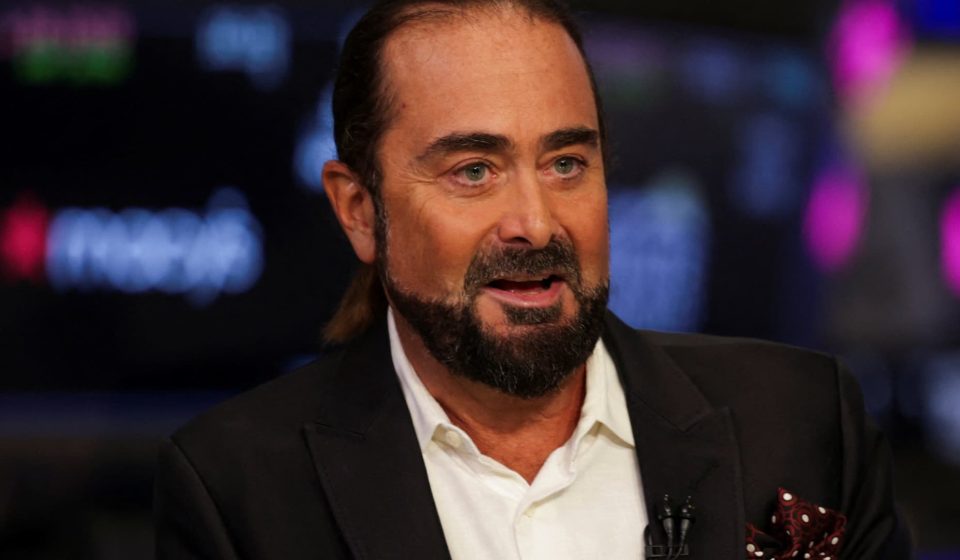

Treasury Secretary Scott Bessent has hired veteran Wall Street economist David Zervos, who was longtime chief markets strategist at Jefferies, as an adviser to the Treasury Department. Zervos was a CNBC contributor.
Bessent announced the hire Monday in a statement first obtained by CNBC. Zervos will perform an extensive advisory function and is expected to start immediately.
He supported Bessent’s recent decision to increase purchases of some long-term Treasury debt and called for lower interest rates from the Federal Reserve.
Zervos, in a brief interview, called himself a “Wall Street geek” and said he was excited about his third term in government. Bessent “has done an incredible job in this administration guiding the economy through many tumultuous times,” Zervos said.
“Whether it was trade or war, he stepped up,” he said of Bessent.
Zervos will add intellectual firepower to the Treasury after a series of attention-grabbing staff departures. Seven of the 16 Senate appointees had left the department by mid-August, the Washington Sun reported. Bessent is on his third chief of staff since becoming Treasury secretary in January 2025.
Joseph Lavorgna, a Wall Street economist, served in a similar role as an advisor to Bessent previously. departure in March. The position does not require Senate confirmation.
Bessent manages a particularly broad portfolio for a Treasury secretary. He has served as President Donald Trump’s de facto top negotiator on China and has been closely involved in policy debates on artificial intelligence, although Trump said Friday that Bessent would not add a role as the administration’s top adviser on artificial intelligence.
Zervos was considered by Trump to lead the Federal Reserve, although the president ultimately chose Kevin Warsh for the job in January.
Zervos has worked at Jefferies, an investment bank based in New York, since 2010.
Zervos has a doctorate in economics and has worked twice for the Fed. The first time was early in his career, in the early 1990s, when he was doing technical research in economics and interest rates. He left for the private sector and returned to the Fed in 2009 as a guest advisor in the aftermath of the financial crisis. Warsh was Fed governor at the time, although it is unclear whether he and Zervos worked directly together at the time.
Zervos will serve as a special government employee, he said in an email to clients. This status allows him to avoid some of the often onerous divestiture requirements that accompany other federal appointments, but it limits the length of time he can hold the position. Zervos said he expects his term to end in April 2027.
Zervos said last year he believed interest rates should be “much lower.” Since Warsh took office, Zervos has said he believes Warsh could allow interest rates to fall by shrinking the Fed’s balance sheet. These reductions are one of Warsh’s top priorities.
The Fed raised interest rates earlier this month for the first time since 2023. The move sparked frustration among some economists in the Trump administration, but Bessent was more circumspect. He said during an appearance on Fox News on Sunday that the Fed “should have an open mind” about how to manage the economy.
Bessent intervened in Treasury markets as interest rates continued to rise. The 10-year Treasury rose to 5.2% on Friday, a level last seen in 2007, fueled by a strong economy, competition for capital linked to the development of artificial intelligence and concerns about inflation as the war in Iran continues.
Zervos, in an appearance on CNBC last month, supported Bessent’s decision to increase buybacks of some long-term Treasury debt, a move that could have eased pressure on some Treasury yields. Some on Wall Street had criticized the buybacks, but Zervos said he supported them.
“I don’t see how anyone could fight this when the firepower and the cards are in the hands of the Treasury Department,” Zervos said.
Gn bussni