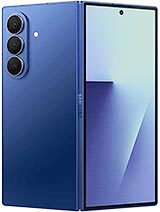
Deals: Galaxy Z Fold7 vs. Galaxy Z Fold8 and Z Fold8 Ultra, plus Galaxy S26 FE alternatives

Last week we focused on the launch of the iPhone 18 Pro series. This week we’ll take a look at what’s happening with Galaxy phones. Let’s start with the foldables.
The Samsung Galaxy Z Fold7 – last year’s book-shaped foldable – is available for $1,350. That’s $550 less than what its replacement, the Z Fold8 Ultra, costs. Both are surprisingly thin (8.9mm) and light (215g) for foldables, but the new one brings a tangible increase in battery size – 600mAh compared to the Z Fold7’s 4,400mAh battery. And it boosts both wired (25W to 45W) and wireless (15W to 20W) charging. The other major upgrade is the chipset (Snapdragon 8 Elite to 8 Elite Gen 5) and ultra-wide camera (12MP to 50MP). The 200 MP main cameras and 10 MP 3x telephoto cameras are basically the same.
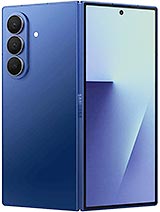
Of course, Samsung considers the Galaxy Z Fold8 to be the true successor of the series – hence the name. The Z Fold8 is a big foldable – its interior screen has a 4:3 aspect ratio instead of the almost square screens of the Z Fold7 and Z Fold8 Ultra. This also affects the cover display, which is a 5.5″ panel with an aspect ratio close to 3:2. The larger Z Folds, meanwhile, have 6.5″ 21:9 cover displays.
The Z Fold8 is even lighter at 201g, although a bit thicker at 9.7mm. And it has a bigger battery than the Z Fold7 at 4,800 mAh with the Ultra’s faster charging. The Z Fold8 uses the same Elite Gen 5 chipset as the Ultra, but it pays for its smaller size in other ways. For starters, it only has a 50 MP main sensor (with a smaller 1/1.56″ sensor) and a 50 MP ultra-wide camera. There’s no dedicated telephoto lens, not even a 200 MP 1/1.3″ sensor in the main camera like on the Ultra. Additionally, the phone measures 81.9mm wide when closed, compared to 72.8mm when folded larger (well, “bigger” would be more accurate). This makes one-handed use difficult.
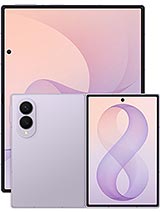
And then there’s the Galaxy Z Fold8 Ultra – its name leaves no doubt that it’s the flagship of the series. We have already covered its specifications above, the only question left is whether you want an extra size and are willing to pay the extra cost for it.
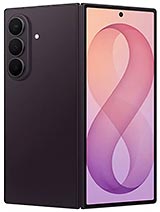
Taking a break from Samsung for a while, the Nothing Phone (4a) Pro is a $450 phone that packs a lot of hardware. It has a large 6.83-inch 144Hz OLED display (a sharp 1260p+ panel), a Snapdragon 7 Gen 4 chipset, and a 5,080 mAh battery with 50W charging. The cameras are interesting – the main 50 MP (1/1.56″) is joined by a 50 MP 3.5x/80mm periscope and an 8 MP ultra-wide. Most phones in this price range don’t have a telephoto lens.
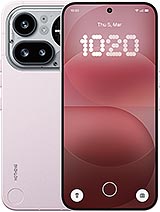
For example, the Galaxy A57. The base model costs the same as the (4a) Pro, but it comes with a smaller 6.7″ 120Hz OLED (1080p+), a slightly slower Exynos 1680 chipset, and a 5,000mAh battery with 45W charging. As for its cameras, the main 50MP has the same size sensor (1/1.56″), but there’s only one 8MP ultra-wide alongside. The A57 has better water resistance (IP68 vs IP65) and it will receive twice as many OS updates – 6 vs 3 (both phones launched with Android 16).
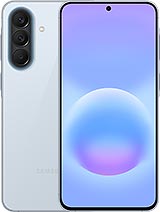
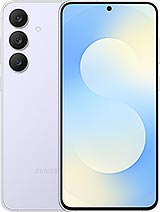
Looking at the A57 reminded us of the Galaxy S26 FE – it launched earlier this month and sort of disappeared. What happened to him? Nothing happened – there’s no discount and its MSRP is too high. Unless you’re willing to spend $700 on a phone with just 128GB of storage, you’ll need the $800, 256GB one.
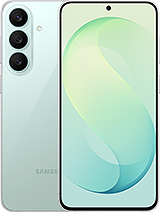
Except you’d be better off with a Galaxy S26+ for $100 more. The S26+ has the better 6.7″ display (1440p+ LTPO vs. 1080p+ LTPS), a better chipset (Snapdragon 8 Elite Gen 5 vs. Exynos 2500), and slightly better cameras and charging. We think these differences are worth the $100.
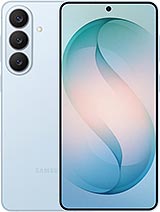
But if you don’t want to spend more, why not spend less? The Galaxy S25 FE is much cheaper and it’s essentially the same phone, except it uses the even older Exynos 2400. The only problem is that the 256GB version costs over $100 more than the 128GB model. It’s still much cheaper than a 256GB S26 FE, though.
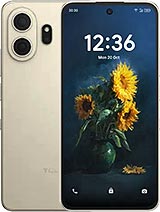
Earlier this month, TCL introduced the P80 series, which is the first to offer OLED-based NxtPaper displays. The TCL NxtPaper 70 Pro uses an older LCD-based NxtPaper setup, but that still represents more eye protection than most displays have to offer. It is a 6.9″ IPS LCD (1080p+, 120Hz). The phone is powered by the Dimensity 7300 and has expandable storage. It has a 5,200 mAh battery with 33W charging. The cameras include a 50 MP (1/1.56″) primary camera and an 8 MP ultra-wide.
We may receive a commission on qualifying sales.
Gn tech