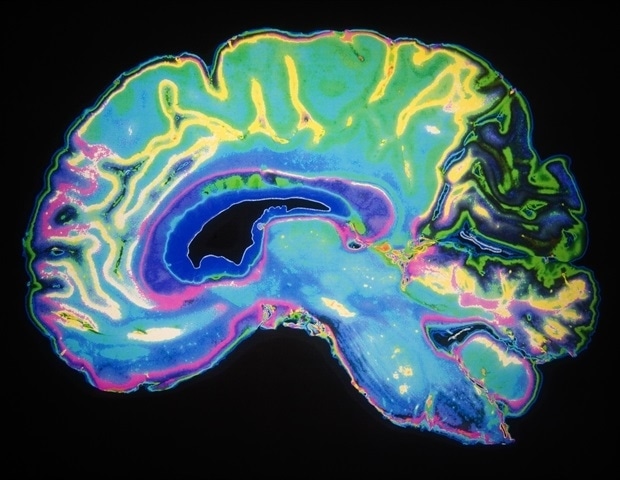
Adolescence is often described as a turbulent period of life marked by increasing independence, shifting social relationships, and unpredictable changes in behavior. Changes in preteen and adolescent behavior reflect a brain that is still actively developing, researchers say, but scientists know surprisingly little about the neural mechanisms that shape social behavior during this critical life stage.
It has become increasingly important to study adolescent brain development, particularly because many psychiatric disorders first appear during adolescence.
“We don’t know much about the adolescent brain. If we compare it to early postnatal life or infant development, we know a lot about it. But adolescence, well, we’re still trying to get it,” said Laurence Coutellier, associate professor of behavioral neuroscience in the psychology department at Ohio State University.
Results from a new mouse study from Coutellier’s lab suggest that a brain pathway known as the prefrontal cortex-ventral striatum circuit (PFC-vSTR) undergoes significant development during adolescence and may play a key role in social motivation. The circuit sends signals from the prefrontal cortex – the brain’s command center – to the ventral striatum, a region associated with reward processing, motivation and pleasure.
Lead author Katrina Lin, a doctoral student and graduate research assistant in Coutellier’s lab, recently presented her preliminary results in a poster at Neuroscience 2026, the annual meeting of the Society for Neuroscience. The study showed that mice whose activity in this pathway was temporarily inhibited during adolescence were less motivated to socialize as adults. The same intervention in adult mice did not produce this effect.
Previously, Coutellier’s lab hypothesized that changes in this circuit with age might be linked to changes in social motivation. For this study, the researchers wanted to know whether adolescence represents a particularly sensitive period for career development, and whether disrupting this process would have lasting effects on behavior.
Coutellier’s lab has studied the prefrontal cortex, the region of the brain associated with functions such as working memory, attention, decision-making, impulse control and social behavior, for more than a decade. “What’s interesting about this region is that it’s the last region of the brain to mature,” she said. When a teenager acts impulsively or displays inflexible thought patterns, it’s normal, because the prefrontal cortex doesn’t reach full maturity until around age 25, she explains.
Unlike humans, whose adolescence lasts nearly a decade, mice have a short adolescence of about three weeks, allowing researchers to study patterns of social activity throughout the animal’s life.
To establish a baseline of age-specific behavior in mice, Coutellier’s team first performed a social interaction test, placing two mice that had never met before in the same cage and filming their interactions.
“I always say it’s like two dogs in a park. They start sniffing each other. They’re cautious at first, then they get into different sniffing behavior,” she said. The researchers predicted that adolescent mice would show greater social motivation than adult mice, and that’s exactly what they found.
“In humans, it’s the same,” Coutellier said. “A teenager loves hanging out with their friends and they will look for that interaction. As adults, we will be more careful. We don’t approach a stranger like that and we will be more careful in how we interact. There is still a strong social motivation, necessary to have social relationships, but it is less strong.”
In other words, the drive to seek meaningful relationships with peers appears to be hardwired into adolescent brains.
Coutellier emphasized that animal studies cannot fully replicate human behavior, but allow researchers to manipulate specific brain circuits and see how changes affect behavior.
To test whether the PFC-vSTR circuit stimulates social development, the team used a technique to turn specific neurons on or off in male and female mice. When the researchers slowed activity in the circuit during adolescence, the mice became less socially motivated as adults. In contrast, quieting the same circuit in adult mice caused only a temporary decline in social investigation while the intervention was active, suggesting that adolescence may be a particularly important period for wiring social behavior.
“We found that actually, yes, if we prevent the maturation of the frontal circuit up to the striatum, when the mice reach adulthood, their social motivation is impaired,” Coutellier said.
Learning how these circuits typically develop could help researchers better understand what happens when their development veers. Many psychiatric disorders, including depression and schizophrenia, first appear during adolescence, Coutellier said, and often result in social challenges or withdrawal.
She is particularly interested in examining specific environmental factors that may influence the maturation of brain circuits. For example: “We can try to study what happens when our mice fail to socialize, and we can think about what happened during COVID-19, when teenagers were told to stay home and stop socializing to be safe. What impact did this have on this trajectory of development of social circuits? » she said.
Additionally, the lab studied mouse behavior that resembles traits seen in people with schizophrenia.
“Mice don’t have schizophrenia. Mice don’t have depression. But there are some symptoms we can try to assess,” she said. “Like social withdrawal or cognitive deficits. We are trying to understand what genetic and environmental factors can cause these symptoms to appear during adolescence – not before or during adulthood, but during this sensitive period of development.”
This research was funded by a grant from the Whitehall Foundation.
Source:
The Ohio State University
Gn Health