DOJ sued for records on ‘unprecedented’ plan to deploy 1,000 election observers in midterms

The NAACP sued the Trump administration Friday, seeking documents about its plan to deploy about 1,000 federal agents to polling places during the 2026 midterms.
The planned effort represents an extraordinary expansion of federal election oversight. It has already sparked clashes with state officials and concerns about voter intimidation.
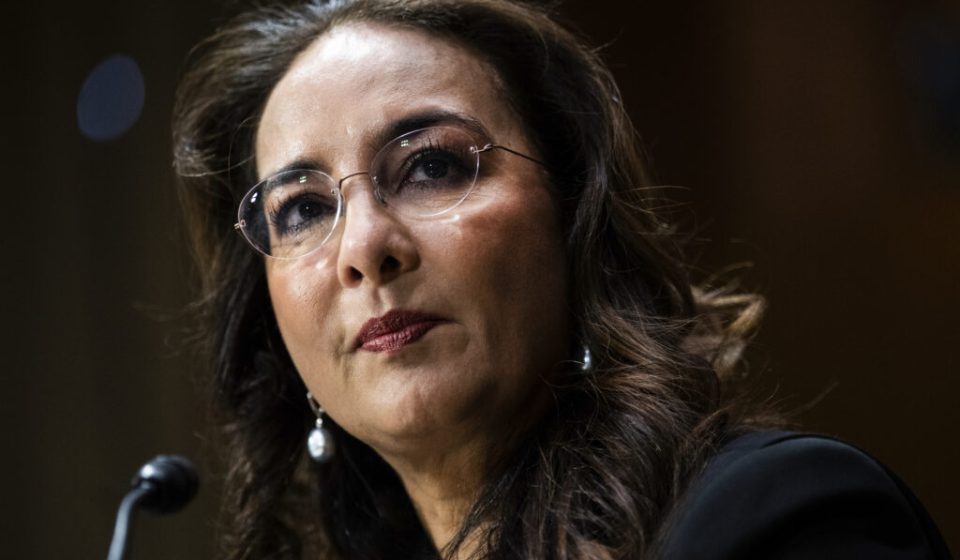
The civil rights organization filed the suit in federal court a month before the Nov. 3 election. The case seeks to force the Department of Justice’s (DOJ) Civil Rights Division, led by Assistant Attorney General Harmeet Dhillon, to turn over documents detailing the legal authority, personnel, training, locations and internal planning behind the massive operation.
The lawsuit is led by Kristen Clarke, who led the Civil Rights Division from 2021 to 2025 and is now general counsel for the NAACP.
In addition to seeking records about the observers, the lawsuit also seeks to confirm that David Michael Levin is a DOJ employee and that he participated in observing elections in Minnesota or elsewhere during the 2026 midterms. Democracy Docket exclusively reported that Levin, who pleaded guilty after illegally accessing election websites in 2016, served as an election observer in Minneapolis during the primaries.
“This unprecedented deployment of federal officials risks compromising the election and interfering with voters’ rights to participate in elections without intimidation,” the NAACP wrote. “Courts have recognized that unnecessary law enforcement and government presence at polling places can instill fear, create confusion, impose burdens on election officials, and have a deterrent or coercive effect on the electorate. »
The lawsuit comes as the Trump administration prepares for what Dhillon has described as the DOJ’s largest deployment of election surveillance in history. The department plans to send about 1,000 people across the country, far more than the approximately 289 observers sent during the 2022 midterms and the 714 sent during the 2024 presidential election.
The Civil Rights Division itself is nowhere near large enough to provide this force. DOJ budget documents show the division has only 353 authorized positions, including 193 attorneys, in fiscal year 2026. It remains unclear where the department will recruit enough staff to reach 1,000 or what training and oversight those employees will receive.
The NAACP filed a broad Freedom of Information Act (FOIA) request on September 1. She sought documents identifying DOJ’s legal authority for the program, internal legal analysis, complaints used to justify deployments, locations selected for November, training materials, observer qualifications and records showing whether state and local governments consented to their presence.
The organization also asked whether personnel from the FBI, U.S. Marshals Service, Department of Homeland Security, Immigration and Customs Enforcement or other federal law enforcement agencies would participate.
The DOJ acknowledged receiving the request on September 21 and said it “may encounter delays,” according to the complaint. The NAACP alleges that the department then failed to meet the FOIA deadline for determining which documents it would release or withhold.
As early voting begins in parts of the country and Election Day quickly approaches, the group is asking the court for emergency relief, including an order requiring the DOJ to preserve records and immediately process and release relevant documents.
Federal election monitoring itself is not new. For decades, the Civil Rights Division has deployed attorneys and other staff to polling places, primarily to protect voting access and enforce federal voting rights protections.
But the 2026 operation differs sharply in scale, rhetoric and reported conduct in this year’s primaries.
The DOJ, under President Donald Trump, has increasingly described its mission not only in terms of protecting voting rights, but also in terms of ensuring “ballot security” and “election integrity.”
During the primary season, the department repeatedly said observers were deployed to promote “transparency, voting security and compliance with federal law.” In September, Dhillon said the DOJ had already visited 11 states and hundreds of polling places. And she referred to DOJ personnel involved in the effort as “observers” rather than monitors.
The distinction is important because federal observers authorized under the Voting Rights Act may receive special statutory authorization to enter polling locations.
This is different from the monitoring program. State law and local election officials may limit where regular DOJ staff can go and what they can do.
These limits have already given rise to conflicts.
In Minnesota, Hennepin County rejected the Justice Department’s request to place federal observers at polling locations during the August primary. The DOJ agreed to stay outside the 100-foot limit required by state law, where plainclothes federal personnel could ask incumbent voters to participate in voluntary interviews.
County Attorney Mary Moriarty warned that threats, harassment or intimidation of voters and election workers would be investigated.
Democracy Docket later identified one of the men who appeared alongside a lead attorney for the DOJ voting unit outside a Minneapolis polling site as David Michael Levin,
In Wyoming, Republican Gov. Mark Gordon called for a state investigation after two Civil Rights Division attorneys monitored the August primary in Laramie County. Gordon described their behavior as “a bit aggressive” and “irregular.” Local officials said observers questioned poll workers and sought information about voting procedures and equipment.
The DOJ has disputed some of these accounts, including an allegation that observers sought to inspect voting machines.
“The public will significantly benefit from the information requested by Plaintiff. The rhetoric of Defendant and the current administration regarding their Election Day plans has generated anxiety and fear,” the NAACP wrote in the complaint. “The sun of public transparency is always in the public interest, compared to that of a government agency authorized to carry out far-reaching secret plans, especially when it comes to the public’s fundamental right to vote.”
The lawsuit does not directly ask the court to stop the DOJ from deploying the monitors.
Instead, he’s seeking something more basic before the federal government sends unprecedented numbers of personnel to election sites across the country: an explanation of who they are, where they’re going, what they’ve been asked to do and what authority the department says allows them to do it.
Gn usa