
Sugary foods combined with antibiotic treatment may damage the gut microbiome in ways that could leave people vulnerable to dangerous infections, a new study suggests.
The new research, published Wednesday in the journal Nature, took advantage of a natural experiment: It looked at what happened to gut bacteria in cancer patients who were hospitalized and treated with prolonged antibiotics before receiving a stem cell transplant. Because the patients ate only hospital-prepared food, the researchers knew exactly what and how much of the food they ate — a rarity in nutrition studies, which typically rely on participants to remember what they ate hours or days earlier, something people are notoriously bad at.
The gut microbiome is made up of billions of bacteria, viruses and other microbes that inhabit the human intestines. These tiny organisms perform many functions, including helping with digestion, producing essential vitamins, and playing a role in immune function. Science has shown that the microbiome also communicates with the brain to produce neurotransmitters like serotonin, which are important for sleep, mood and stress levels.
Studies have shown that the number and variety of bacteria living in the intestine largely depends on diet. People who eat a varied, plant-based, high-fiber diet tend to have a greater diversity of organisms in their intestines than those who eat a diet of more highly processed foods. In general, the more diverse a person’s microbiome, the healthier it is. A dense, diverse community of microbes in the gut is able to prevent bad actors – called pathobionts – from taking over and causing disease.
“One of the things that makes this study different from other previously published studies is that patients have their microbiome pummeled, and their nutritional status is also disrupted by cancer treatment,” said study author Dr. Jonathan Peled, a physician scientist at Memorial Sloan Kettering.
The research, led by scientists at Memorial Sloan Kettering Cancer Center, NYU Langone Health in New York, and the City of Hope Cancer Center in Los Angeles, examined what happened after antibiotics and hospital food destabilized and disrupted normal gut flora. They used this state of disruption as a window to observe the effects of certain types of foods on the composition of the gut microbiome.
“We sliced the data in different ways,” Peled said.
They looked at the relationship between broad categories of macronutrients like fats, carbohydrates and fiber, and different types of gut bacteria. They also looked at the effects of specific foods like chicken, apples and chocolate cake.
“And the theme that kept coming up was that the more sugary foods you eat, regardless of the type of sugar — with the particularly harmful effects of added sugars — it seemed like it really seemed to synergize with antibiotics in terms of damaging the microbiome,” Peled said.
The study drew its data from more than 1,000 stool samples, collected from 173 patients, who ate more than 9,400 meals prepared at the hospital.
Overall, the more intense a patient’s antibiotic regimen, the greater the loss of diversity in their microbiome.
They found that most food types were not associated with changes in the diversity of bacteria in the gut. On the other hand, sweets – which the researchers defined as sugars and sugary foods and drinks – were a different story. For every 3.5 ounce increase in sweets consumption during Under antibiotic treatment, the diversity of a patient’s microbiome measured in their stool sample decreased by about 24%, according to the study.
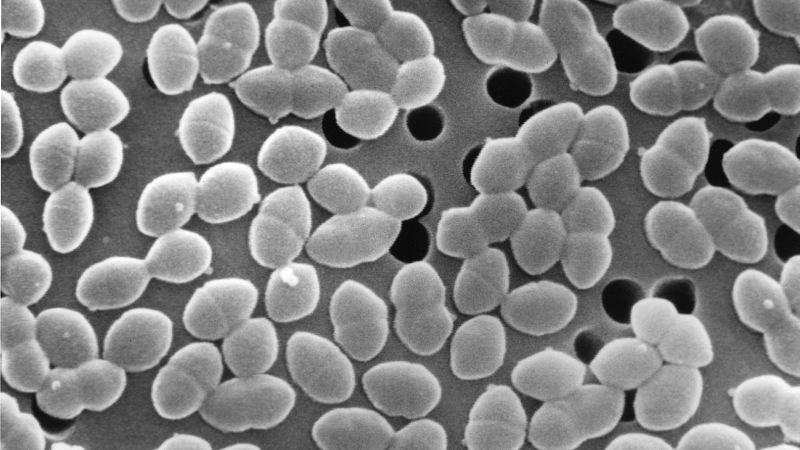
The decrease in gut bacteria diversity was linked to expanding populations of certain bad actors, like the bacteria Enterococcus faecium.
Enterococcus is an opportunistic organism. It hangs around harmlessly in the intestine and is kept in check by other types of bacteria that outcompete it. But when there is a disruption, such as an antibiotic treatment that kills other bacteria, they can start to overgrow. In some cases, it can pass through the intestinal wall and enter the bloodstream, where it can cause sepsis.
“Regarding bone marrow transplantation in particular, we have found that enterococci can worsen certain complications of transplantation, which is called graft-versus-host disease,” Peled said.
In graft-versus-host disease, donated stem cells recognize the recipient’s body as foreign and begin attacking their healthy tissues.
The team also tested in mice whether they could recreate the microbiome changes seen in human cancer patients. They gave mice a single injection of a broad-spectrum antibiotic and found a slight increase in the number of Enterococcus bacteria. When they also fed the mice added sugar after the antibiotic injection, the amount of enterococci bacteria increased 16-fold on the third day and 33-fold on the sixth day.
This increase could also have real consequences.
Overall, patients who consumed more sugar than average had about a 12% higher risk of death after their transplant than those who didn’t consume as much. This is a small but significant increase in risk.
“This is a slight change in their risk profile,” Peled said.
The expansion of Enterococcus bacteria lasted approximately eight days after antibiotic treatment.
“It’s a pretty interesting study,” said Dr. Anthony Maresso, a professor of virology and microbiology at Baylor College of Medicine in Houston. “I suspect this will make waves,” added Maresso, who was not involved in the research.
“This is important for these transplant recipients because that’s the number one thing that hospitals worry about is that they’re going to get infections in the course of clinical care,” Maresso said. “I wonder if we should change the hospital diet.”
The next question, he says, is whether this study is meaningful for people who take antibiotics outside of the hospital setting. Does a diet high in sugar and antibiotics, for example for an ear infection, prepare you for other infections later, for example?
Peled said that while this study is provocative, it is not a randomized, controlled clinical trial in which researchers can test different regimens to see which might be most protective for people taking antibiotics.
Because it’s generally a good idea to avoid eating too much sugar, he said, it’s not unreasonable to consider limiting sugar during antibiotic treatment.
“What our study suggests might be effective is not avoiding sugar or sugary foods all your time, but specifically when you’re taking antibiotics,” Peled said.
Gn Health