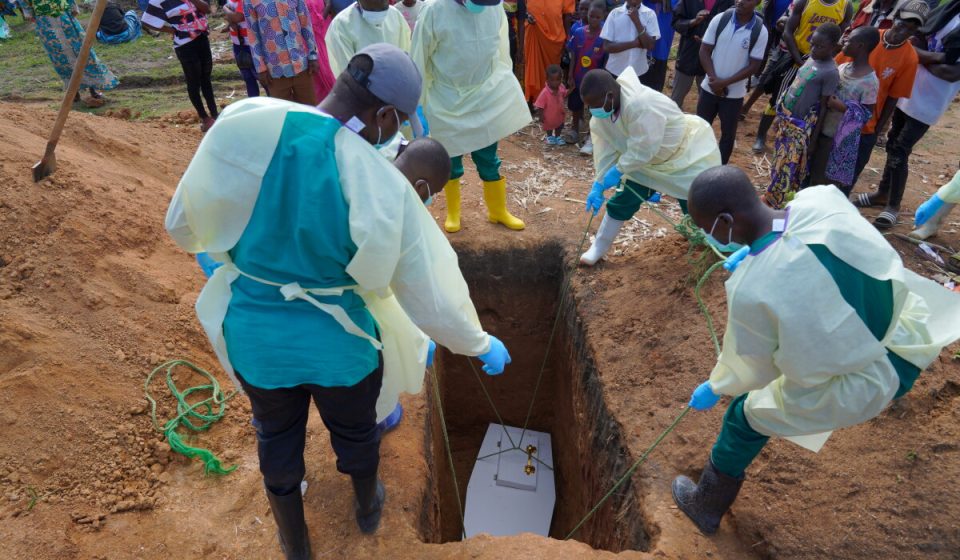
BUNIA, Congo (AP) — Six months after a Ebola outbreak has been declared in Congo, the disease remains out of control and efforts to contain it are failing.
More than 11,000 cases have been recorded, and almost half of those infected have died, according to government data. It is the deadliest of the 17 epidemics in Congo and is on track to surpass the toll of the West African epidemic which killed 11,000 people between 2014 and 2016.
Basic containment measures, including contact tracing and isolation, remain insufficient, raise doubts about the ability of the authorities to stem the epidemic. Experts believe there is little chance of bringing the situation under control within a year.
By the time the outbreak was announced in mid-May, 43 deaths had already been recorded, suggesting that the virus had been circulating undetected for a prolonged period. Since then, the disease has spread to eight of the country’s 26 provinces, at a pace that humanitarian groups have compared to wildfire.
New hot spots continue to emerge, straining an already strained healthcare system.
Questions about financing and management
Community transmission remains high. According to the Africa Centers for Disease Control and Prevention, 80% of new cases are detected outside health surveillance, meaning most infections have not been tracked by authorities.
A third of deaths occur at home or elsewhere in the community, where burials and other procedures are often carried out without specialist supervision, increasing the risk of transmission.
Health workers have gone on strike several times to demand salaries that are months behind schedule, sometimes leaving patients with confirmed infections without treatment.
Humanitarian groups have also questioned how the response is being managed. Last month, the Africa CDC raised concerns about more than $700 million in aid against Ebola which remains untraceable.
“A troubling gap persists between the considerable resources mobilized for the response and what is actually reaching patients, frontline workers and communities,” said humanitarian organization Doctors Without Borders, known by its French acronym MSF.
Children face high mortality rates
Children are particularly vulnerable to Ebola, especially those with pre-existing conditions such as malnutrition, experts say.
Most children affected by the disease have not received specialized care, contributing to high mortality rates.
According to UNICEF, children accounted for 35% of deaths recorded until November 4. Children under the age of 5 accounted for 21% of all deaths, and almost 72% of infected children in this age group died.
Conflicts and attacks hamper response
Health workers face difficult conditions as Ebola prevention and containment measures conflict with social and cultural practices.
Since the start of the epidemic, health workers were attackedsome fatal, adding to the dangers of working in an already unstable region. Health facilities have also been attacked.
The epidemic has been concentrated in eastern Congo, particularly in Ituri and North Kivu, where communities face both the epidemic and armed conflict.
Fighting between government forces and hundreds of rebel groups, including the Rwandan-backed M23, had already helped create one of the world’s worst humanitarian crises. The Allied Democratic Forces, a rebel group affiliated with the Islamic State, also attack civilians.
The rapid spread of the virus has raised fears of wider transmission across Africa. Nigeria, Kenya And Uganda have confirmed cases, making it the most geographically widespread Ebola outbreak on record.
_____
To learn more about Africa and development: https://apnews.com/hub/africa-pulse
The Associated Press receives financial support from the Gates Foundation for global health and development coverage in Africa. The AP is solely responsible for all content. Find AP standards to work with philanthropies, a list of supporters and funded coverage areas on AP.org.
Gn Health