
Earlier this week, the International Energy Agency, after consulting the G7, announced it would release an additional 100 million barrels of diesel, gasoline and crude oil. The release is part of a plan announced in March to release 400 million barrels of oil in response to the Hormuz crisis. But there is a problem with these versions: the storage empties.
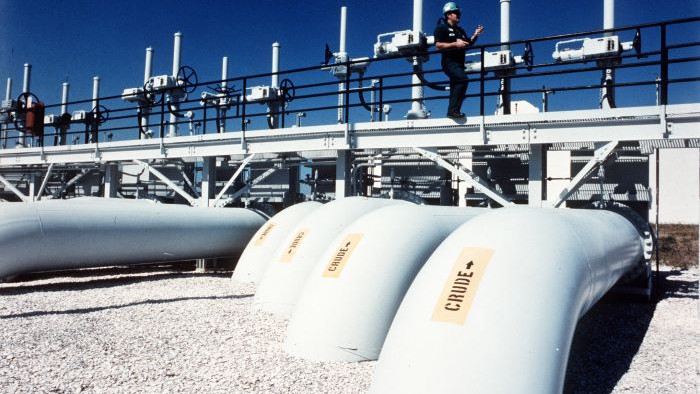
When the U.S. administration began releasing oil from the Strategic Petroleum Reserve, a flurry of reports followed, citing experts who warned that the level of oil in the SPR was already low enough to be cause for concern and that any further withdrawal would be risky. At the beginning of October, the amount of oil in the US strategic reserve stood at 331.2 million barrels, which was the lowest since 1983, after the last release of more than 9 million barrels. These releases are part of a 172 million barrel spill that the United States committed to earlier this year.
The problem is that 331.2 million barrels is pretty close to what experts consider the operational minimum for the storage system, which is between 250 and 300 million barrels. Allowing oil levels to drop near the operational minimum is dangerous because it begins to affect the storage infrastructure, and not in a good way. To avoid this, stocks must be replenished – and be able to meet any future supply shortages, of course. Related: U.S. Oil Drilling Continues to Grow
But American strategic oil reserves are not the only ones reaching minimum levels. Global stocks are also falling. According to the IEA’s latest monthly oil report from September, global oil inventories fell by 95 million barrels in August, bringing total withdrawals since February to 507 million barrels, or 2.8 million barrels per day. The only good news announced by the IEA in this report is that OECD commercial stocks increased by 23 million barrels, offsetting a 19 million barrel decrease in strategic reserves.
However, the good news did not last long. Earlier this week, Aramco Chief Executive Amin Nasser warned that global oil stocks were dangerously low – and suggested that the prospect of replenishing them was rather remote.
“The system is already under strain,” Nasser said at the Energy Intelligence Forum in London. “And, with few other resources for the world to turn to, the cushion of supply resilience is woefully thin. » Replenishing depleted stocks, Nasser noted, could take up to two years, and that only after the Strait of Hormuz reopens. While the world waits for this to happen, it is depleting its stocks, exposing itself to much more severe supply shocks if the war extends into 2027.
“IEA member governments still have significant levels of public emergency oil stocks – equivalent to around 1.1 billion barrels, including more than 200 million barrels of diesel,” agency head Fatih Birol said this week after meeting with agency members to discuss the new release of oil and fuel. “The IEA stands ready to commercialize more of these actions if and when necessary.”
The objective was to reassure the market that there would be no shortage of diesel, in particular. However, this may well cause concern instead of allaying shortage fears, as global stocks are also dangerously close to their operational minimum and this cannot be exceeded, because once exceeded you no longer have a global inventory system.
The world has drawn more than a billion barrels of crude from its stocks since the start of the war between the United States, Israel and Iran. Most of that came from commercial inventories, Aramco’s Nasser said this week. That leaves less than 6 billion barrels still stored – and those 6 billion barrels are needed to stay where they are for the storage system to continue functioning. It seems the world has run out of oil.
It is therefore not surprising that many countries, particularly in Asia, are now engaged in a race to replenish their oil stocks. Asia is particularly vulnerable to adverse events in the Middle East because most of its oil imports come from the region. With this situation severely compromised, Asian economies, particularly those in Southeast Asia, are struggling to secure fuel for their economies and populations, and to keep it relatively affordable.
“The most advanced efforts are to support the development of oil storage systems in each country and regional joint storage on a voluntary basis,” nine Southeast Asian governments said this week in a statement cited by Reuters. In other words, they will do what the IEA does, to be able to better respond to future crises. But here’s the thing: the oil these countries are going to store has to come from somewhere and not cost an arm and a leg. It will take some time before prices return to levels more acceptable to Southeast Asian governments – or any other government that might need to replenish its reserves.
By Irina Slav for Oilprice.com
More important reading on Oilprice.com
Gn bussni