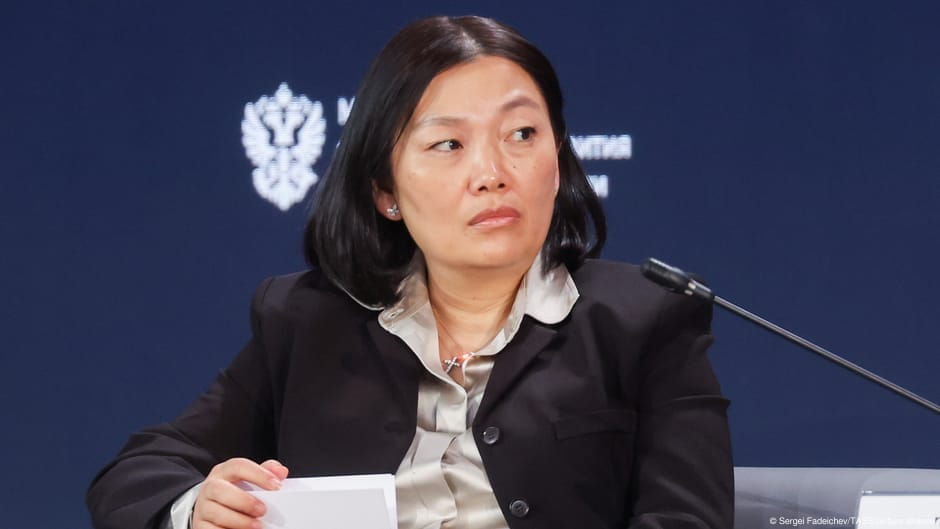
The European Union on Monday added Russia’s richest woman, CEO and owner of online retailer Wildberries Tatyana Kim, to its Russian sanctions list.
As a result, Kim’s European assets will be frozen and he will be banned from carrying out financial transactions or traveling within the bloc.
Wildberries is Russia’s largest e-commerce retailer.
Kim, born in Grozny, Chechnya, to parents of Korean origin, has an estimated net worth of $8.1 billion (€7.4 billion).
The sanctions were part of a broader regime targeting around 50 banks and oil exporters, as well as nearly 100 business leaders, propagandists and a large pro-Russian hacker group.
EU authorities say they targeted Kim because Wildberries is “one of the largest taxpayers” in Russia and “functions as a supply network for the Russian military by facilitating the sale of military and dual-use goods.”
An EU statement goes on to say that “Kim supports, materially or financially, the Russian military and industrial complex and profits from it.”
Why is the EU targeting an online retailer?
In its defense against invading Russian forces, Ukraine this summer expanded its list of military targets to include Wildberries’ warehouses in Russia, claiming that the company’s product list – which includes night vision goggles, ammunition pouches and helmets as well as ordinary clothing, cosmetics and electronics – supports Russia’s illegal war.
Kim defended his company at the time, saying its offerings were no different from those of other online retailers like Amazon in the United States and Alibaba in China.
The Kremlin has also denied that the company and its warehouses were involved in the war effort.
Who else is on the new EU sanctions list?
In a statement, Wildberries said Brussels sanctions would have no impact on the company given that it has no assets in the bloc and does not conduct any activities there.
Other entities on Monday’s sanctions list include companies in China, Oman, Seychelles and the United Arab Emirates linked to the sale of oil from Russia’s so-called shadow fleet of illicit tankers.
The sale of this oil also fuels the Russian invasion, which the EU seeks to hinder with sanctions as well as direct financial and military aid to kyiv.
Brussels imposed more than 20 rounds of sanctions in response to Russia’s invasion of Ukraine on February 24, 2022, targeting thousands of individuals and businesses to pressure President Vladimir Putin to negotiate an end to the assault.
The 27-nation bloc intends to introduce another set of drastic sanctions by the end of the year.
Gn world