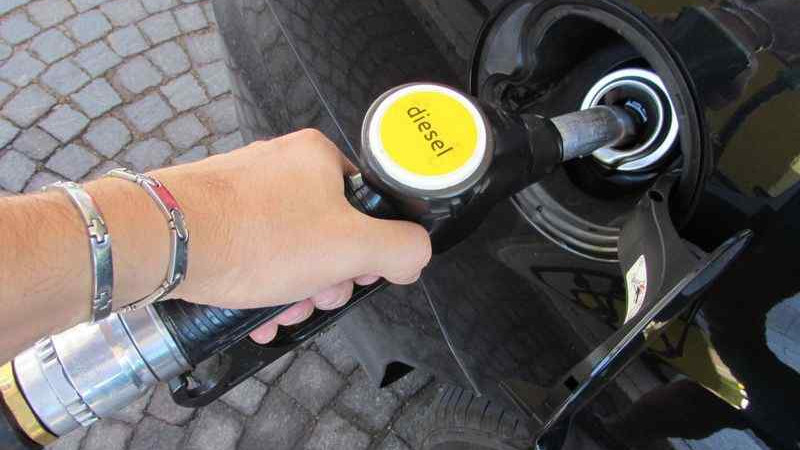

China announced this week that it would suspend all fuel exports this month to maintain supplies to its domestic market. Also this week, President Donald Trump demanded that Germany and France release 120 million barrels of diesel from their stockpiles or risk being hit with a U.S. ban on diesel exports. Europe is running out of options to stay well supplied with essential fuel.
Diesel is the fuel on which any economy is based. Although less common in passenger cars these days, diesel is the default fuel for heavy machinery, agriculture and freight transportation. This makes import-dependent countries particularly vulnerable to the type of shock the world is currently experiencing, and Europe is full of import-dependent countries.
According to Euronews, gasoline prices in the European Union have increased by around 29% since the start of the year, while diesel prices have ballooned by 40%. ECB officials had expected diesel margins to peak this month, citing peak gasoline margins in August, after which they declined, but it does not appear their prediction is coming true as China has just imposed a fuel export ban on its refiners. Chinese refiners are also canceling shipments of gasoline and jet fuel. Related: G7 set to release 100 million barrels to counter diesel crisis
At the same time, diesel imports into Europe last month reached the lowest September total on record, Vortexa warned in a report released earlier this week. Monthly imports stood at just 1 million barrels per day, up to 600,000 barrels per day less than diesel imports for September 2025. Additionally, “diesel on water indicated in Europe is more than 25% below last year’s levels, with all points pointing to October being another month of weak arrivals,” wrote Vortexa analyst Mick Strauttman.
Local fuel production at European refineries also declined in September due to maintenance work, which was delayed for obvious reasons to guarantee supply in a tightening market. Maintenance can be delayed but it cannot be canceled, so refineries across the continent last month were down 600,000 barrels per day compared to August. Yet the delay in maintenance has already caused unplanned outages, Strauttman noted, and could cause more such events, interfering with domestic fuel production in Europe.
However, diesel prices are soaring all over the world, and not just in Europe. In the United States, fuel prices overall, and diesel prices in particular, have become an extremely sensitive topic in the run-up to the November midterm elections. The United States is the largest foreign supplier of fuel to most of Europe. It is therefore not surprising that President Trump has asked France and Germany to release diesel from their stocks or cut off their access to American diesel. There is no alternative to U.S. fuel imports, not with sanctions on Russia and Russia’s ban on diesel exports, as well as China’s new suspension of fuel exports.
Together, Germany and France hold around 35% of the EU’s strategic diesel reserves. The EU is estimated to hold around 39 million tonnes of diesel, equivalent to more than two months of the bloc’s consumption. This is a considerable level of consumption, and the reason is historical.
“Decades of policy incentives, such as tax benefits, have left Europe’s car fleet much heavier on diesel than regions like the United States,” Georg Zachmann, an analyst at Bruegel, told Deutsche Welle earlier this week. “As a result, the EU is structurally a buyer of gasoline, which it exports, and short of diesel, which it must import. »
In addition to the tax incentive plan, the European Union has been working to reduce its refining capacity as part of its plan to reduce carbon dioxide emissions. Carbon credits, taxes and the growing burden of emissions regulation have led to the closure of 30 out of 100 refineries across the bloc since 2009. That means Europe has lost a third of its refining capacity, making it even more dependent on fuel imports than before.
The worst part of the problem facing the European Union – and Europe as a whole – is that there is no silver bullet. In fact, there is no such thing as a slow solution either. For starters, France and Germany will need to release diesel from stockpiles, as recent history suggests that Trump can and will ban diesel exports despite advice to the contrary, to teach the Europeans a lesson, as he did with the tariffs. Furthermore, France, Germany and all other European countries facing falling imports will have to resort to stockpiling because there is simply no alternative. In other words, it will only be a matter of time before Europe moves into diesel storage.
This will of course create another problem, that of emptying said storage, but, again, there is no alternative. Even without a diesel export ban, U.S. imports are not enough to cover dwindling supplies elsewhere in the world. With a ban, the situation will only get worse. And the situation will remain bad until fuel exports from the Persian Gulf resume. For now, tanker trackers are only reporting recovery of crude flows, noting that fuel exports have not yet resumed.
By Irina Slav for Oilprice.com
More important reading on Oilprice.com
Gn bussni